

QUEEN: Efficient and Sustainable Production of Metallurgical Silicon from Quartz Sand Sourced from Local Quarries
August 26, 2025
i-MovE: Interoperability for an efficient, safe and equitable mobility
September 8, 202528/08/2025
The Structural and Materials Technology (ATEM) research group at the Universitat Politècnica de Catalunya - BarcelonaTech (UPC) is participating, in collaboration with the Universitat de les Illes Balears (UIB), in the ReINfoRCed project, which aims to promote the extension of the service life of reinforced concrete structures affected by corrosion.
Currently, many reinforced concrete structures are nearing the end of their service life or show clear signs of deterioration, such as that caused by corrosion. In such cases, it is necessary to assess whether it is possible to restore or increase their load-bearing capacity through repairs or strengthening, or whether demolition and replacement are required.
From a circular economy perspective, extending the lifespan of existing infrastructure is preferable to demolition and reconstruction, as it reduces resource consumption and associated emissions—provided that appropriate safety and functionality levels can be ensured. However, such decisions must be based on rigorous life-cycle analysis, taking into account not only economic costs but also social and environmental impacts.
With this challenge as a starting point, the ReINfoRCed project aims to establish a framework for extending the life of reinforced concrete structures through digitalised assessments, sensor-based monitoring systems, and strengthening techniques following eco-efficiency criteria.
To support decision-making regarding whether to extend the life of an infrastructure or opt for its replacement, the project will develop and apply experimental, analytical, and numerical methods for comprehensive life-cycle assessment. It will also create and validate digital tools to analyse the structural behaviour of existing elements, such as interoperable digital twins and corrosion detection systems. In addition, a web-based application will be made available to assess shear resistance using a methodology based on different levels of approximation.
To extend the service life of deteriorated or underperforming reinforced concrete structures, the project will compare several reinforcement techniques: fibre-reinforced polymers (FRP), textile-reinforced mortars (TRM), and shape memory alloys (SMA). Special attention will be given to eco-efficient TRM solutions that incorporate low-carbon footprint mortars and natural fibres. These solutions will be experimentally characterised to assess their mechanical behaviour and durability.
The project will also carry out experimental research on the behaviour of corrosion-affected reinforced concrete elements with structural redundancy, and assess the effectiveness of TRM reinforcements in improving their structural response.
Impact
The project seeks to actively contribute to the transition from a linear economy model—based on use and discard—towards a circular economy that encourages asset reuse, reduces resource consumption, and minimises waste generation and emissions from new construction. At the same time, it will foster the digitalisation of the assessment and rehabilitation processes of buildings and infrastructures.
This approach is particularly relevant considering that many critical reinforced concrete infrastructures in Europe were built over 50 years ago and are now nearing the end of their service life. This makes efficient, sustainable, and digitally advanced management of their maintenance and potential reuse even more necessary, with broad social, economic, and environmental implications.
Budget and Funding
The project is coordinated by the Universitat Politècnica de Catalunya - BarcelonaTech (UPC), in collaboration with the Universitat de les Illes Balears (UIB) (UIB). With a total budget of €270,595, the project began in December 2022 and will conclude in September 2025. ReINfoRCed is funded by the Spanish National Plan for Scientific and Technical Research and Innovation (2021–2023) and by the European Union's NextGenerationEU programme.
Project TED2021-130272B-C21
Funded by MCIN /
AEI/10.13039/501100011033 and by the
European Union
NextGenerationEU/PRTR

Sector
Topic
You want to know more?
Related Projects
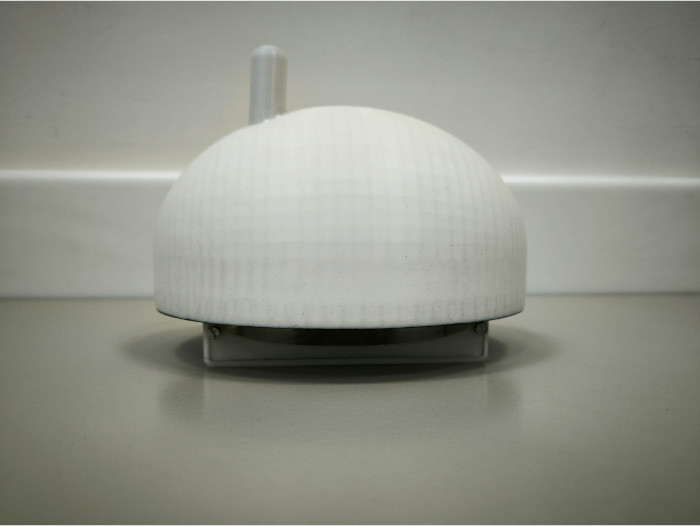
- Researchers from the Computer Networks and Distributed Systems (CNDS) research group at the Universitat Politècnica de Catalunya - BarcelonaTech (UPC) are developing new artificial intelligence-based solutions to obtain more accurate and reliable data from IoT sensor networks, with applications in air quality monitoring, anomaly detection and industrial predictive maintenance.
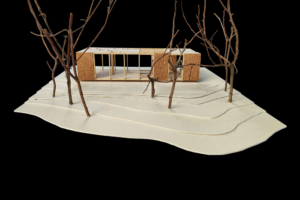
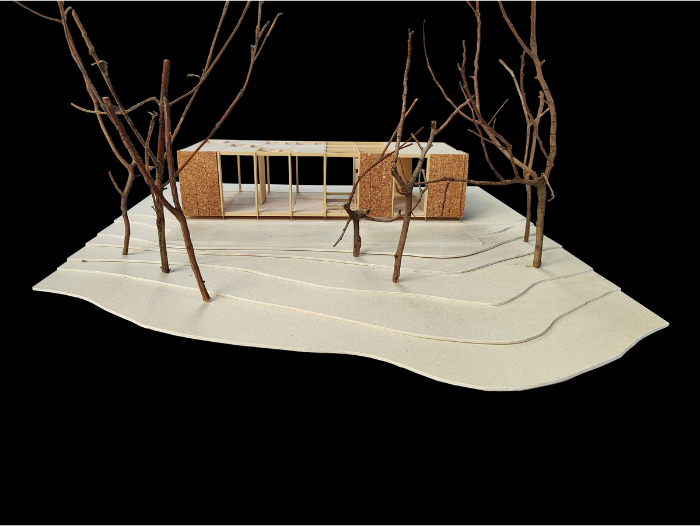
- The Casa Bosc project explores a lightweight, modular and prefabricated timber construction system designed to reduce the environmental impact of housing while making it easier to build and adapt to different contexts. The project has been developed by researchers from the Architectural Rehabilitation and Restoration Research Group (REARQ) at the Universitat Politècnica de Catalunya - BarcelonaTech (UPC) and the company ÀGORA.
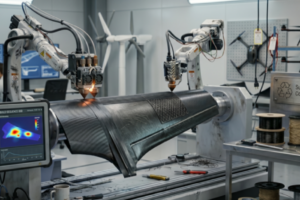
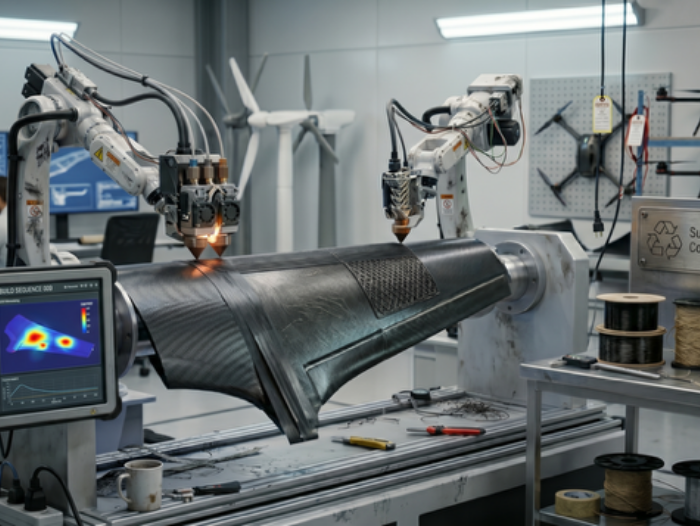
- The Control, Data and Artificial Intelligence (CoDAlab) research group at the Universitat Politècnica de Catalunya - BarcelonaTech (UPC) is taking part in the ATHENS project, which is developing recyclable thermoplastic composite materials with advanced real-time monitoring systems to improve the manufacture, safety and service life of lightweight structures.
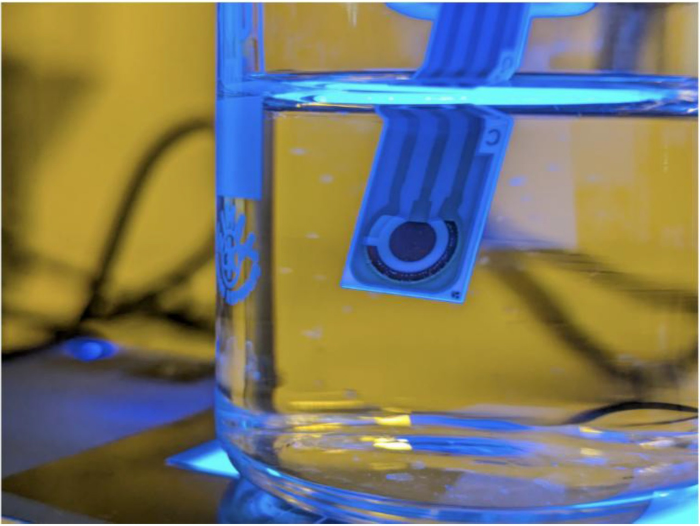
- The MICROTECH LAB - Microtechnology for the Industry research subgroup, part of the Centre for Advanced Technologies in Mechanics (CATMech) at the Universitat Politècnica de Catalunya - BarcelonaTech (UPC), is leading the technical development of a minimally invasive platform to monitor biomarkers and physiological indicators related to stress and emotional wellbeing.