


RegBCN: Regenerating housing and community spaces in Barcelona
March 17, 2026
BIOCHOLESTEROID: New bio-based smart materials with optical response for advanced applications
March 30, 202619/03/2026
The research groups Structural and Materials Technology (ATEM) and Construction Engineering (EC) at the Universitat Politècnica de Catalunya – BarcelonaTech (UPC) are working on the RE-STEEL project, which aims to develop an efficient methodology for the assessment and sustainable rehabilitation of existing steel structures.
The construction sector is the largest industrial employer and one of the most significant economic activities in Europe. However, it is also responsible for 40% of carbon emissions and material resource consumption, making it a strategic sector for achieving the Sustainable Development Goals. Since most of the building stock consists of existing structures, efficient management that promotes their rehabilitation and extension of service life represents an effective way to reduce CO₂ emissions and mitigate the effects of climate change.
Current analysis methodologies, however, have been conceived for the design of new structures and are not suitable for assessing existing ones, as they are typically applied with a high degree of conservatism. This requires a specific approach combining advanced structural analysis methods based on system behaviour, data obtained through Structural Health Monitoring (SHM) systems, the definition of adapted reliability criteria, and Life Cycle Assessment (LCA).
In this context, the RE-STEEL project aims to reduce the gap between the assessment standards for existing structures and the criteria applicable to new buildings, as established in the new generation of Eurocodes — the harmonised European standards defining structural design within the EU. The project proposes the development of a coherent, efficient and replicable methodology for assessing and prioritising the rehabilitation of steel structures, integrating system and reliability-based calculation methods, as well as data derived from SHM and LCA. This methodology will include the development of a system-level structural reliability framework, using new system-based direct design methods (DDM) applied to existing structures, considering different residual service life scenarios.
To test the developed methodology in a real context and propose the necessary modifications and improvements, the team will leverage existing synergies within the Spanish research framework in order to simulate and monitor the demonstrator building that will be constructed and tested to collapse within the ERC-ENDURE project at ICITECH-UPV.
In addition, key performance indicators (KPIs) will be defined and a simplified decision-support framework will be developed, accessible to both professionals and infrastructure managers. The methodology will be validated through a real-scale demonstrator — a steel building — by means of a case study integrating structural monitoring data, different rehabilitation strategies and environmental assessment results.
Finally, technical guidelines oriented towards professional practice will be prepared to facilitate the application of the project results in real cases.
Impact
RE-STEEL will provide an experimentally validated methodology to address the rehabilitation of existing structures in a rational and sustainable manner, offering practical tools for engineers and architects seeking to develop safe, efficient and economically viable solutions.
With the active involvement of key stakeholders in the sector, RE-STEEL will contribute to the digitalisation and modernisation of the building stock, promoting smart buildings adapted to new challenges. At a socio-economic level, the project will have a significant impact on achieving more sustainable and resilient cities through the creation of an integrated, interoperable and holistic framework for the management of existing steel structures, based on the deployment of advanced design, SHM and LCA technologies.
Funding
The project, with a budget of €148,375, is funded by the State Plan for Scientific, Technical and Innovation Research 2021–2023. It started in September 2023 and is expected to be completed in August 2026.

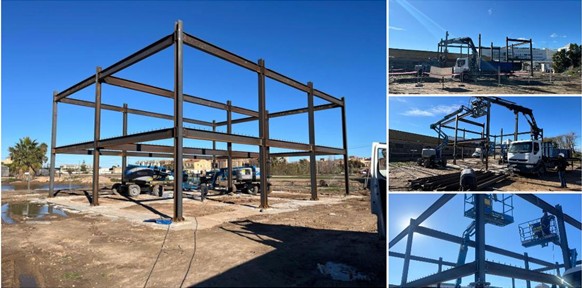
Image 1: Real building constructed for the experimental campaign
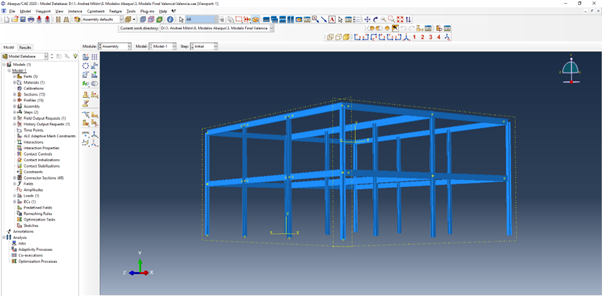
Image 2: Numerical modelling of the building
Sector
Topic
You want to know more?
Related Projects
- A team from the Matrix Analysis and Discrete Potential Theory (MAPTHE) research group at the Universitat Politècnica de Catalunya - BarcelonaTech (UPC), and the Department of Mathematics at CUNEF Universidad in Madrid, have participated in the development of MARIA, a prototype of a portable, flexible and radiation-free device designed to improve the early detection of breast cancer. The device can identify tumours through electrical conductivity, with the aim of enabling its future use in primary care settings.
- The Research Group in Smart and Sustainable Resources and Industries (RIIS) at the Universitat Politècnica de Catalunya - BarcelonaTech (UPC) is developing the ZeroCarbonPave project, which aims to assess the feasibility of incorporating biochar as filler and/or as the fine fraction of granular material in bituminous mixtures, with the objective of reducing the carbon footprint associated with the manufacture and laying of road pavements.
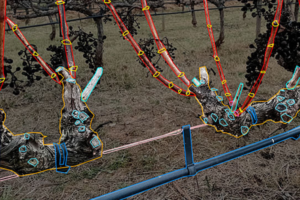
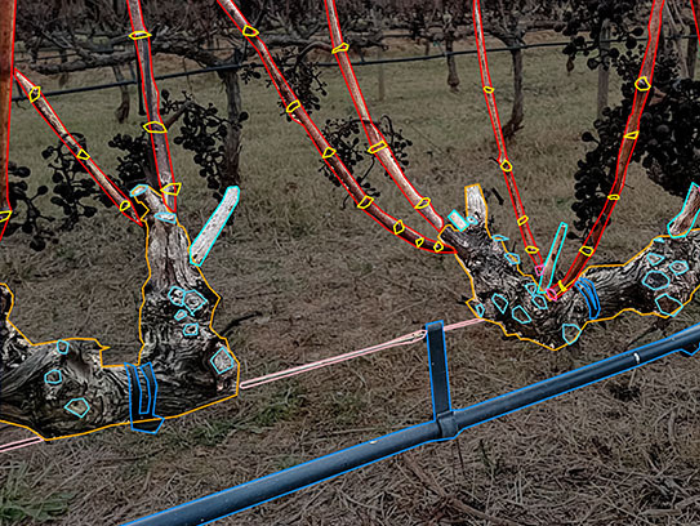
- The Center for Industrial Equipment Design (CDEI-UPC) at the Universitat Politècnica de Catalunya - BarcelonaTech (UPC) is participating in a cross-border project aimed at promoting the use of advanced digital technologies in viticulture in regions on both sides of the Pyrenees. The initiative seeks to improve specialist training, technical advice and decision-making in vineyard management.
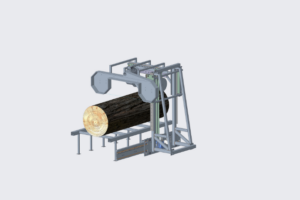
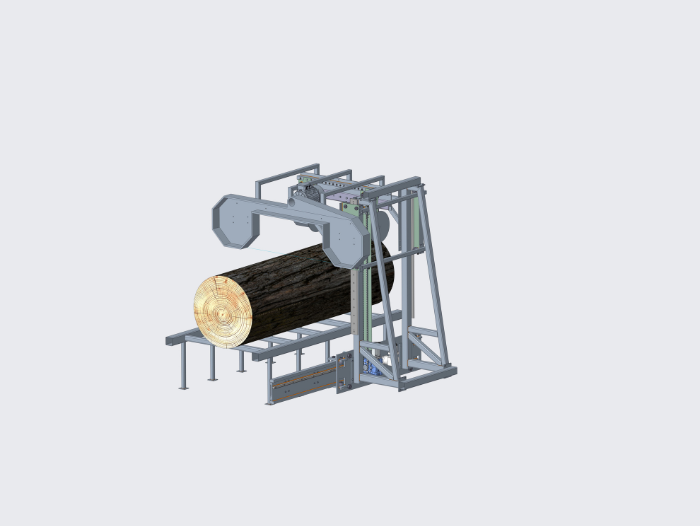
- The Centre for Industrial Equipment Design (CDEI) at the Universitat Politècnica de Catalunya - BarcelonaTech (UPC), together with the IRI, Institut de Robòtica i Informàtica Industrial (CSIC-UPC), is participating in the development of a pre-commercial prototype of an automatic portable sawmill that integrates computer vision, artificial intelligence and computer numerical control to improve productivity, efficiency and safety in local wood processing for the company Envall Coop. S.L.