


AI4EO: Artificial Intelligence applied to Earth Observation
May 26, 2026
EO4TIP: A new Earth observation methodology to improve anticipation of abrupt changes and reduce environmental risks
June 2, 202628/05/2026
A team from the e-PLASCOM and eb-POLICOM research groups, alongside the Barcelona Research Center in Multiscale Science and Engineering (CCEM) at the Universitat Politècnica de Catalunya - BarcelonaTech (UPC), is involved in the EcoPolyRub project in partnership with the Centre Català del Plàstic (CCP). The initiative aims to create innovative elastomeric materials based on recycled tyre rubber, enhanced recycled plastics, and natural rubber for high-performance mechanical and thermal applications.
The growing demand for sustainable materials and energy-efficient technologies has accelerated the research for alternatives to conventional plastics, rubbers, and refrigeration systems. In this context, the EcoPolyRub project (Blends with High Mechanical Performance from Eco-Polymers and Rubber Wastes) focuses on the development of new elastomeric materials based on recycled tyre rubber, modified recycled plastics, and natural rubber for advanced mechanical and thermal applications.
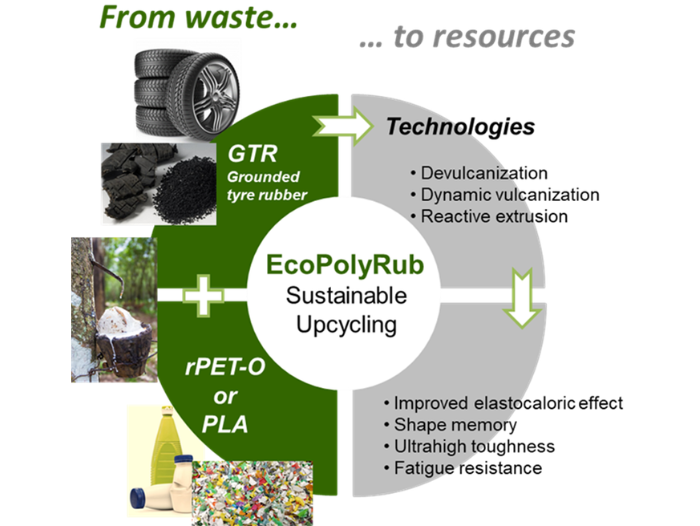
The project aims to transform rubber and plastic waste into high added-value materials with improved durability, flexibility, and functional properties. Ground tire rubber particles obtained from end-of-life tires are incorporated into natural rubber matrices to create more sustainable compounds while reducing the environmental impact associated with rubber disposal. These recycled particles not only contribute to circular economy strategies, but can also reinforce the rubber matrix and modify its mechanical behavior under deformation.
In parallel, EcoPolyRub explores the incorporation of modified recycled plastics, such as recycled PET and PLA-based materials, into rubber matrices. These recycled plastic phases are expected to act as reinforcing fillers, similarly to ground tyre rubber. The objective is to improve the mechanical resistance and durability of the materials, while opening up new possibilities for combining flexibility, toughness and lightweight properties in a single system.
One of the lines of the project is the study of the elastocaloric effect in rubber materials. Elastocaloric materials are capable of generating heating and cooling effects when stretched and released. This phenomenon can be exploited in solid-state refrigeration technologies, offering a potential alternative to conventional cooling systems based on refrigerant gases and vapor-compression cycles. Natural rubber is especially promising for this application because of its ability to crystallize during deformation, a phenomenon that strongly influences both its thermal and mechanical response.
The project also investigates the fracture and fatigue behavior of these materials under repeated mechanical loading. Using advanced infrared thermography and mechanical characterization techniques, the research analyzes how cracks initiate and propagate in rubber materials and how deformation-induced thermal effects can help to better understand their long-term durability and performance.
By combining recycled materials, sustainable rubber sources, and innovative thermal functionalities, EcoPolyRub aims to develop a new generation of durable and energy-efficient elastomeric materials for future domestic, industrial, and transport applications, contributing both to circular economy strategies and to the development of environmentally friendly cooling technologies.
Budget and Funding
The project is developed in collaboration with the Centre Català del Plàstic (CCP), and runs from September 2024 to December 2027. It has received a total budget of €162,500.

Related Projects
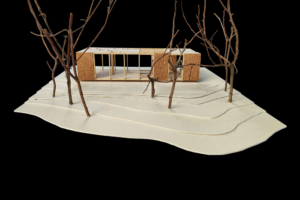
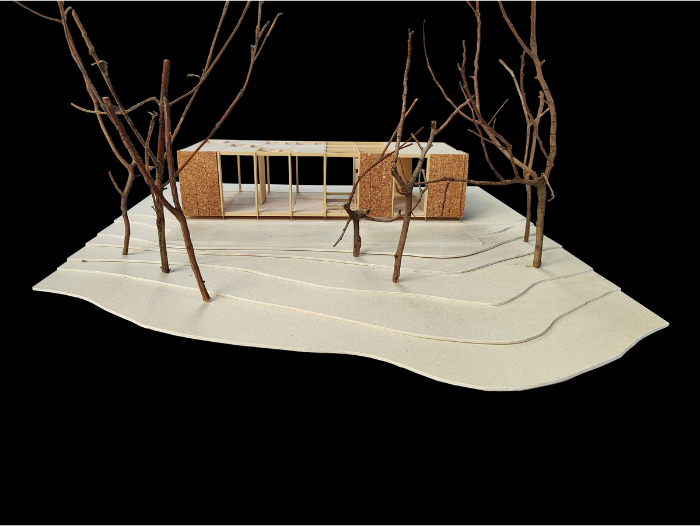
- The Casa Bosc project explores a lightweight, modular and prefabricated timber construction system designed to reduce the environmental impact of housing while making it easier to build and adapt to different contexts. The project has been developed by researchers from the Architectural Rehabilitation and Restoration Research Group (REARQ) at the Universitat Politècnica de Catalunya - BarcelonaTech (UPC) and the company ÀGORA.
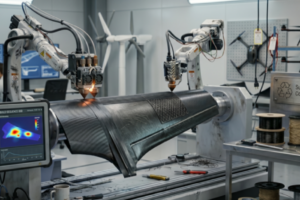
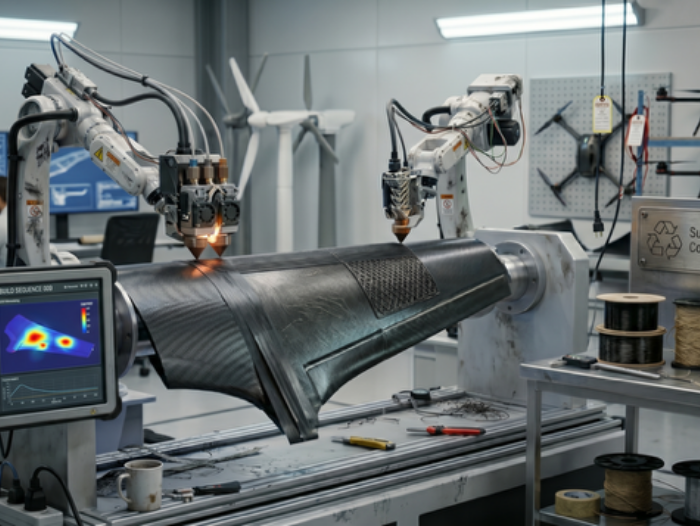
- The Control, Data and Artificial Intelligence (CoDAlab) research group at the Universitat Politècnica de Catalunya - BarcelonaTech (UPC) is taking part in the ATHENS project, which is developing recyclable thermoplastic composite materials with advanced real-time monitoring systems to improve the manufacture, safety and service life of lightweight structures.
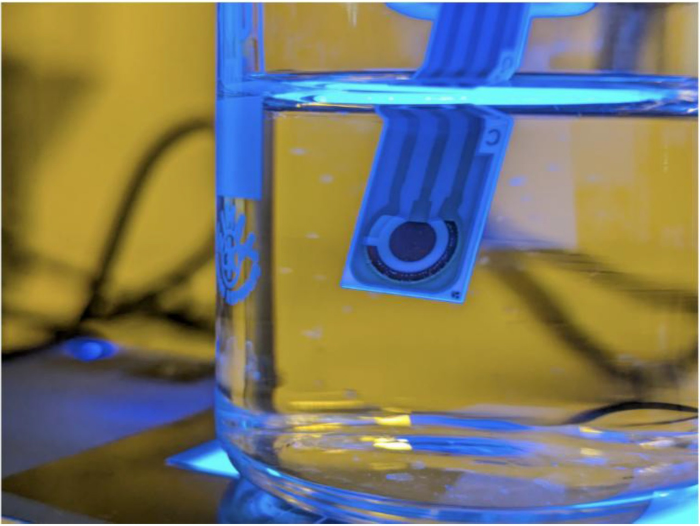
- The MICROTECH LAB - Microtechnology for the Industry research subgroup, part of the Centre for Advanced Technologies in Mechanics (CATMech) at the Universitat Politècnica de Catalunya - BarcelonaTech (UPC), is leading the technical development of a minimally invasive platform to monitor biomarkers and physiological indicators related to stress and emotional wellbeing.
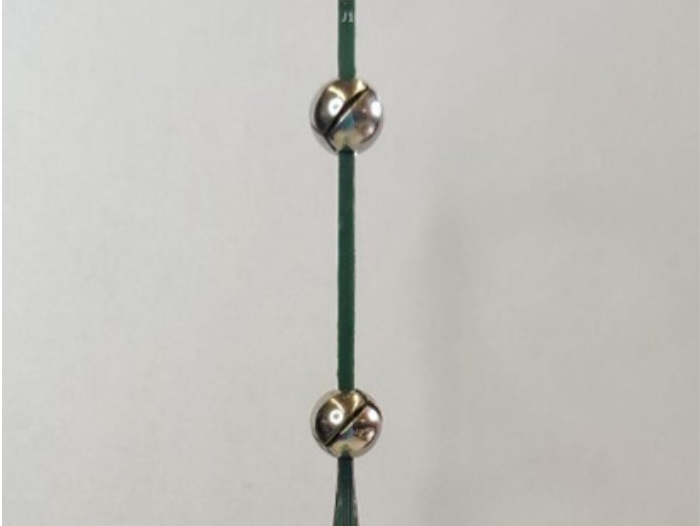
- A research team from the Universitat Politècnica de Catalunya - BarcelonaTech (UPC) has participated in the M3LEC project, coordinated by the Centro de Astrobiología (CAB), a joint centre of the Spanish National Research Council (CSIC) and the Instituto Nacional de Técnica Aeroespacial (INTA), with the Universidad de Sevilla (US) / Instituto de Microelectrónica de Sevilla (IMSE) also participating. M3LEC aimed to contribute to the characterisation of the Martian atmosphere and meteorology, and to investigate new instrumentation for future planetary exploration missions.