

RELUM: Innovative reflective pavements to reduce the urban heat island effect
October 13, 2025
BioSAFE: Bio-sustainable solutions to improve the acoustic performance and fire resistance of building envelopes
October 22, 202514/10/2025
The Architecture, Energy and Environment (AiEM) research group at the Universitat Politècnica de Catalunya - BarcelonaTech (UPC) has characterised Barcelona’s residential buildings according to their capacity to adapt to climate change. This study is part of the project ‘VeUvE: Urban havens for vulnerable zones’.
The work highlights the climate inequality conditions present across different areas of the city and will help to better define the priorities and energy renovation strategies for its districts.
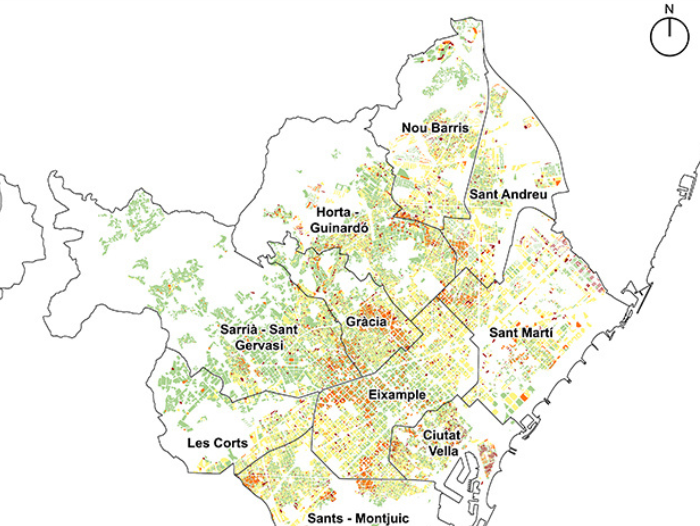
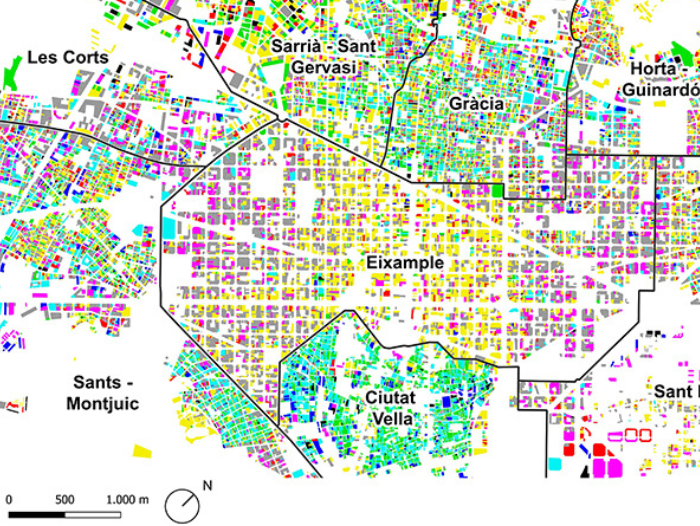
The characterisation of the buildings was carried out using three variables derived from public cadastral data: urban fabric compactness, potential for cross ventilation in buildings, and the presence of thermal insulation in façades and roofs. These factors made it possible to identify the availability of passive cooling strategies in constructions, with the aim of improving thermal comfort in homes without increasing energy consumption.
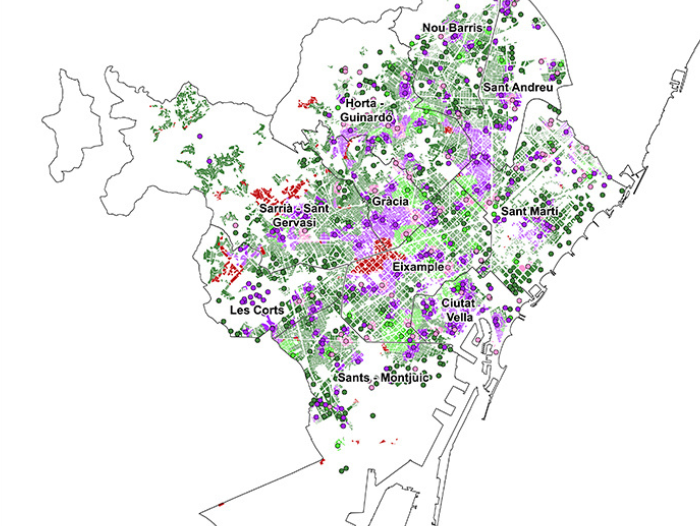
The study resulted in the creation of an interactive map that identifies the specific characteristics of each district of the city in relation to its capacity to adapt to climate change. Specifically, the analysis shows that adaptation conditions vary according to the urban morphology and building history of Barcelona’s different districts.
Older, compact neighbourhoods such as Ciutat Vella or Vila de Gràcia have a low potential for cross ventilation, whereas buildings in the central Eixample area or in zones close to Collserola show a greater ventilation potential, which facilitates adaptation to extreme heat situations. In contrast, areas developed during the post-war period tend to feature buildings without insulation and with limited potential for natural ventilation.
Regarding thermal insulation, only 15% of the city’s building stock has it, concentrated mainly in the districts of Sarrià and Sant Martí. This feature, combined with a higher potential for cross ventilation, enhances adaptation to extreme climate scenarios.
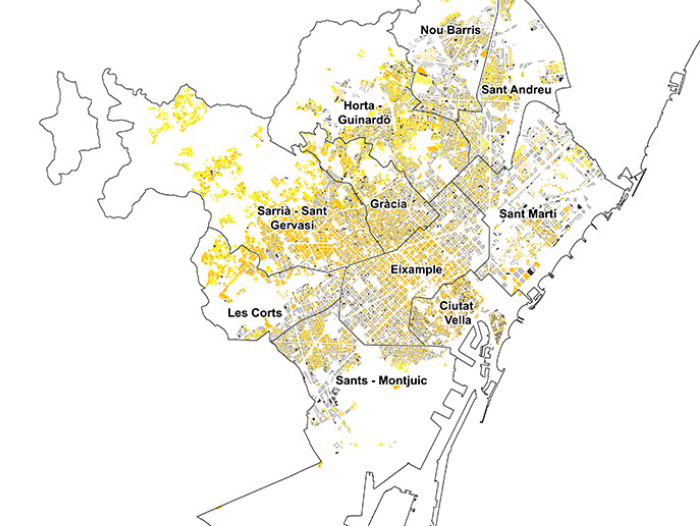
As part of the VeUvE project, an interactive map has also been created to graphically represent the different categories of nearly 600 climate shelters within Barcelona’s municipal network, as well as their proximity to housing. Overall, 46% of the city’s dwellings are located within a five-minute walk of a climate shelter — a first step towards achieving the 100% coverage target set out in the Climate Emergency Action Plan.
Of these shelters, 45% are natural spaces, 35% are free-access air-conditioned spaces, and the remaining 20% are commercial or paid-access air-conditioned spaces. The study notes that the restricted opening hours of some shelters reduce the network’s effectiveness, especially on Sundays and during August, when approximately one-third of shelters are unavailable.
In terms of spatial distribution, the districts of Sants-Montjuïc and Sant Martí have the largest number of natural climate shelters, due to urban projects carried out over the past thirty years. By contrast, Ciutat Vella lacks natural spaces but compensates with a large number of air-conditioned public facilities. The district with the fewest climate shelters is Gràcia.
Impact
The conclusions of this analysis, which could be applied to other cities, will help to better define the priorities and strategic actions for energy renovation in districts and their buildings. In fact, the study provides useful tools for guiding medium- and long-term urban planning, and suggests an approach focused on people’s well-being and comfort in the design of urban regeneration measures.
In this regard, the interactive maps provide access to data such as the cross-ventilation potential of dwellings, proximity to climate shelters (such as parks, libraries, and sports centres), climate vulnerability, and the availability of passive cooling strategies in homes. As for the climate shelter network, the tool includes all shelters in Barcelona, as well as information on proximity to shelters open in August and on Sundays.
Budget and Funding
The project ‘VeUvE: Urban havens for vulnerable zones’ is funded by the Spanish Ministry of Science and Innovation through the State Plan for Scientific, Technical and Innovation Research 2017–2020, with a total budget of €170,731. The project has a duration of four years and four months (September 2021 – December 2025).
Related Projects
- Researchers from the Computer Networks and Distributed Systems (CNDS) research group at the Universitat Politècnica de Catalunya - BarcelonaTech (UPC) are developing new artificial intelligence-based solutions to obtain more accurate and reliable data from IoT sensor networks, with applications in air quality monitoring, anomaly detection and industrial predictive maintenance.
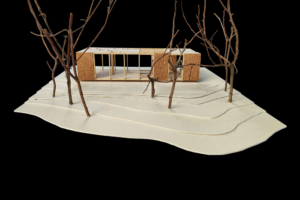
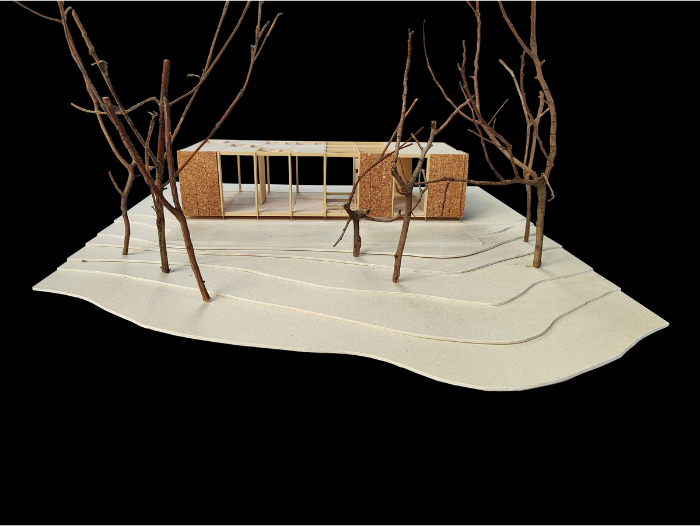
- The Casa Bosc project explores a lightweight, modular and prefabricated timber construction system designed to reduce the environmental impact of housing while making it easier to build and adapt to different contexts. The project has been developed by researchers from the Architectural Rehabilitation and Restoration Research Group (REARQ) at the Universitat Politècnica de Catalunya - BarcelonaTech (UPC) and the company ÀGORA.
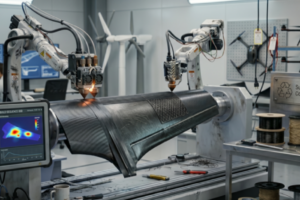
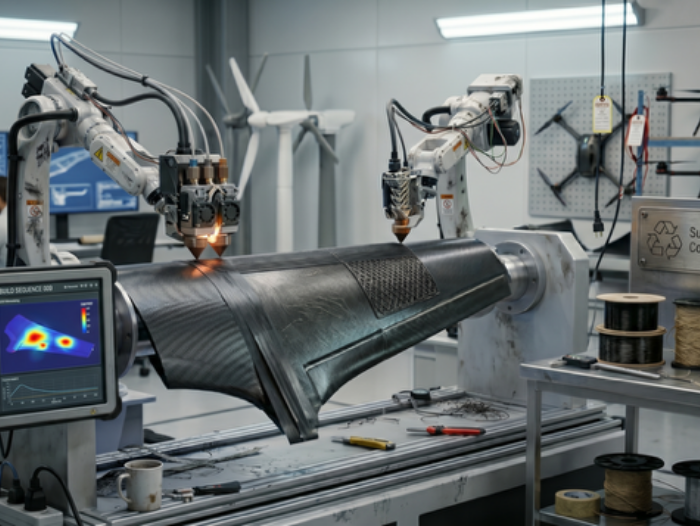
- The Control, Data and Artificial Intelligence (CoDAlab) research group at the Universitat Politècnica de Catalunya - BarcelonaTech (UPC) is taking part in the ATHENS project, which is developing recyclable thermoplastic composite materials with advanced real-time monitoring systems to improve the manufacture, safety and service life of lightweight structures.
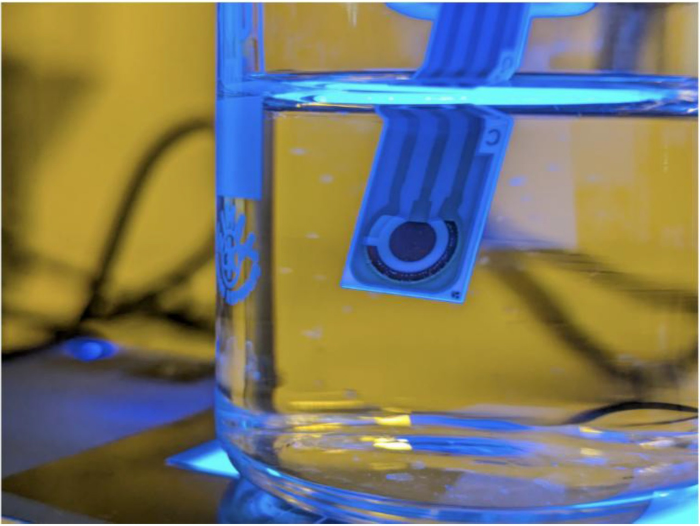
- The MICROTECH LAB - Microtechnology for the Industry research subgroup, part of the Centre for Advanced Technologies in Mechanics (CATMech) at the Universitat Politècnica de Catalunya - BarcelonaTech (UPC), is leading the technical development of a minimally invasive platform to monitor biomarkers and physiological indicators related to stress and emotional wellbeing.