

BIO-4D: 4D Printing of Biodegradable Shape Memory Polymeric Stents
November 27, 2025
CLIPE: Creating realistic and interactive virtual characters for VR/AR environments
December 16, 202501/12/2025
As part of the DigiPatICS project, eight ICS hospitals have optimised breast cancer diagnosis thanks to artificial intelligence (AI) algorithms that automate the analysis of tissue samples, enabling earlier and more accurate detection of the disease. The results and diagnoses are shared in real time across the eight centres, thereby forming the largest pathology network in Europe.
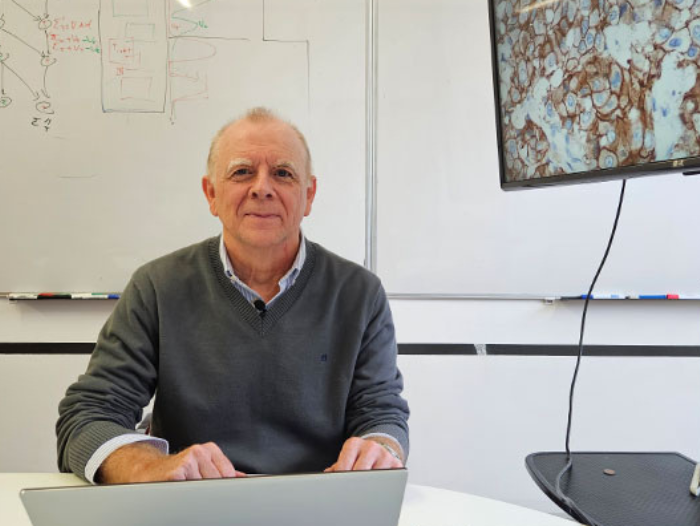
The Image and Video Processing Group (GPI) at the Universitat Politècnica de Catalunya – BarcelonaTech (UPC), from to the Intelligent Data Science and Artificial Intelligence Research Centre (IDEAI-UPC), is taking part in the DigiPatICS project, led by the Institut Català de la Salut (ICS), to improve cancer diagnosis in public hospitals in Catalonia. This is achieved through the digitalisation of histopathological samples (that is, microscopic samples of biological tissue) and the incorporation of AI tools that automate the analysis to refine the diagnosis and make it more reliable. With this system, a larger number of samples can be analysed more quickly, allowing patients to receive a more precise diagnosis sooner.
Previously, tissue samples were analysed using microscopes, a process in which pathologists manually counted a small number of cells reactive to immunohistochemical stains (a set of techniques used to detect the presence of cancer). Since 2022, when the first phase of the project — dedicated to digitalisation — began, ICS hospitals have had 24 high-precision scanners connected to 13 stations for digitising samples. This has made it possible to analyse a much greater number of cells per sample and to share both the images and the diagnoses in real time and securely with the rest of the hospitals in the network, creating a shared database of more than four million digitised images.
Based on the digitised samples, AI algorithms using deep learning automatically detect, quantify and classify the cells reactive to immunohistochemical stains. This not only speeds up the process, but also improves statistical accuracy and enables diagnoses to be reproducible — one of the objectives of DigiPatICS. Just one year after the algorithms were implemented, in 2024, 13,885 images had already been analysed, supporting the treatment of more than 4,400 patients.
The results generated by the algorithms can be viewed by more than 170 pathologists across the seven ICS hospitals that provide this service: Arnau de Vilanova University Hospital (Lleida), Bellvitge University Hospital (L’Hospitalet de Llobregat), Germans Trias i Pujol University Hospital (Badalona), Girona Doctor Josep Trueta University Hospital, Joan XXIII University Hospital (Tarragona), Vall d’Hebron University Hospital (Barcelona), and Tortosa Verge de la Cinta Hospital. The diagnoses and images are also shared with Viladecans Hospital, completing the Institute’s network. This allows the hospitals to remain connected, jointly review results, and offer remote diagnoses, thus creating one of the largest digital pathology networks in the world. At the same time, the introduction of these tools has enabled the ICS to advance in the digital transformation of this type of medical service.
Although the project initially focused on breast cancer due to its high prevalence — with estimates suggesting that one in eight women has had or will have this type of cancer — the study is now being extended to other oncological pathologies, such as lung, colon and endometrial cancer.
The DigiPatICS project received, on 19 November in Barcelona, the award of the 15th UPC Research Valorisation Prize, in the category of best technology transfer project, granted by the UPC Social Council.
Image credits: UPC, Vall d'Hebron University Hospital.



Related Projects
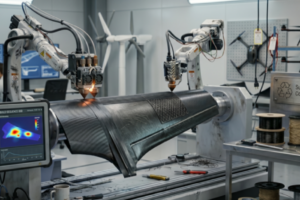
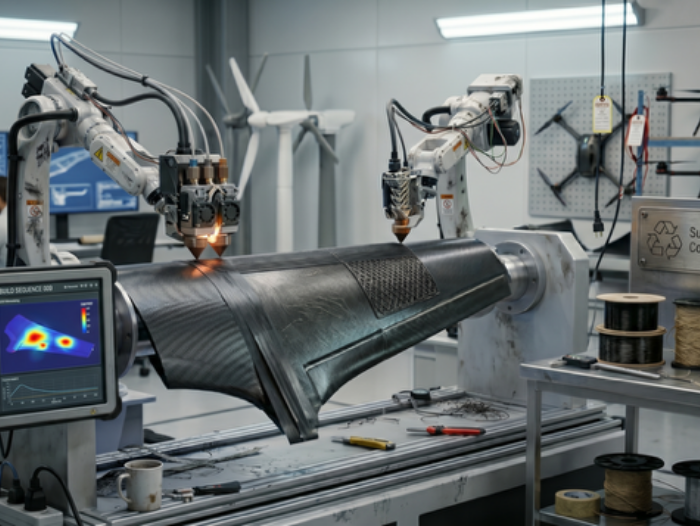
- The Control, Data and Artificial Intelligence (CoDAlab) research group at the Universitat Politècnica de Catalunya - BarcelonaTech (UPC) is taking part in the ATHENS project, which is developing recyclable thermoplastic composite materials with advanced real-time monitoring systems to improve the manufacture, safety and service life of lightweight structures.
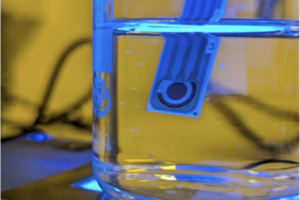
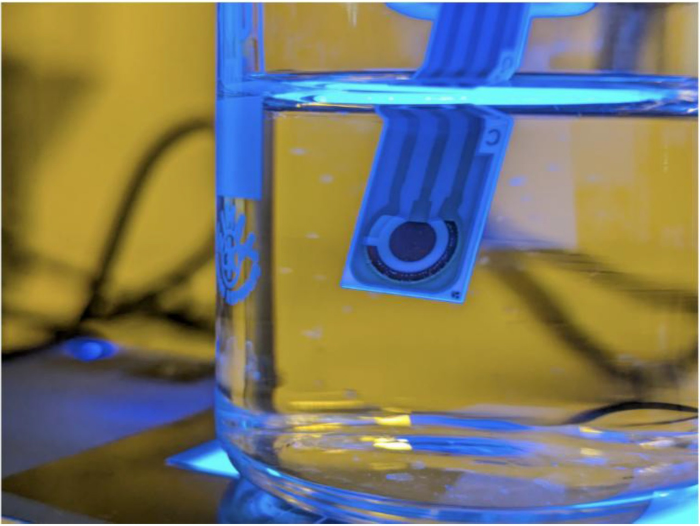
- The MICROTECH LAB - Microtechnology for the Industry research subgroup, part of the Centre for Advanced Technologies in Mechanics (CATMech) at the Universitat Politècnica de Catalunya - BarcelonaTech (UPC), is leading the technical development of a minimally invasive platform to monitor biomarkers and physiological indicators related to stress and emotional wellbeing.
- A research team from the Universitat Politècnica de Catalunya - BarcelonaTech (UPC) has participated in the M3LEC project, coordinated by the Centro de Astrobiología (CAB), a joint centre of the Spanish National Research Council (CSIC) and the Instituto Nacional de Técnica Aeroespacial (INTA), with the Universidad de Sevilla (US) / Instituto de Microelectrónica de Sevilla (IMSE) also participating. M3LEC aimed to contribute to the characterisation of the Martian atmosphere and meteorology, and to investigate new instrumentation for future planetary exploration missions.
- The Interdisciplinary Group on Building Science and Technology (GICITED) and the Energy, Catalysis, Process and Reaction Engineering (ENCORE) research group at the Universitat Politècnica de Catalunya - BarcelonaTech (UPC) are participating in the European ArchiSpace project, to develop infrastructure prototypes for human settlements in extraterrestrial environments using materials and conditions analogous to those on the Moon and Mars.