

Ciutat i Joc: A framework on game-based learning and storytelling to foster civic competences
January 14, 2026
AI applied to safety in indoor climbing
January 20, 202614/01/2025
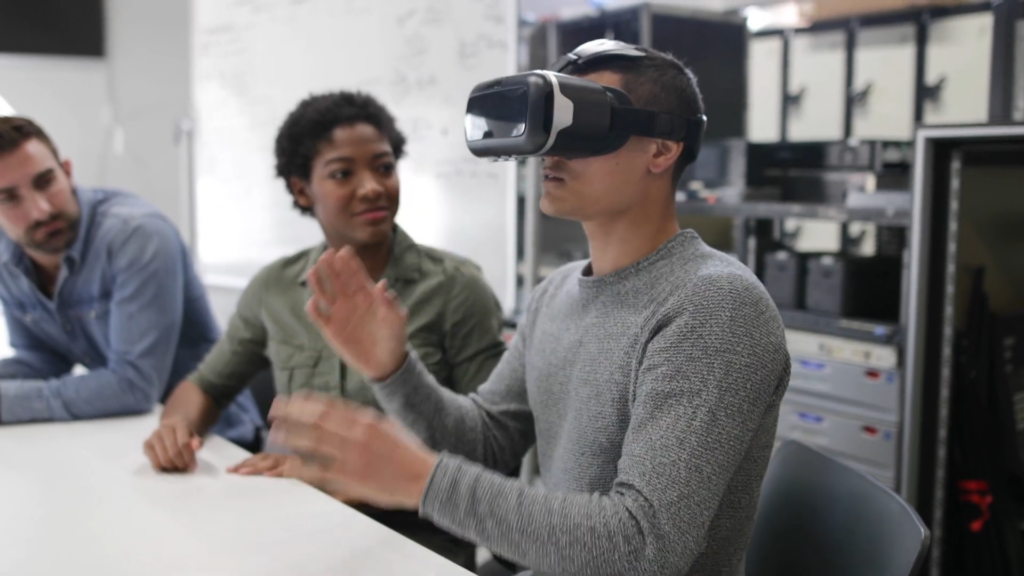
Researchers from the Centre for Image and Multimedia Technology of the UPC (CITM) and from the DiCode research group (Digital Culture and Creative Technologies Research Group) at the Universitat Politècnica de Catalunya – BarcelonaTech (UPC) have worked on the project ‘Els ulls de la història’ (The Eyes of History), an initiative of the Catalan Agency for Cultural Heritage that offers an immersive view of Catalan cultural heritage. It is especially aimed at the first and second cycles of secondary education and was created to bring heritage into the classroom. Its goal is to bring the history and monuments of Catalonia closer in a vivid and innovative way, using tools such as virtual reality and new museographic narratives.
The project pursues two main objectives:
- To make heritage more accessible and easier to understand for all audiences, especially young people and students.
- To experience history in the first person: understanding what a place was like, why it was important and what was happening at the time.
The project has been designed around learning situations created by a team of professionals specialised in pedagogy, education and the socialisation of heritage. Each situation combines several classroom sessions with immersive experiences in a virtual reality room that the project team brings to the school, with a total of between 9 and 11 sessions.
The learning situations developed are:
- Rock art site of Roca dels Moros – El Cogul (Les Garrigues)
- Charterhouse of Escaladei (Priorat)
- Romanesque complex of the Vall de Boí (Alta Ribagorça)
- Monastery of Sant Pere de Rodes (Alt Empordà)
- Castle of Miravet (Ribera d’Ebre)
The main educational advantages include:
- Immersive learning: combining storytelling, virtual reality and reflective work.
- Access to heritage from the classroom: especially useful for schools that may not be able to visit these sites in person.
- It promotes knowledge of Catalan cultural heritage in an engaging and meaningful way.
The CITM has contributed to this project with its expertise in the design of immersive interactive experiences within virtual reality environments and applied video games. Teaching staff from the field of Video Game Design and Development took part in the development of the narrative and gameplay scripts for the five experiences, drawing on heritage-related events in Catalonia from an educational perspective. The project ran from 20 June 2024 to 31 December 2025.

Related Projects
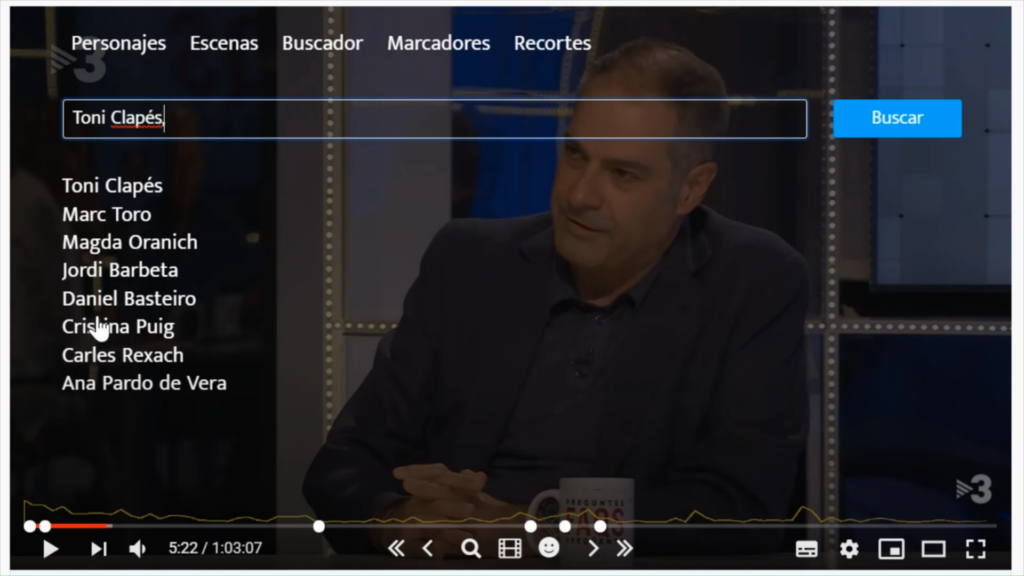
- The AgroTech research group at UPC, in collaboration with its spin-off Ugiat Technologies, has developed uPlayer, a new multimedia player concept that enables more intuitive video navigation and viewing, intelligently enhancing the user experience, especially on YouTube and other platforms, by integrating as a plugin or advanced player.
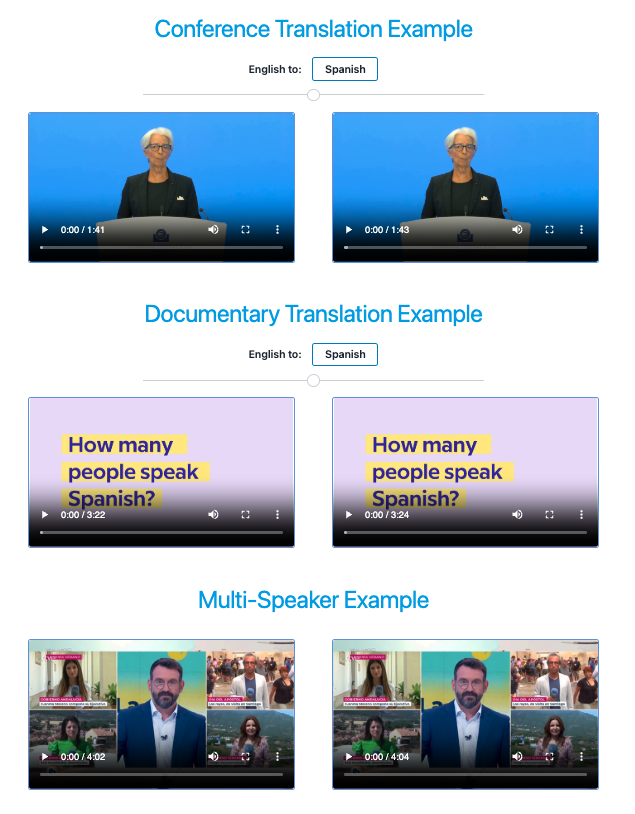
- The AgroTech research group at the Universitat Politècnica de Catalunya – BarcelonaTech (UPC), together with its spin-off Ugiat Technologies, have driven DoblAI, an AI platform that integrates transcription, translation, subtitling and video dubbing into a single workflow. The solution, which uses deep learning technology and cloned or default voice models, is specifically designed for the journalism and communications sector.
- The Image and Video Processing Group (GPI), part of the IDEAI-UPC research group, and the Digital Culture and Creative Technologies Research Group (DiCode) from the Image Processing and Multimedia Technology Center (CITM) at the Universitat Politècnica de Catalunya – BarcelonaTech (UPC), have co-organised the AI and Music Festival (S+T+ARTS) together with Sónar+D and Betevé, to explore the creative use of artificial intelligence in music.
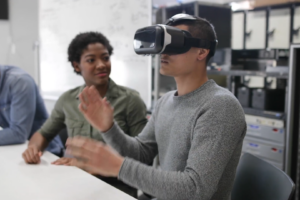
- The Visualisation, Virtual Reality and Graphic Interaction Research Group (ViRVIG) at the Universitat Politècnica de Catalunya - BarcelonaTech (UPC) has participated in the XR4ED project, an initiative that connects the educational technology (EdTech) and Extended Reality (XR) sectors, with the aim of transforming learning and training across Europe.