

6G LABNET UPC: A unique and open real-world 6G testbed
February 16, 2026
RE-STEEL: An efficient and sustainable methodology for assessing the rehabilitation of steel structures
March 19, 202617/03/2026
The project is led by a team from the Rehabilitation and Architectural Restoration (REARQ) at the Universitat Politècnica de Catalunya - BarcelonaTech (UPC), in collaboration with the Interdisciplinary Group on Building Science and Technology (GICITED), also from UPC, and CONSTRAULA.
RegBCN proposes an open and modular system that is attached to the existing building and makes it possible to improve, protect, repair, re-equip and extend its dwellings and community spaces, enhancing energy efficiency, comfort and shared spaces.
The regeneration of the existing housing stock is one of the major challenges facing European cities. In the Barcelona Metropolitan Area, a significant amount of residential buildings suffer from deficiencies in terms of energy efficiency, environmental comfort, accessibility and the quality of community spaces. In addition, many of these buildings have structural and economic limitations that make comprehensive refurbishment interventions difficult.
In this context, Regenerar Barcelona (RegBCN) emerges as a project proposing a new way of intervening in existing buildings through an efficient and adaptable infrastructure that can be integrated into the existing architecture. The aim is to improve habitability conditions while, at the same time, generating new community spaces and opportunities for use by residents.
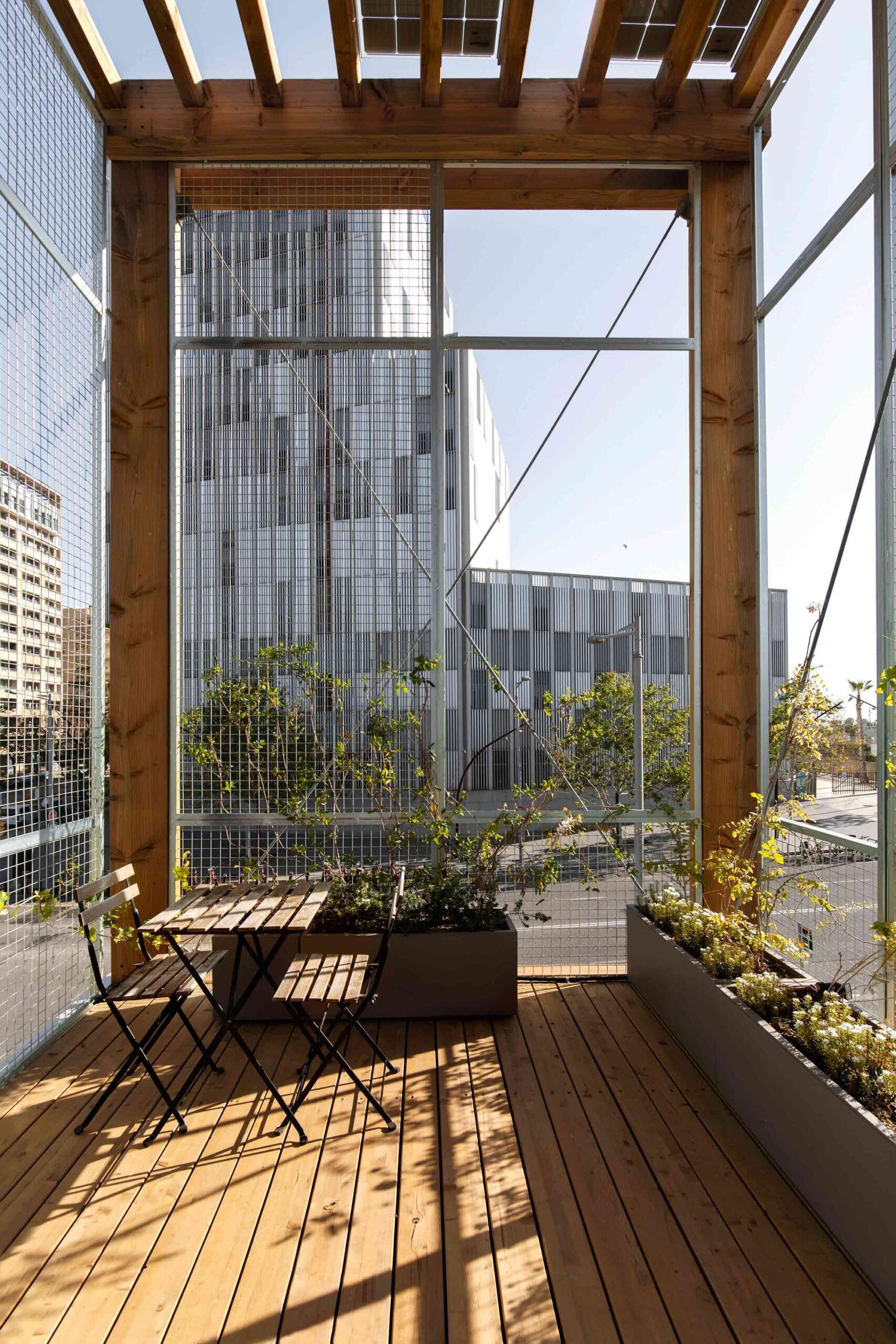
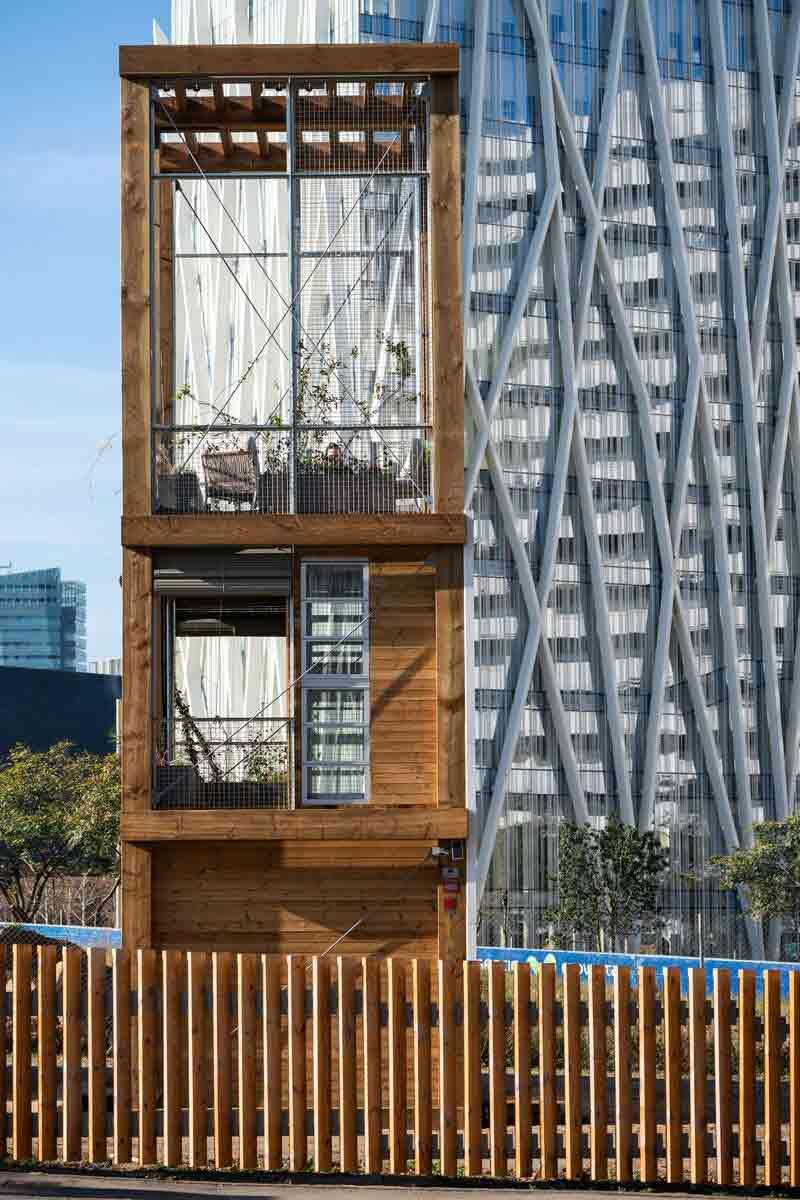
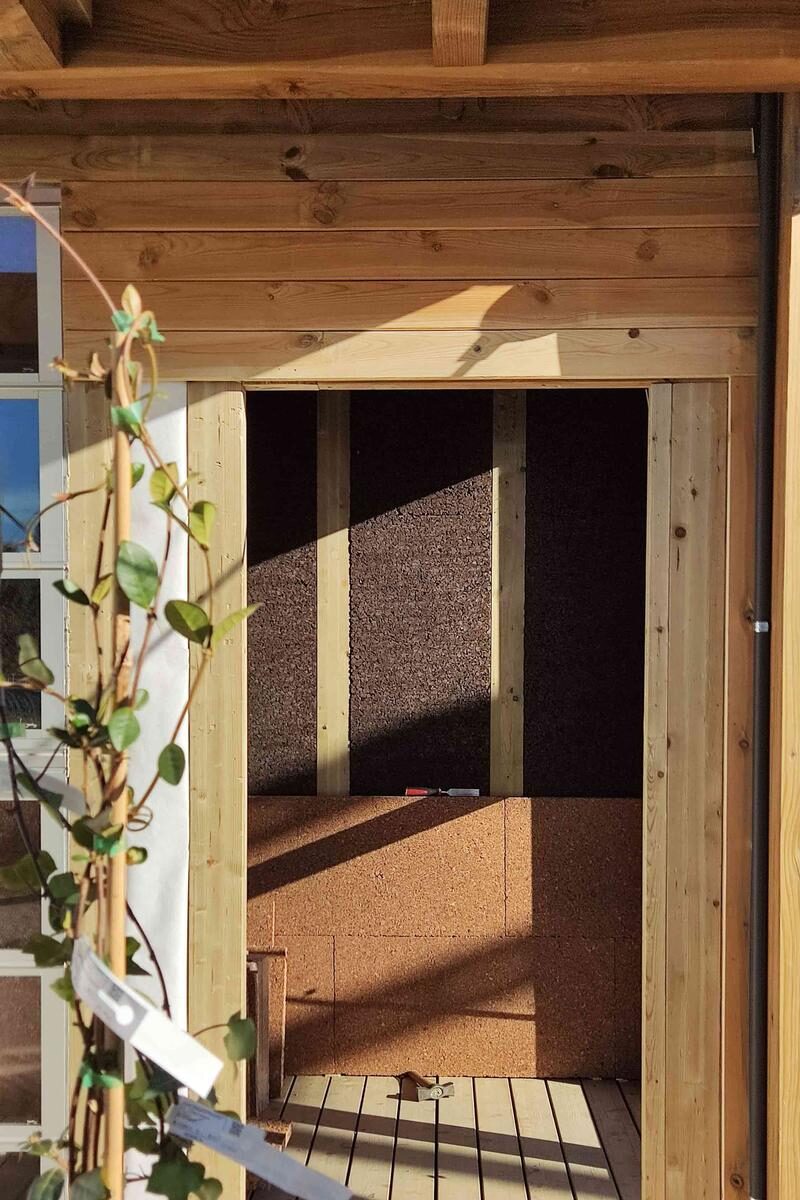
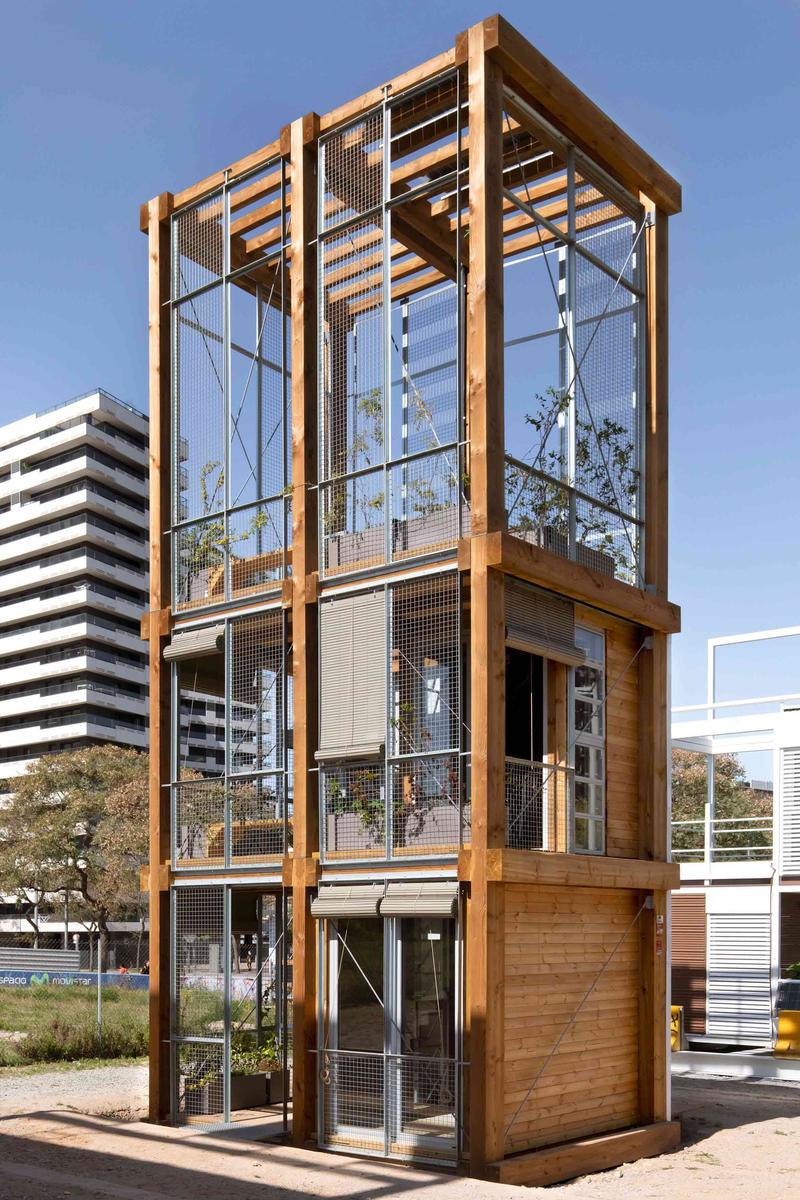
The project is based on an Open System, consisting of a support (based on a self-supporting timber structure), modular and dry-assembled, capable of accommodating diverse forms of occupation and appropriation of space, adaptable to different pre-existing situations and typologies and, in general, to a variety of needs. It is conceived as an urban infrastructure, an equipped support, which not only enables and facilitates the incorporation of extensions and activities, but also integrates systems and elements capable of improving habitability conditions, comfort and energy efficiency, and of repairing, protecting and servicing the pre-existing dwellings and residential buildings to which it is applied. At the urban scale, this modular structure also aims to enhance the environmental and spatial qualities of nearby public space and the wider urban environment.
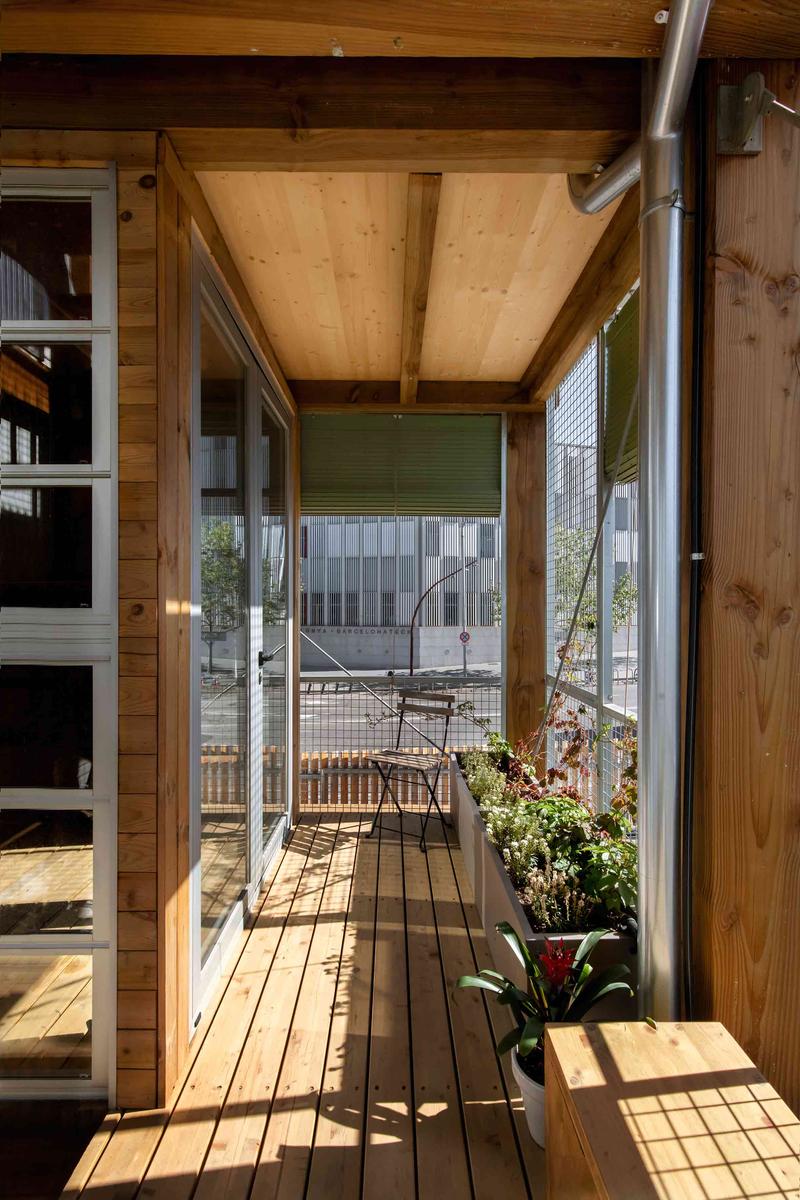
This infrastructure incorporates a bioclimatic envelope that improves energy efficiency and indoor comfort. Different “kits” or plug-in systems can be integrated into the modular structure, providing new functionalities to the building. These include volume extension systems, water collection and storage (aljibe kit), integrated vegetation (vegetation kit), solar energy generation through photovoltaic panels (photovoltaic kit), and smart building monitoring solutions.
The modular and demountable nature of the components allows the solution to be adapted to different building typologies and to the evolving expansion needs of the resident community (community spaces, exterior and interior spaces, private spaces). It also promotes the reuse of construction elements and facilitates replication in other urban contexts.
One of the aims of the project is to generate an environmental and social micro-ecosystem around the refurbished buildings. The new exterior and community spaces can accommodate multiple uses and encourage coexistence, while the environmental systems contribute to improving the climatic quality of the surroundings and increasing urban biodiversity.
Impact
Once built, the ecological infrastructure will provide benefits at small and medium scales for the resident community, the neighbourhood, biodiversity and the urban quality of the context in which it is inserted.
The REARQ and GICITED teams at UPC have developed the architectural and technological concept of the modular system, as well as the definition of the different functional kits and their integration into an adaptable infrastructure. The environmental, energy and social impact of the system has also been analysed, with the aim of ensuring its replicability and applicability in different contexts and urban situations within the Barcelona Metropolitan Area, as well as in other similar urban environments at a territorial scale.
The project has been recognised with the Catalunya Construction Award 2024 in the Innovation in Construction category and an award in the ‘Works’ category at the 17th Spanish Biennial of Architecture and Urbanism, ‘Common Flows: Responses to a Hyperconnected Territory’. It was also a finalist in the 13th Ibero-American Biennial of Architecture and Urbanism ‘CLIMAS’ (Works category), and in the World Smart City Awards (Infrastructure and Buildings category). Between May and November 2025, it was exhibited in the international pavilion of the Biennale Architettura 2025: ‘Intelligens. Natural. Artificial. Collective’, curated by Carlo Ratti. These recognitions highlight its transformative potential in the field of urban regeneration.
Budget and Funding
RegBCN has been funded by Barcelona City Council, following its award in the Urban Challenge call for the regeneration of residential buildings with innovative and sustainable systems, promoted by the BIT HABITAT Foundation, the Municipal Institute of Urbanism and the Urban Planning Department, with a total budget of €187,500. The project was developed between October 2022 and May 2025.
Sector
You want to know more?
Related Projects
- The project is led by a team from the Rehabilitation and Architectural Restoration (REARQ) at the Universitat Politècnica de Catalunya - BarcelonaTech (UPC), in collaboration with the Interdisciplinary Group on Building Science and Technology (GICITED), also from UPC, and CONSTRAULA.
- The La Volta project foresees the construction of a large Catalan vault pergola within the Llars Mundet campus, in the Montbau neighbourhood (Horta-Guinardó district). This structure will become a new architectural landmark for Barcelona, combining traditional construction techniques with contemporary innovation. The project involves the Rehabilitation and Architectural Restoration Research Group (REARQ), at the Universitat Politècnica de Catalunya - BarcelonaTech (UPC), and is led by the Architects’ Association of Catalonia (COAC) and the Barcelona Provincial Council.
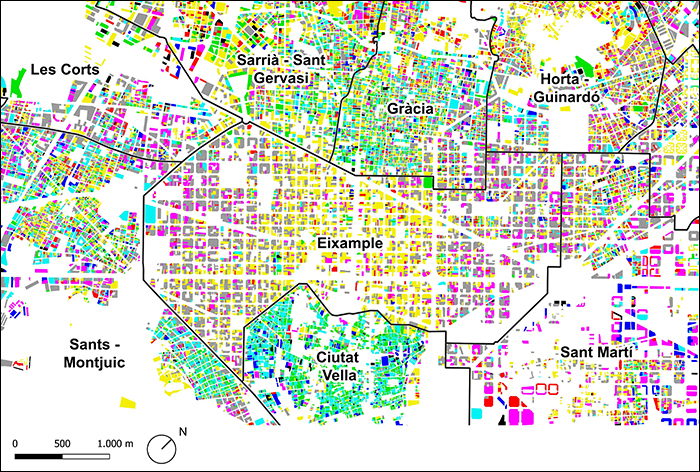
- The Architecture, Energy and Environment (AiEM) research group at the Universitat Politècnica de Catalunya - BarcelonaTech (UPC) has characterised Barcelona’s residential buildings according to their capacity to adapt to climate change. This study is part of the project ‘VeUvE: Urban havens for vulnerable zones’. The work highlights the climate inequality conditions present across different areas of the city and will help to better define the priorities and energy renovation strategies for its districts.
- The Research Center for Supervision, Safety and Automatic Control (CS2AC-UPC) at the Universitat Politècnica de Catalunya - BarcelonaTech (UPC) has coordinated the SaCoAV project, focused on researching new methods and tools to ensure the safe coordination of autonomous vehicles in urban environments.