


The UPC takes part in Equiplast 2026 with the Clúster MAV
May 4, 2026
CIT UPC takes part in the 2nd General Assembly of DISCOVER in Lisbon
July 15, 2026The UPC takes part in Equiplast 2026 with the Clúster MAV
May 4, 2026CIT UPC takes part in the 2nd General Assembly of DISCOVER in Lisbon
July 15, 202618/05/2026
The Fractus-UPC Deep Tech Hub model exemplifies how a long-term strategic collaboration between Fractus and the Universitat Politècnica de Catalunya - BarcelonaTech (UPC) can generate impact across the business ecosystem, talent development and technological innovation.
This model is the central theme of a new episode in the audiovisual series SME Voices – Driving Digital Innovation, promoted within the framework of the European MERIT project (Master of Science in Smart, Secure, Interconnected Systems), co-funded by the European Union under the Digital Europe Programme (GA 101083531). In the interview, conducted by the UPC Technology Center, CIT UPC, Rubén Bonet, Co-Founder & Executive Chairman at Fractus, reflects on the relationship between business and academia, the skills required by technology companies and the potential of collaboration to bring together academia, industry and society. The MERIT project has led to the creation of five master’s study programmes, one of which is taught at the UPC-EPSEM in Manresa, Spain.These programmes aim to connect academia with industry and promote digital transformation and advanced technological skills in Europe, particularly among SMEs.
In the interview, Rubén Bonet highlights that technology companies need engineers, scientists and digital specialists, but also professionals capable of understanding markets, strategy, collaboration and innovation in order to turn knowledge into tangible results. The conversation also addresses some of the main current challenges facing the technology sector, such as the gap between academic training and industry needs, the pace at which universities adapt to constant market changes, and the growing importance of advanced digital skills, including artificial intelligence (AI), data, cybersecurity and transversal skills.
Founded as a spin-off of the UPC, Fractus is one of the pioneering companies in the development of antenna technology for smartphones, tablets and other wireless Internet of Things (IoT) devices. The company has an intellectual property portfolio covering more than 40 inventions, protected through more than 120 patents and patent applications in the United States, Europe and Asia, and promotes initiatives that bring together academia and business.
CIT UPC and the MERIT project
CIT UPC participates in the MERIT project as a consortium partner and contributes to promoting advanced digital skills in Europe, especially among small and medium-sized enterprises.
As a centre dedicated to the transfer of technology developed at the UPC, CIT UPC acts as a bridge between university research and SMEs. Its role is to identify the technological needs of companies and connect them with the University’s research groups and capabilities, with the aim of providing tailored innovation solutions and supporting digital transformation.
The MERIT project brings together an international consortium: UPC, the project coordinator through UPC Manresa - EPSEM, Asoindel, CIT UPC, Digital Innovation Zone EDIH (DIZ), Exacaster, Fondazione Bruno Kessler (FBK), Riga Technical University (RTU) - Riga Business School (RBS), Sunrise Tech Park, Tallinn University of Technology (TALTECH) and Vilnius Gediminas Technical University (VILNIUS TECH).
More information about the MERIT project: https://digitalmerit.eu/.
More information about the Fractus-UPC Deep Tech Hub model, here.
Related Projects
- The Research Group in Smart and Sustainable Resources and Industries (RIIS) at the Universitat Politècnica de Catalunya - BarcelonaTech (UPC) is developing the ZeroCarbonPave project, which aims to assess the feasibility of incorporating biochar as filler and/or as the fine fraction of granular material in bituminous mixtures, with the objective of reducing the carbon footprint associated with the manufacture and laying of road pavements.
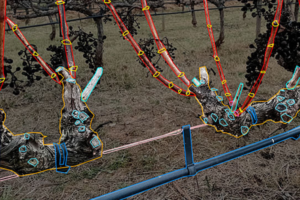
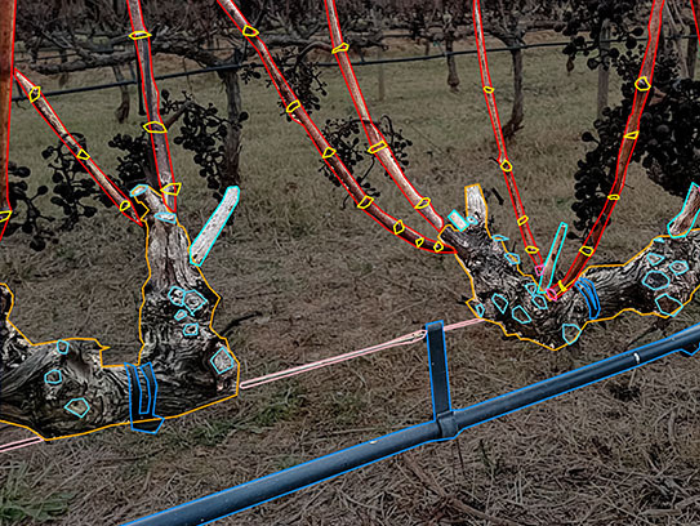
- The Center for Industrial Equipment Design (CDEI-UPC) at the Universitat Politècnica de Catalunya - BarcelonaTech (UPC) is participating in a cross-border project aimed at promoting the use of advanced digital technologies in viticulture in regions on both sides of the Pyrenees. The initiative seeks to improve specialist training, technical advice and decision-making in vineyard management.
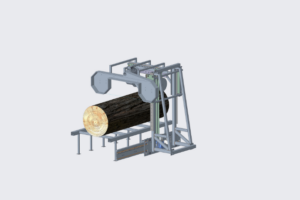
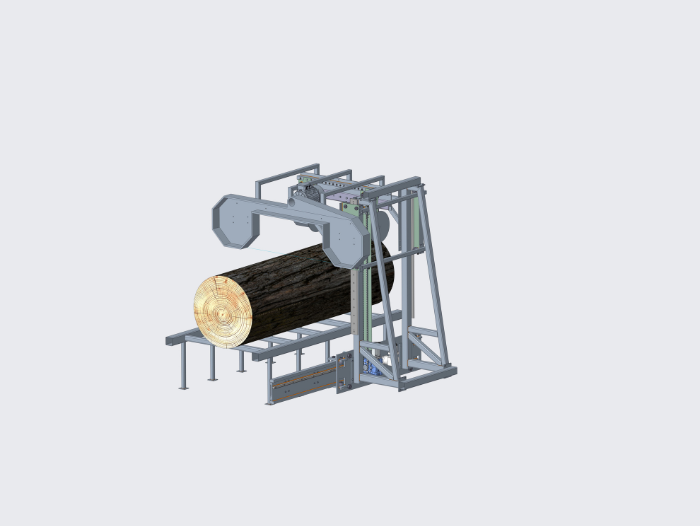
- The Centre for Industrial Equipment Design (CDEI) at the Universitat Politècnica de Catalunya - BarcelonaTech (UPC), together with the IRI, Institut de Robòtica i Informàtica Industrial (CSIC-UPC), is participating in the development of a pre-commercial prototype of an automatic portable sawmill that integrates computer vision, artificial intelligence and computer numerical control to improve productivity, efficiency and safety in local wood processing for the company Envall Coop. S.L.
STOR-HY: More flexible, efficient and resilient hydropower storage for the European electricity grid
The Center for Industrial Diagnostics (CDIF) at the Universitat Politècnica de Catalunya - BarcelonaTech (UPC) coordinates the European STOR-HY project, which develops digital tools, monitoring systems and advanced models to optimise the operation of pumped-storage hydropower plants and reduce their investment and maintenance costs.