


EcoPolyRub: Sustainable Rubber Materials from wastes for solid-state cooling
May 28, 2026
The UPC’s CD6 completes construction of a pioneering optical system for the world’s largest telescope
June 4, 202602/06/2026
A joint UPC research team, integrated by the CommSensLab-UPC, and the ICM-CSIC, is participating in the EO4TIP project, which is developing new Earth observation methodologies to detect tipping points and sudden changes at local and regional scale on Earth using high-resolution satellite data.
Our planet exhibits behaviour that challenges the expectation of smooth, predictable and reversible change with the reality of sudden, unexpected and potentially irreversible changes caused by climate variations, anthropogenic pressures and degradation processes. Tipping points (TPs) and abrupt changes in the Earth system are possibly the most significant risk in a transforming world, as they threaten the environment, society and the economy. Identifying, monitoring and analysing these phenomena is crucial for driving adaptation and mitigation strategies.
In this context, the EO4TIP project (Earth Observation in a changing world threatened by Tipping Points) has emerged. It aims to move towards a new Earth Observation (EO) paradigm called Remote Sensing v3.0. The project develops methodologies to detect, monitor and analyse tipping points and abrupt changes using past, current and future satellite missions, and lays the foundations for a monitoring system that is especially useful at local and regional scale. It also promotes new instrumental concepts to improve spatial monitoring and raises awareness of the importance of this type of monitoring among the scientific community, stakeholders and society.
The contribution of the Universitat Politècnica de Catalunya - BarcelonaTech (UPC) team focuses on exploiting high-resolution Earth Observation data, especially synthetic aperture radar (SAR), and applying it to terrestrial environments. SAR is an active remote sensing technology that generates images of the Earth’s surface using radio waves emitted from satellites or aircraft. Unlike optical sensors, SAR can operate day and night and in any weather conditions, providing relevant information on the physical properties of the terrain. These capabilities make it possible to analyse rapid change dynamics in the terrestrial component of the Earth system, such as soil moisture, crop condition, deforestation, ecosystem degradation, floods, fires, landslides and ground deformation. It is also useful in marine applications, such as monitoring waves, sea ice and ocean winds.
Within the project, the UPC will work to make better use of SAR’s multi-scale capacity, which remains underused in many areas, and to combine it with L-band radiometry. This passive remote sensing technique measures the natural microwave radiation emitted by the Earth’s surface in a given frequency band, and is particularly suitable for estimating variables that other sensors find more difficult to capture, such as soil moisture, vegetation water content and sea-surface salinity.
The integration of SAR data and L-band radiometry should enable more robust estimates of terrestrial variables and improve the monitoring of complex environmental processes. This opens up new opportunities in areas such as natural risk analysis, the detection of ecological degradation processes and the study of interactions between soil, vegetation and territory.
In parallel, the UPC will also explore the relationship between the Total Electron Content of the ionosphere derived from SMOS and seismic activity, with the aim of advancing new concepts for observing and anticipating abrupt phenomena.
This line of work builds on a well-established history of collaboration between the Spanish National Research Council (CSIC) and the UPC within the Barcelona Expert Center, which began around the SMOS mission. This joint experience has made it possible to evolve from fundamental products, such as sea-surface salinity and soil moisture, towards higher added-value products such as sea-ice concentration, the fire-risk index and ocean vector winds.
Budget and Funding
EO4TIP is a competitive project funded by the Spanish State Research Agency, within the framework of the 2021-2023 State Plan for Scientific, Technical and Innovation Research, under the State Programme to Promote Scientific and Technical Research and its Transfer and the State Subprogramme for Knowledge Generation (PID2023-149659OB-C22). The project is being carried out in consortium with the Spanish National Research Council (CSIC), through the Institut de Ciències del Mar (ICM-CSIC), with a joint budget of €414,000. It will run for 3 years (September 2024 - December 2027).

Proyectos Relacionados
- A team from the Matrix Analysis and Discrete Potential Theory (MAPTHE) research group at the Universitat Politècnica de Catalunya - BarcelonaTech (UPC), and the Department of Mathematics at CUNEF Universidad in Madrid, have participated in the development of MARIA, a prototype of a portable, flexible and radiation-free device designed to improve the early detection of breast cancer. The device can identify tumours through electrical conductivity, with the aim of enabling its future use in primary care settings.
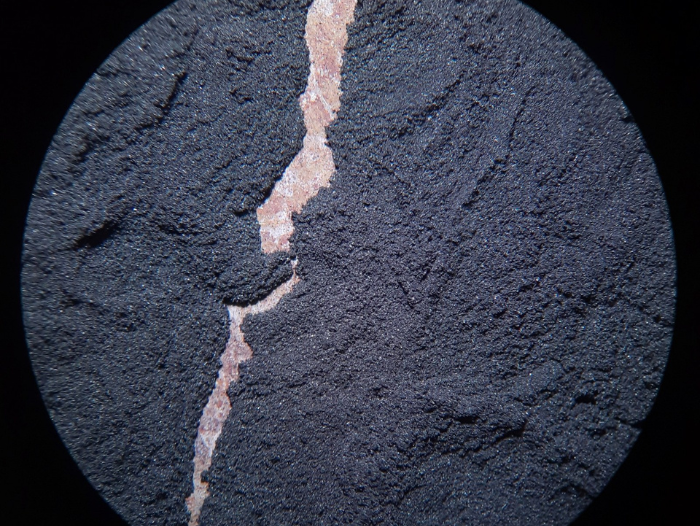
- The Research Group in Smart and Sustainable Resources and Industries (RIIS) at the Universitat Politècnica de Catalunya - BarcelonaTech (UPC) is developing the ZeroCarbonPave project, which aims to assess the feasibility of incorporating biochar as filler and/or as the fine fraction of granular material in bituminous mixtures, with the objective of reducing the carbon footprint associated with the manufacture and laying of road pavements.
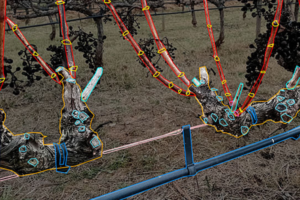
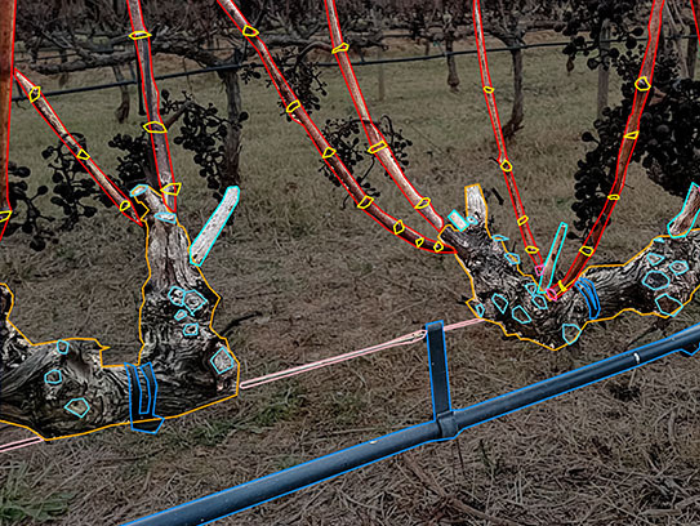
- The Center for Industrial Equipment Design (CDEI-UPC) at the Universitat Politècnica de Catalunya - BarcelonaTech (UPC) is participating in a cross-border project aimed at promoting the use of advanced digital technologies in viticulture in regions on both sides of the Pyrenees. The initiative seeks to improve specialist training, technical advice and decision-making in vineyard management.
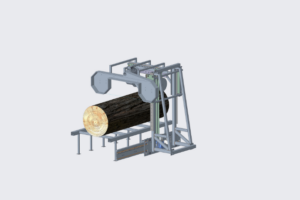
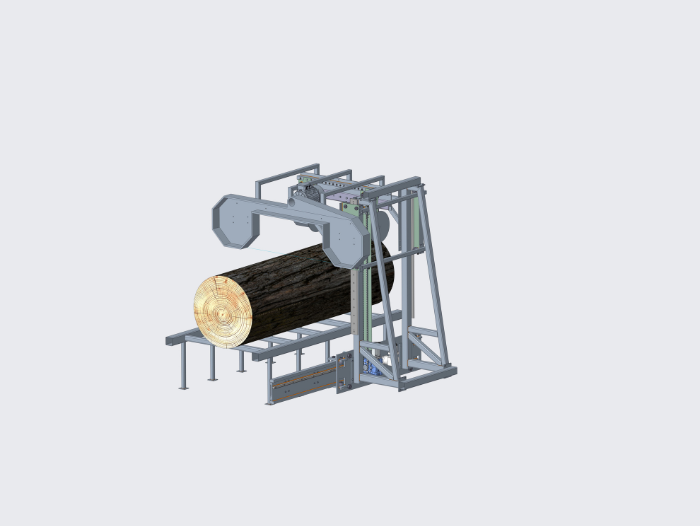
- The Centre for Industrial Equipment Design (CDEI) at the Universitat Politècnica de Catalunya - BarcelonaTech (UPC), together with the IRI, Institut de Robòtica i Informàtica Industrial (CSIC-UPC), is participating in the development of a pre-commercial prototype of an automatic portable sawmill that integrates computer vision, artificial intelligence and computer numerical control to improve productivity, efficiency and safety in local wood processing for the company Envall Coop. S.L.