

Research in this area focuses on materials for hard tissue replacement and generally engaged in an eminently structural function. These tasks include both mechanical characterization, microstructural and chemical fabrics and materials and the development of new materials and bioactive surfaces.
Development of biomaterials for tissue and organs regeneration/functional repair. It requires the design of materials able to modulate the response of the desired tissue leading, in some cases, to the regeneration and formation of the degraded tissues, or to the perfect integration of the biomaterial and the recovery of the lost functionality.
- Injectable calcium phosphates for bone replacement and regeneration
- Metallurgy and coatings
- Shape memory alloys (low elastic modulus alloys for the manufacture of implants and prostheses)
- New biomaterials from biodegradable compounds for bone regeneration
- Bioactive surfaces on titanium and its alloys
- Cell bioengineering
- Cell cultures
- Biodegradable scaffolds
- Surface characterization
RELATED PROJECTS
- A research team from the UPC, in collaboration with the company B. Braun Surgical, has created a ceramic and biocompatible catalyst that captures greenhouse gases and transforms them into useful chemical products in a more sustainable way and at a lower cost than current technologies. The technology has successfully passed the pilot phase through joint projects with companies from different sectors.
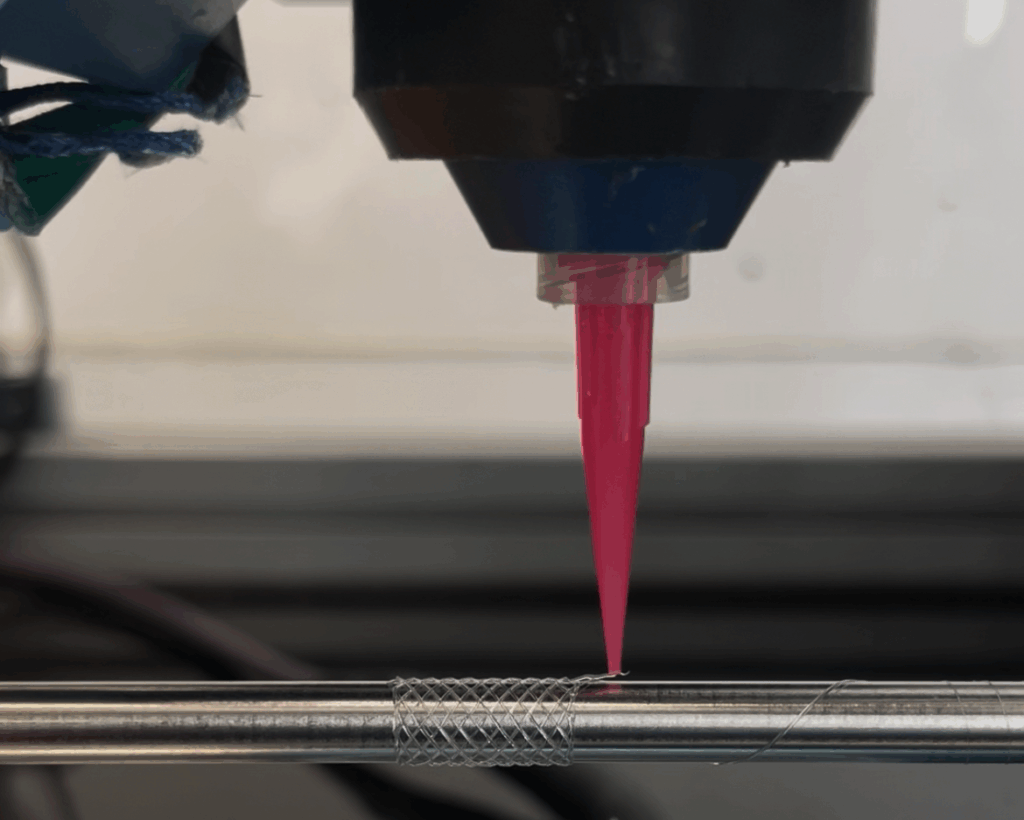
- The research groups in Biomaterials, Biomechanics and Tissue Engineering (BBT) and the Barcelona Research Center in Multiscale Science and Engineering (CCEM) at the Universitat Politècnica de Catalunya – BarcelonaTech (UPC) have developed biodegradable shape-memory stents for pediatric patients with aortic coarctation.
- A team from the Bioinspired Oral Biomaterials and Interfaces (BOBI) research group at the Department of Materials Science and Engineering (CEM) of the Universitat Politècnica de Catalunya - BarcelonaTech (UPC) is taking part in the European project HYDROHEAL, which explores how to transform bone fracture treatment using smart and advanced biomaterials, aiming to reduce the risk of infection and implant rejection, as well as shortening fracture recovery times.
- The Resource Recovery and Environmental Management (R2EM) of the Center for Research in Multiscale Science and Engineering (CCEM) at the Universitat Politècnica de Catalunya - BarcelonaTech (UPC) is leading the HARMONIZE project, which focuses on the recovery and valorisation of ammonia from urban and industrial waste streams. The project is part of a larger initiative, MemTecWare, coordinated by the UCM.