

TECHNOLOGICAL CAPABILITIES

OCEAN ENERGY
- Tidal power, wave power, offshore wind power, ocean thermal energy conversion, energy form currents and blue energy or salinity gradient energy.

MARITIME TRANSPORT
- Energy saving, reduction of contamination and improvement in management of energy quality and emissions.

PORT ACTIVITIES
- Studies of the traffic of boats in ports and air quality, using data from the automatic identification system (AIS) during manoeuvres.
- Production and maintenance of shipyards.

MARINE LIVING RESOURCES
- Prediction of hydro-morphodynamic and ecological evolution.
- Management of coastal bays.
- Monitoring of estuaries.
- Use of meteo-oceanographic conditions.
- Automatic learning. Modelling and display of marine agriculture data.
- Integrated multi-trophic aquaculture (MTA) techniques.
- Analysis and effect of meteorological and seasonal variables on the breeding system.
- Systematic studies of localization and monitoring of marine species to understand their behaviour.
- Measure of surface circulation forced by waves breaking. Monitoring habitat degradation.

INFRASTRUCTURE
- Addressing the negative impact of coastal construction on biodiversity.
- Reduction of the acoustic impact and vibrations from these constructions.
- Establishment of standards for terminology and methodology.
- Control of wind turbines and electricity substations and numerical modelling to take advantage of wave energy.

THE BLUE BIOECONOMY & BIOTECHNOLOGY
- Studies of natural pressures on the sea and those derived from humans.
- Development of a European system for ocean observation.
- Estimations of the amount of plastic floating on the surface of the ocean.
- Comprehensive modelling to trace the movement of plastic over the ocean.

SHIPBUILDING AND REPAIR
- Manufacture of vessels. Efficient, digitalized, automated and modular production of boats.
- Integration of the industrial internet of things (IIoT).

MARINE NON-LIVING RESOURCES
- Supply of critical raw materials.
- Improvement in underwater capture equipment (collectors).
- Seawater processing techniques and desalination.

COASTAL TOURISM
- Improvement in coverage in time and space, and in the resolution and quality of marine observations.
- Water management with innovative systems to manage reserves and the planning of trips.
RELATED PROJECTS
- The research group IMEM-BRT of the UPC leads the TherGel project, which aim is to combine the properties of both materials in a conductive polymer hydrogel that could be used in water evaporation systems, as filtration membranes and as solid-state electrolytes that are active in electrochemical cells of capacitive deionisation of salt water.
- Participants in the HybridNeuro project include researchers from the group BIOART, which is part of the CREB of the UPC. The project is designed to establish a new way of analysing the motor system and human musculoskeletal movements, and the transfer of academic research to clinical practice and industry.
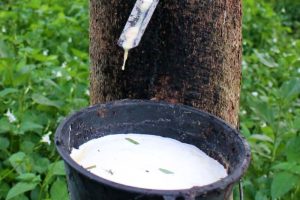
- The research group Plastics and Ecological Composites (e-PLASCOM) of the Universitat Politècnica de Catalunya - BarcelonaTech (UPC), and the Catalan Plastics Center (CCP), work in a project that aims to design ad hoc natural rubber-based composites, with specific compositions and geometries, to be optimally integrated into both EC and BC technologies at prototype level.
- The research group Eco-friendly Plastics and Composites (e-PLASCOM) at the Universitat Politècnica Catalunya - BarcelonaTech (UPC) is participating in the European Advanced Engineering and Research of aeroGels for Environment and Life Sciences (AERoGELS) project. This project is designed to bring together the knowledge of academic, industrial and regulatory experts on the research and technology of aerogels at European scale.