

A pioneering open-source platform for the new generation of cloud applications
May 2, 2023
The number of summer days has increased from 90 to 145, in the last 50 years, according to a UPC study
May 12, 202304/05/2023
Currently, concerns about sustainability are increasing in the construction sector, due to its contribution to climate change. Approximately a third of carbon dioxide emissions are produced by this sector in the construction phase and in the functioning of buildings.
Another environment challenge is the abundance of waste produced by agriculture, industrial processes and products that reach the end of their useful life. One path towards greater sustainability is to recover this waste for its use as raw materials.
Consequently, it is of great interest to use more sustainable construction materials and reduce the amount of cement that is required. To this requirement we can add the increasing demand for durability, performance, sustainability and safety of these materials. In this context, the project RECYBUILDMAT is developed with the participation of the Textile Technology Research Group (TECTEX), of the Institute of Textile Research and Industrial Cooperation of Terrassa (INTEXTER), at the Universitat Politècnica de Catalunya - BarcelonaTech (UPC).
The main aim of the project is to develop new sustainable construction materials based on cement or lime mixed with nanosilica, produced from byproducts of maize or rice agriculture, reinforced using nonwoven fabric made from textile waste fibres. These materials could be applied in multifunctional panels of ventilated façades, floating flooring and panels for roofs, and as reinforcement of structures made from brick and stone when old and historical buildings are renovated.
As part of RECYBUILDMAT, the use of fibres and additives recovered from textile and agricultural waste in construction products will reduce the environmental problems associated with the accumulation of waste, generate more sustainable construction materials and advance towards the circular economy.
In addition, the project will enable progress in knowledge on the recovery of raw materials from waste, and on the combination of these fibres and additives with cement- or lime-based materials to produce construction products for various applications. In addition, the results will help to develop new sustainable construction materials that will contribute to improving the energy efficiency of buildings and cutting the emissions generated by the construction sector.
Budget and funding
The project has obtained funding from the Ministry of Science and Innovation as part of the Spanish ‘State Plan for Scientific and Technical Research and Innovation 2017–2020’. It has a budget of €248,050. RECYBUILDMAT will last four years (June 2020 – May 2024)
Technology
Topic
You want to know more?
Related Projects
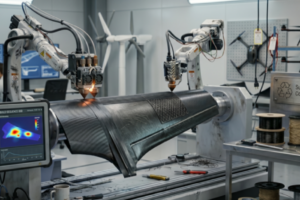
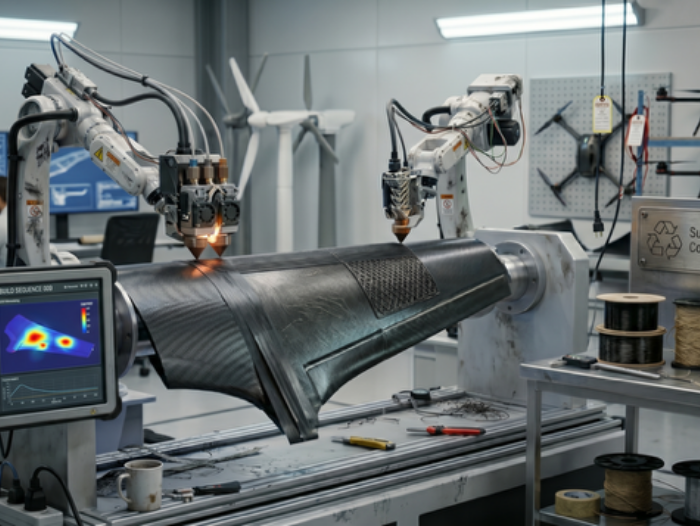
- The Control, Data and Artificial Intelligence (CoDAlab) research group at the Universitat Politècnica de Catalunya - BarcelonaTech (UPC) is taking part in the ATHENS project, which is developing recyclable thermoplastic composite materials with advanced real-time monitoring systems to improve the manufacture, safety and service life of lightweight structures.
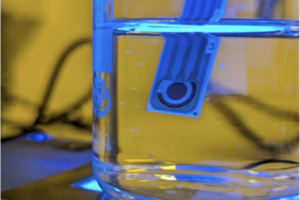
- The MICROTECH LAB - Microtechnology for the Industry research subgroup, part of the Centre for Advanced Technologies in Mechanics (CATMech) at the Universitat Politècnica de Catalunya - BarcelonaTech (UPC), is leading the technical development of a minimally invasive platform to monitor biomarkers and physiological indicators related to stress and emotional wellbeing.
- A research team from the Universitat Politècnica de Catalunya - BarcelonaTech (UPC) has participated in the M3LEC project, coordinated by the Centro de Astrobiología (CAB), a joint centre of the Spanish National Research Council (CSIC) and the Instituto Nacional de Técnica Aeroespacial (INTA), with the Universidad de Sevilla (US) / Instituto de Microelectrónica de Sevilla (IMSE) also participating. M3LEC aimed to contribute to the characterisation of the Martian atmosphere and meteorology, and to investigate new instrumentation for future planetary exploration missions.
- The Interdisciplinary Group on Building Science and Technology (GICITED) and the Energy, Catalysis, Process and Reaction Engineering (ENCORE) research group at the Universitat Politècnica de Catalunya - BarcelonaTech (UPC) are participating in the European ArchiSpace project, to develop infrastructure prototypes for human settlements in extraterrestrial environments using materials and conditions analogous to those on the Moon and Mars.