


TECHNOLOGICAL CAPABILITIES

ADVANCED CONNECTIVITY AND 6G
- Management with generative AI. Autonomous network orchestration through large-scale language models (LLMs) and intent-based networks.
- Deterministic networks. Design of multi-agent control planes based on AI to guarantee communications with near-zero latency and Ultra-High Reliability in geographically distributed networks.
- Fibre-Radio convergence: development of infrastructures integrating programmable optical fronthaul and wireless access in millimetre bands (FR2, 26 GHz) for connected mobility.
- Open infrastructures. Laboratories and testbeds based on open architectures (O-RAN) and open-source software.
- Multi-element antennas with technology based on beamforming.
- Management of interference in communications and in information processing.
- Signal protocol models to improve the efficiency of handover mechanisms through software-defined networks (SDN).
- Graphene and wireless microantennas that can operate in the terahertz band.

ARTIFICIAL INTELLIGENCE OF THINGS (AIoT) AND DISTRIBUTED CONNECTIVITY
- Aerial and Non-Terrestrial IoT (NTN). Use of drones (UAVs) as flying base stations and intelligent relays to integrate the Internet of Everything into cellular and satellite networks.
- Marine and underwater IoT. Development of autonomous underwater node networks with bidirectional acoustic communication and embedded AI for environmental monitoring.
- Data improvement in IoT. Machine learning to optimise data quality in low-cost sensor networks, improving measurement accuracy.
- IoT mesh networks with low-power radios.
- Data modulation of Wi-Fi devices for communications with non-WiFi devices.

SECURITY AND NETWORK RESILIENCE
- Design of advanced, modular and open security systems in multi-domain environments within 6G ecosystems.
- Cybersecurity in the cloud continuum environment.
- Proactive security strategies supported by digital twins.
- Algorithms for the detection of cyber-physical attacks.
- Intrusion Detection Systems (IDS) and Intrusion Prevention Systems (IPS).
- More efficient and secure hardware-based security systems for memory devices (memristors).

ENERGY EFFICIENCY
- Algorithms for energy optimisation in 5G networks.
- Low-cost radiofrequency links with low energy consumption.
- Faster processors with reduced energy consumption for artificial intelligence and autonomous learning.
- Systems for evaluating and improving energy efficiency and performance associated with AI.

INTELLIGENT COMPUTING AND COGNITIVE SYSTEMS
- Cloud/Edge/Fog Continuum: management of computational resources from the device (edge) to the cloud to reduce latency.
- Automated Regulatory Compliance: AI-based frameworks for regulatory compliance and digital certification (Compliance Digital Passport) in regulated data spaces.
- Efficient processors for intelligent computing systems capable of carrying out cognitive functions.
- Advanced management and control systems for 5G networks.
- Optimisation of massive communications with multiple inputs and multiple outputs (MIMO).
- Autonomous adaptation in wireless networks.
SATELLITE COMMUNICATIONS
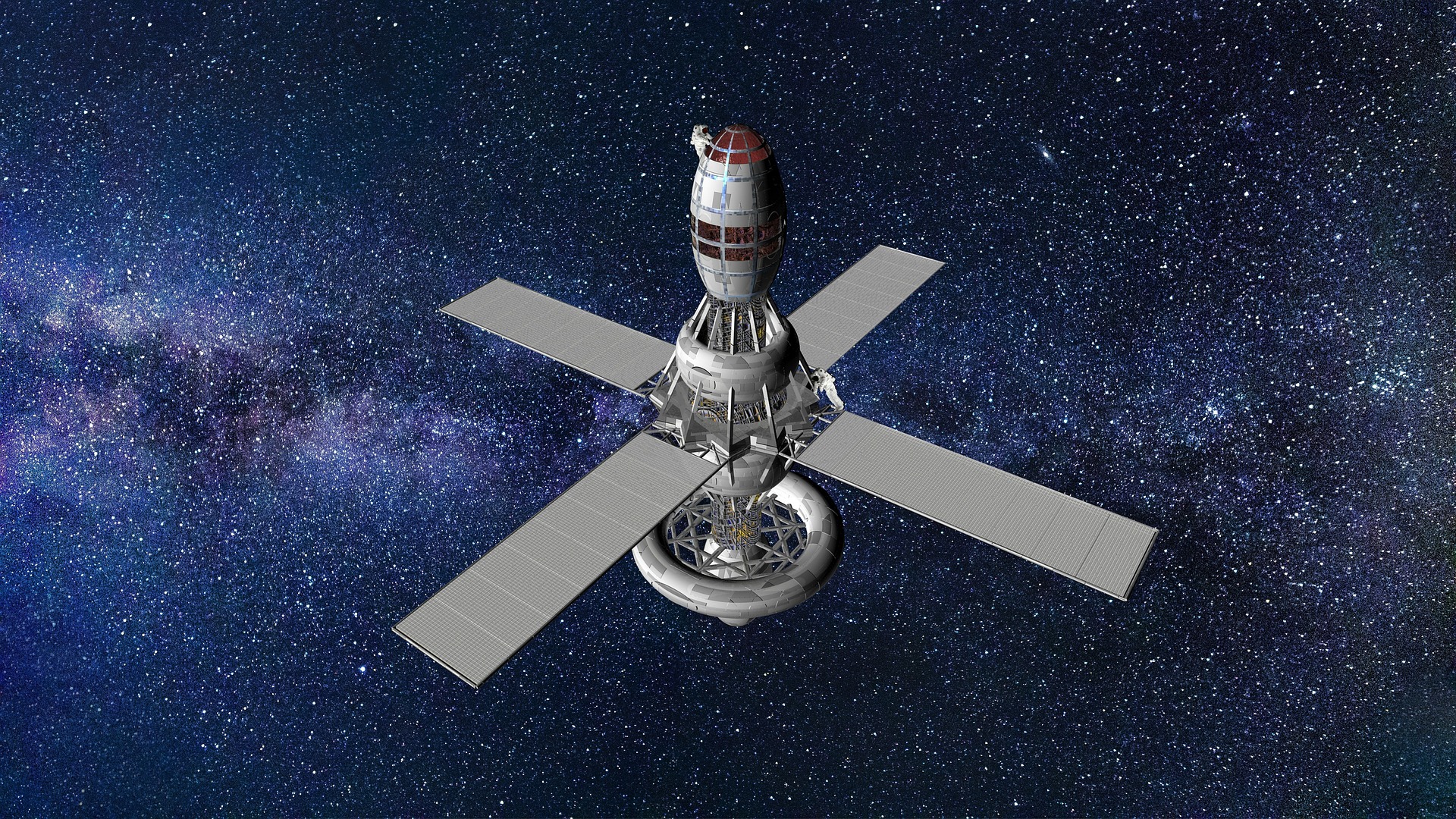
- Instant, precise and reliable positioning methods based on GNSS signals.
- Development and integration of payloads based on GNSS-Reflectometry (GNSS-R) for nanosatellites.
- Development and integration of communication subsystems for nanosatellites and their links (satellites and ground station).
- Environmental testing and validation of nanosatellites and subsystems through cleanroom facilities, thermal-vacuum chambers and vibration systems.

INFRASTRUCTURES AND LABORATORIES
- 6G LABNET UPC: Infrastructure for the experimentation and validation of technologies and services using next-generation networks in a real-world environment spanning more than 30 km.
- UPCxels: Multisectoral data space connecting companies and administrations to create value from information.
- OBSEA: Submarine scientific, cabled and multiparametric laboratory for real-time marine observation.
QUANTUM COMPUTING
- Development and integration of Quantum Key Distribution (QKD) services in 6G satellite networks.
- Post-quantum cryptography.
- Architectures for quantum processors.
UPC LABS
We offer infrastuctures for users or organisations interested in using a platform that integrates radio and optical technology, sensors, SDN controllers, network resource orchestrators and data centres to perform communications test for 5G services.
APPLICATION SECTORS

Industry 4.0

Sustainability

Data Science

Artificial intelligence

Connected vehicle

Cognitive networks

Digital Economy

Health

Mobility

Internet of things

Smart agriculture
FEATURED PROJECTS
- The aim of the GENIUS project, in which the Centre for Technological Innovation in Static Converters and Drives (CITCEA) of the Universitat Politècnica de Catalunya - BarcelonaTech (UPC) participates, is to develop a charge estimator for lithium-ion batteries based on a dynamic model parameterised by a neural network.
- The aim of the Douglas project is to improve safety in the bathing area of the beaches of Catalonia and the Balearic Islands, through the implementation of a coastal signalling system through IoT technology.
- Researchers from Barcelona Innovative Transportation (BIT) and from inLab FIB of the Universitat Politècnica de Catalunya - BarcelonaTech (UPC) have worked on MultiDEPART. In the framework of this project, three key tools have been developed for the planning and management of urban mobility, which will help public transport authorities and their operators to adopt and scale transport services on demand (Demand Responsive Transit, DRT) in their areas.
- 03/11/2022Project Headerrightrightno-repeat;left top;;auto20px The Covid-19 crisis and the total paralysation of tourism revealed the need to change the tourism model, with a focus on tourists’ greater […]