

Agrixels: Agricultural Information Standard Oriented Towards AI-Based Services for Use Cases in the Agri-Food Sector
June 19, 2025
OPTIMA: Optimisation of Photovoltaic Technology for Self-Consumption in Buildings
June 23, 202520/06/2025
The UPCxels project, led by the Intelligent Data sciEnce and Artificial Intelligence Research Group (IDEAI-UPC) at the Universitat Politècnica de Catalunya - BarcelonaTech (UPC), aims to create an open, cross-sectoral platform for a shared data space across multiple fields, with a special focus on the agri-food sector.
Today, data is a key resource driving innovation. But its real power is unleashed when shared with purpose.
In this context, the UPCxels platform seeks to transform collected data into strategic assets, i.e., data that is valuable for decision-making. Rather than a traditional sectoral data space (SDS), it functions as a data marketplace, enabling businesses to monetise, optimise and scale through advanced analytics and artificial intelligence.
Designed to foster collaboration among companies, institutions and organisations, UPCxels will ensure secure, efficient and fully interoperable data exchange. Data control always remains in the hands of the user, who can decide what to share, with whom, and under what conditions, with guarantees of security, traceability, and regulatory compliance. All of this is built on a scalable cloud infrastructure, with 24/7 security and monitoring to ensure service performance and quality.
UPCxels enables access to:
- Advanced governance: legally valid digital contracts ensuring data traceability, sovereignty and security.
- Connection to European standards: compatible with Gaia-X, Eclipse and IDSA, integrating major European data frameworks.
- AI-based analytics: extracts valuable insights to optimise processes and improve decision-making.
- Process automation: reduces bureaucratic burden through smart contracts and optimised data flows.
Impact
UPCxels has a direct impact on key economic sectors, offering data-driven solutions that enhance efficiency, sustainability, and decision-making.
In the agri-food domain, it enables more precise and responsible resource management, boosting productivity and reducing environmental impact. In the context of Industry 4.0, it helps optimise production processes through advanced data analysis, fostering competitiveness and innovation. In the energy sector, it improves demand management, consumption forecasting, and optimisation of renewable energy sources. Finally, in mobility, it supports more efficient and sustainable urban planning through real-time data management.
Budget and Funding
In addition to IDEAI-UPC, UPCxels involves the following research groups and centres from UPC: Communications and Broadband Architectures Lab (CBA), Database Technologies and lnformation Management Group (DTIM) from the Department of Service and Information System Engineering (ESSI), Castelldefels School of Telecommunications and Aerospace Engineering (EETAC), CER Agrotech-UPC, and the Data Management Group (DAMA).
The project has received a budget of € 933,732, funded under the Recovery, Transformation and Resilience Plan by the Ministry of Digital Transformation and Public Function (Government of Spain). It will run for 14 months (November 2024 – December 2025).
More information: https://upcxels.upc.edu/


You want to know more?
Related Projects
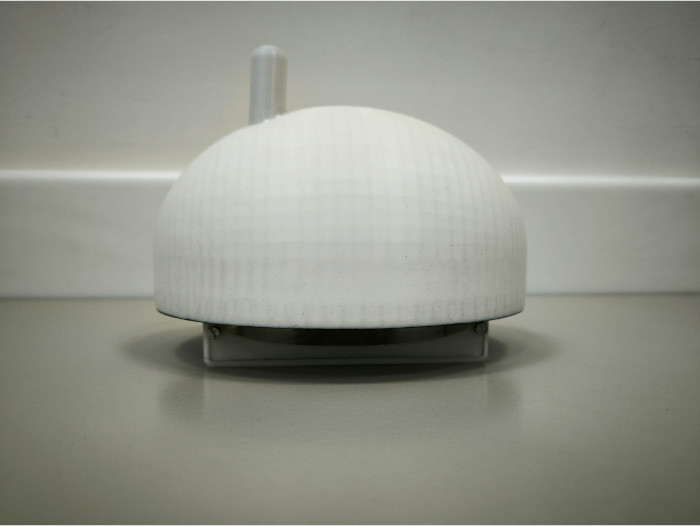
- Researchers from the Computer Networks and Distributed Systems (CNDS) research group at the Universitat Politècnica de Catalunya - BarcelonaTech (UPC) are developing new artificial intelligence-based solutions to obtain more accurate and reliable data from IoT sensor networks, with applications in air quality monitoring, anomaly detection and industrial predictive maintenance.
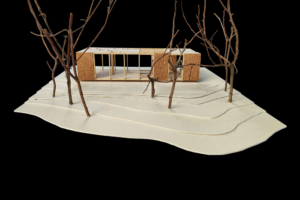
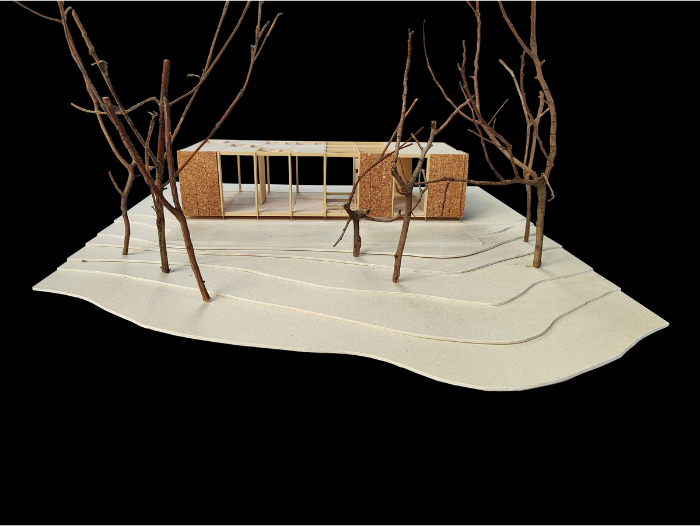
- The Casa Bosc project explores a lightweight, modular and prefabricated timber construction system designed to reduce the environmental impact of housing while making it easier to build and adapt to different contexts. The project has been developed by researchers from the Architectural Rehabilitation and Restoration Research Group (REARQ) at the Universitat Politècnica de Catalunya - BarcelonaTech (UPC) and the company ÀGORA.
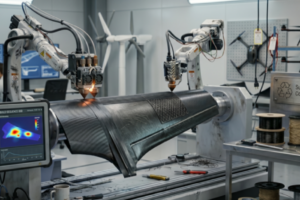
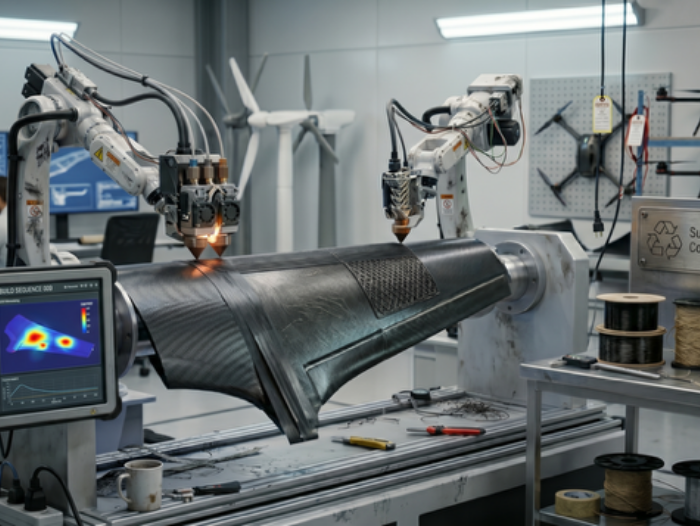
- The Control, Data and Artificial Intelligence (CoDAlab) research group at the Universitat Politècnica de Catalunya - BarcelonaTech (UPC) is taking part in the ATHENS project, which is developing recyclable thermoplastic composite materials with advanced real-time monitoring systems to improve the manufacture, safety and service life of lightweight structures.
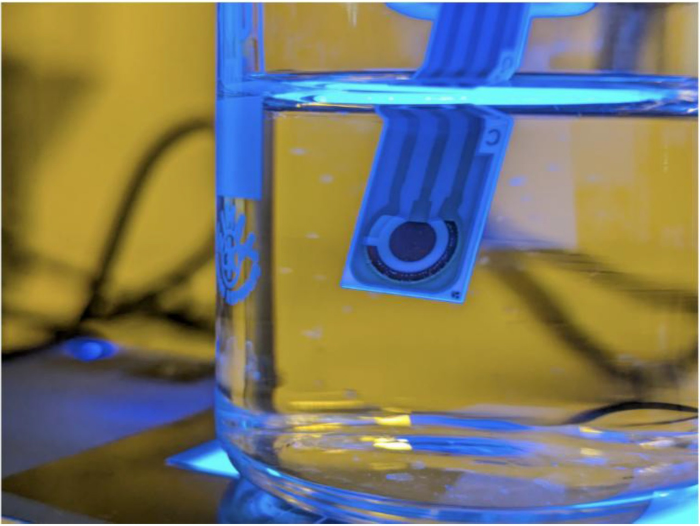
- The MICROTECH LAB - Microtechnology for the Industry research subgroup, part of the Centre for Advanced Technologies in Mechanics (CATMech) at the Universitat Politècnica de Catalunya - BarcelonaTech (UPC), is leading the technical development of a minimally invasive platform to monitor biomarkers and physiological indicators related to stress and emotional wellbeing.