

Analysis of the level of understanding of energy performance certificate classes, perceived confidence and impact on preferences and residential value
December 31, 2019
A catalyst that can transform CO2 into ethanol
December 31, 2019Barcelona Urbanism Laboratory (LUB) research group has carried out a feasibility study for the location of a new youth centre in the Nou Barris neighbourhood of Barcelona, under the initiative of Barcelona City Hall. The plot under study has a surface area of almost 21,000 m2.
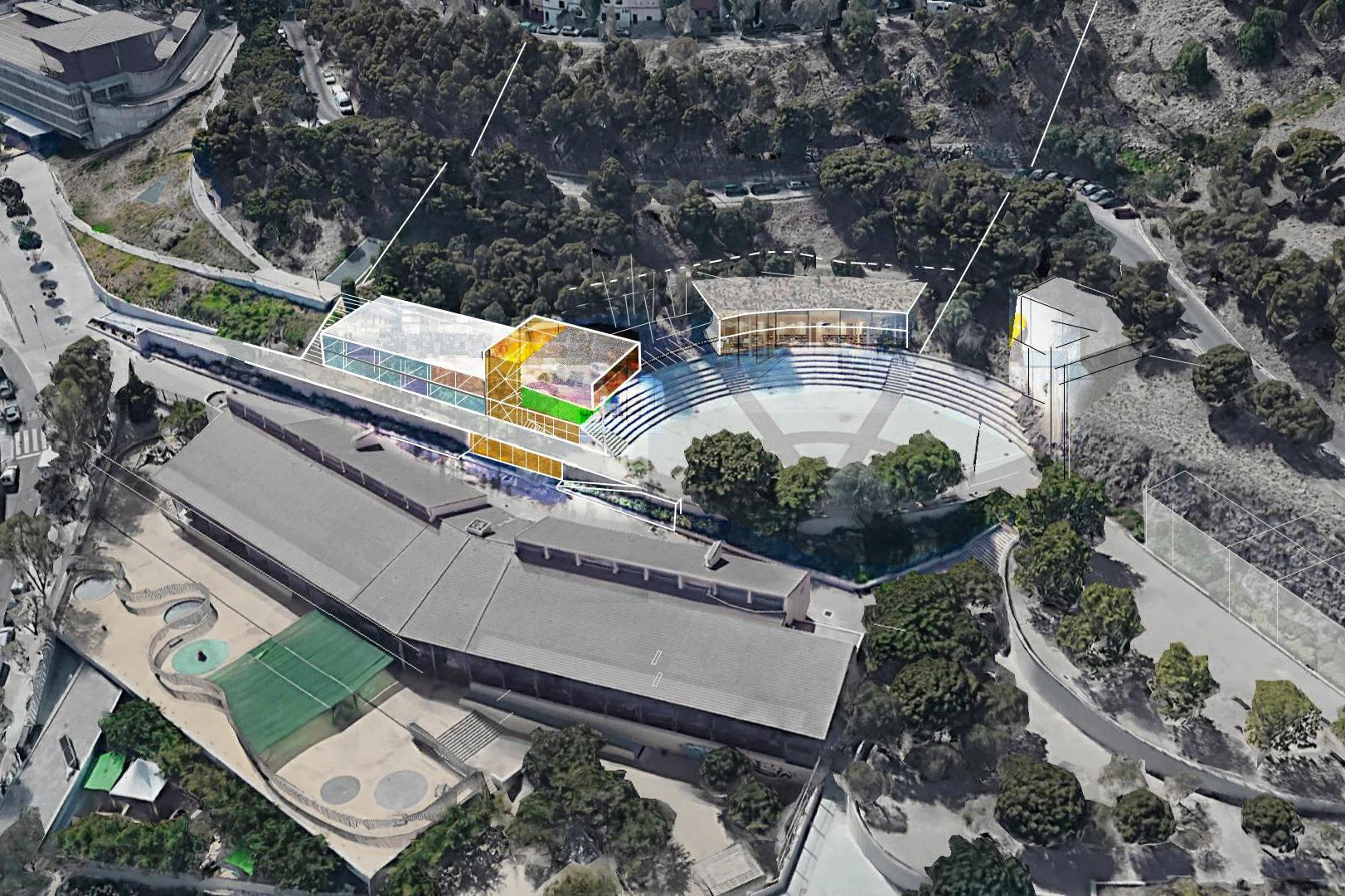
The aim of the project was to convert the Pla de Fornells park into a place of reference for the public, with new associated facilities that can better coordinate the existing topographic variation, according to the functional criteria used in other similar experiences in the Nou Barris district. The project has defined the aspects of planning, construction, accesses, gradients, land use and alignments for the location of facilities planned in the area of the amphitheatre of the Pla de Fornells park, considering the potential of facilities in the neighbourhood such as the Ateneu Popular, the Escola de Circ Rogelio Rivel, the Escola Antaviana and the Escola Bressol Pla de Fornells, and their relationship with the open space around the amphitheatre. The proposed solutions reflect technical and environmental criteria of suitability, the improvement of systems of pedestrian routes and associated mobility, the good urban planning of the nearby urban fabric and the correct integration with metropolitan mobility systems (L3 of the metro, mainly).
Two types of occupation (minimum and maximum) were considered in the study, considering the possibilities of the Metropolitan General Plan and the land use of neighbouring plots.
Related Projects
- The La Volta project foresees the construction of a large Catalan vault pergola within the Llars Mundet campus, in the Montbau neighbourhood (Horta-Guinardó district). This structure will become a new architectural landmark for Barcelona, combining traditional construction techniques with contemporary innovation. The project involves the Rehabilitation and Architectural Restoration Research Group (REARQ), at the Universitat Politècnica de Catalunya - BarcelonaTech (UPC), and is led by the Architects’ Association of Catalonia (COAC) and the Barcelona Provincial Council.
- The Architecture, Energy and Environment (AiEM) research group at the Universitat Politècnica de Catalunya - BarcelonaTech (UPC) has characterised Barcelona’s residential buildings according to their capacity to adapt to climate change. This study is part of the project ‘VeUvE: Urban havens for vulnerable zones’. The work highlights the climate inequality conditions present across different areas of the city and will help to better define the priorities and energy renovation strategies for its districts.
- The Research Center for Supervision, Safety and Automatic Control (CS2AC-UPC) at the Universitat Politècnica de Catalunya - BarcelonaTech (UPC) has coordinated the SaCoAV project, focused on researching new methods and tools to ensure the safe coordination of autonomous vehicles in urban environments.
- The Centre for Technological Risk Studies (CERTEC) at UPC is participating in the WUITIPS project (Wildland-Urban-Interface Fire Touristic Infrastructure Protection Solutions), which aims to develop a new wildfire management framework for the tourism sector. This project contributes to risk analysis and the design of specific strategies to mitigate such risks.