

AEROFER: Liquid Fertilisers from Pig Manure
April 30, 2025
SaCoAV: Methods and Tools to Improve the Safety and Coordination of Autonomous Vehicles
May 6, 202502/05/2025
The Centre for Technological Risk Studies (CERTEC) at UPC is participating in the WUITIPS project (Wildland-Urban-Interface Fire Touristic Infrastructure Protection Solutions), which aims to develop a new wildfire management framework for the tourism sector. This project contributes to risk analysis and the design of specific strategies to mitigate such risks.
Wildfires pose a growing threat to tourist destinations located in the wildland-urban interface, especially in the European Mediterranean region. These areas are particularly vulnerable to fire due to the high turnover and diversity of visitors — often unprepared to deal with emergency situations — and the presence of fragile infrastructures that, in many cases, do not systematically include prevention measures.
At present, there is no unified approach or shared understanding among EU member states regarding the assessment of wildfire risk and vulnerability in tourist areas. Nor are there consistent messages or common recommendations on best practices for prevention and protection.
Within this context, the WUITIPS project has developed a harmonised European-scale guide for planning wildfire prevention and protection in tourist infrastructures. This guide focuses particularly on the development of methods and tools to assess fire hazards and the vulnerability of both assets and people.
The tools developed have been tested in pilot trials at various tourist establishments in Alt Empordà (Girona) and Argelès-sur-Mer (Eastern Pyrenees region).
To achieve this, information was collected from tourist establishments through owner visits, surveys, and phone interviews, simulations were carried out to model fire behaviour in emergency scenarios, as well as tourist behaviour during evacuation situations.
Based on this work, a set of innovative tools has been created, many of which are based on new technologies (ICT). The main outcomes are as follows:
- Tourist Hotspot Mapping: a method for identifying areas in Europe that are highly vulnerable to wildfires in relation to tourist infrastructure at the municipal level.
- TourGuard: a tool developed as an app or web application, easily integrated into GIS platforms used by wildfire management services and tourism agencies. It also enables infrastructure managers to assess facility vulnerability and provides guidance to enhance fire resilience.
- TourSafe: a tool that assesses the vulnerability of tourist populations within a municipality or specific tourist area, and supports the work of local emergency managers.
- Advancements in Fire Safety Engineering Methodologies: two key fire safety engineering methods have been improved. These include evacuation modelling (based on archetypal tourist behaviour) and performance-based design (guidelines for in-depth analysis of tourist infrastructure buildings using advanced CFD modelling tools to evaluate fire exposure scenarios).
The CERTEC group at UPC, with a solid track record in developing wildfire risk analysis methodologies across industrial, urban, and forest environments — as well as in fire safety engineering — has led the coordination of the WUITIPS project. It has been responsible for the conceptualisation of the tools and has actively participated in both their development and testing phases.
Impact
The WUITIPS project may have a significant impact on wildfire risk management and safety in tourist areas, particularly across the Mediterranean region. These tools will be available to emergency services, tourist accommodation owners, and public authorities.
Budget and Funding
The WUITIPS project involved a multidisciplinary consortium comprising the Provincial Council of Girona, Efectis France, Entente pour la Forêt Méditerranéenne, and Lund University. It was funded by DG-ECHO, ran for two years (from February 2023 to February 2025), and had a total budget of €602,128.58.
-

- Incendi de Portbou. Imatges del foc des del pavelló de Colera Foto: Marina Valls


Topic
You want to know more?
Related Projects
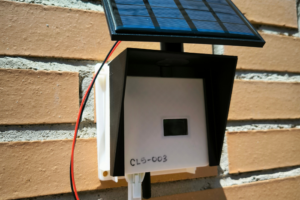
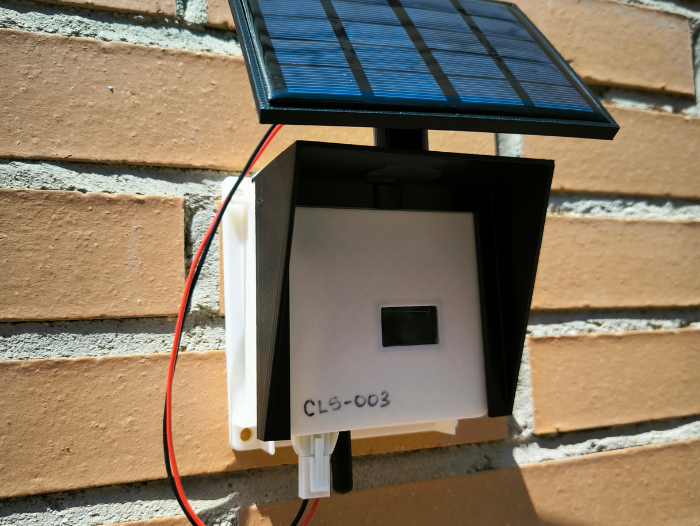
- The Communication Networks and Distributed Systems (CNDS) research group at the Universitat Politècnica de Catalunya - BarcelonaTech (UPC) is developing an innovative methodology that combines sensors, artificial intelligence and thermal imaging to identify differences in thermal comfort across urban spaces and support decision-making in response to heatwaves.
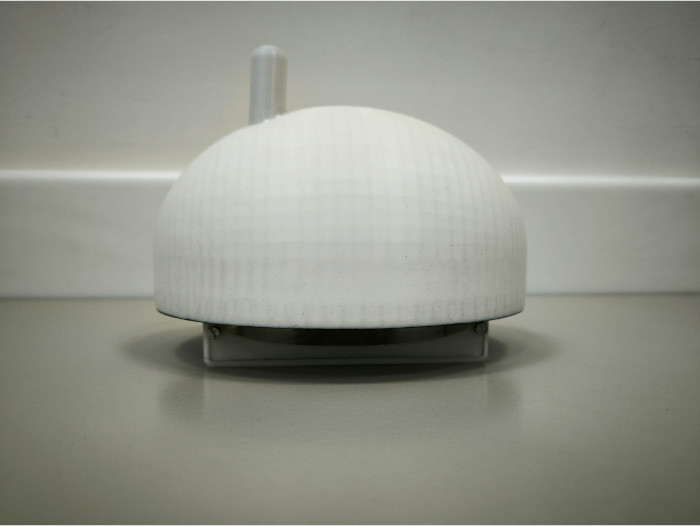
- Researchers from the Computer Networks and Distributed Systems (CNDS) research group at the Universitat Politècnica de Catalunya - BarcelonaTech (UPC) are developing new artificial intelligence-based solutions to obtain more accurate and reliable data from IoT sensor networks, with applications in air quality monitoring, anomaly detection and industrial predictive maintenance.
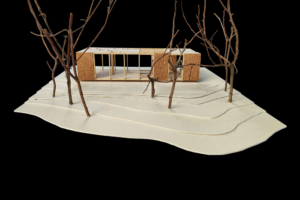
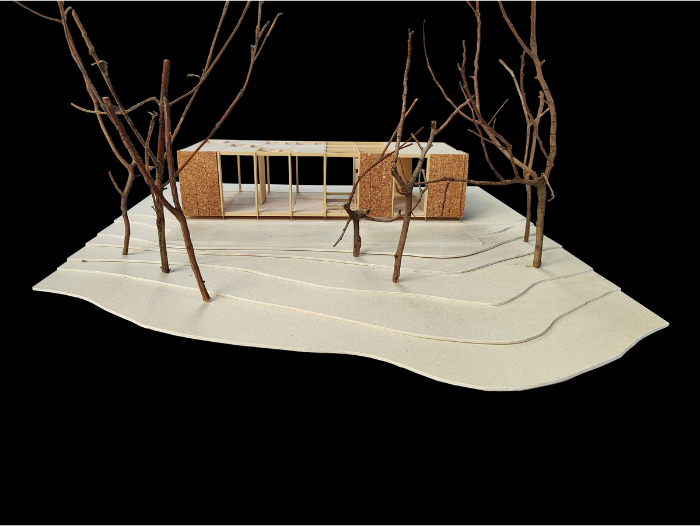
- The Casa Bosc project explores a lightweight, modular and prefabricated timber construction system designed to reduce the environmental impact of housing while making it easier to build and adapt to different contexts. The project has been developed by researchers from the Architectural Rehabilitation and Restoration Research Group (REARQ) at the Universitat Politècnica de Catalunya - BarcelonaTech (UPC) and the company ÀGORA.
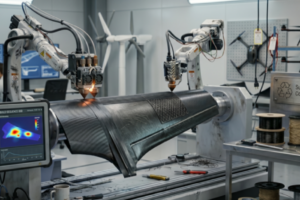
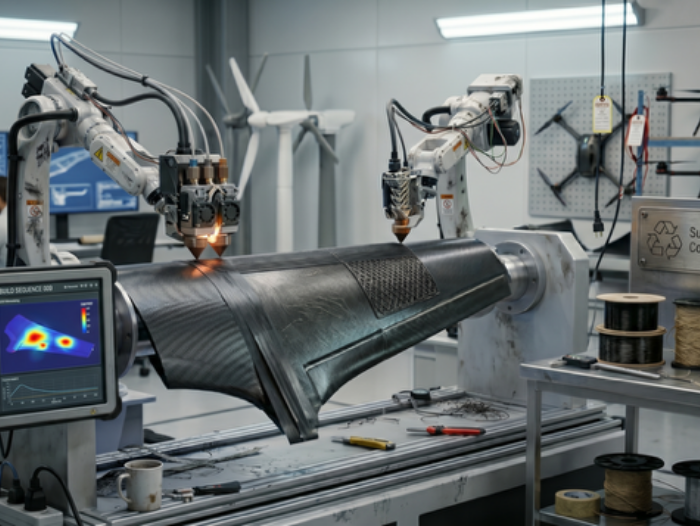
- The Control, Data and Artificial Intelligence (CoDAlab) research group at the Universitat Politècnica de Catalunya - BarcelonaTech (UPC) is taking part in the ATHENS project, which is developing recyclable thermoplastic composite materials with advanced real-time monitoring systems to improve the manufacture, safety and service life of lightweight structures.