


Algorithms to achieve sustainable growth in the leisure marine sector
January 4, 2019
New technologies for more efficient, environmentally friendly buildings
January 4, 2019The Technological Development Centre of Remote Acquisition and Data Processing Systems (SARTI UPC) has concluded its participation in FixO3 (Fixed point Open Ocean Observatory), a European project whose objectives are integration and standardisation of European ocean observatories and making these exceptional facilities accessible to society. The aim of the observatories is to provide multidisciplinary measurements of oceans, from the seabed to the interface between the ocean and the atmosphere.
During FixO3, SARTI UPC centralised demands for use of the OBSEA marine observatory (on the seabed off the coast of Vilanova i la Geltrú, Barcelona province). Projects undertaken at OBSEA included corrosion studies, comparisons of current measuring instruments, and evaluations of acoustic communication systems., one notable project is Fishout which assessed new submarine image processing techniques for observing and analysing macrofauna.. Thus, manufacturers and designers could assess the behaviour of their equipment in the sea, under continuous, real-time supervision provided by OBSEA. Some of the results have been published in Nature. Nature.
The FixO3 project encompassed coordination activities to integrate and standardise processes and procedures. It provided support to access infrastructures, data services, and free products, and to undertake research initiatives that improve the capacity for multidisciplinary ocean observation.
FixO3 was coordinated by the National Oceanography Centre (United Kingdom) based on the results of other projects in the 7th Framework Programme (EuroSIRES, ESONET, and CARBOOCEAN). FixO3 involved the participation of 29 partners from academic institutions, research centres, and SMEs. It received funding of 7 million euros and lasted 4 years.
Technology
You want to know more?
Related Projects
- A research team from the UPC, in collaboration with the company B. Braun Surgical, has created a ceramic and biocompatible catalyst that captures greenhouse gases and transforms them into useful chemical products in a more sustainable way and at a lower cost than current technologies. The technology has successfully passed the pilot phase through joint projects with companies from different sectors.
- The company Trace ID and the group Twin Investors, in collaboration with the Textile Technology research group (TECTEX), which is part of the Institute of Textile Research and Industrial Cooperation of Terrassa (INTEXTER) at the Universitat Politècnica de Catalunya - BarcelonaTech (UPC), are developing electronic devices to identify, monitor, and study the traceability of the products in which they are embedded.
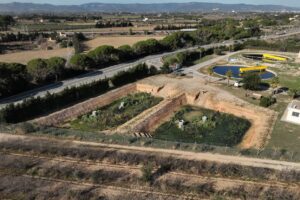
- The Hydrogeology Group (GHS) at the Universitat Politècnica de Catalunya - BarcelonaTech (UPC) is participating in the LIFE REMAR project to develop an innovative and sustainable solution for the reuse of treated wastewater through infiltration, with the aim of increasing the availability of freshwater resources and improving the state of ecosystems.
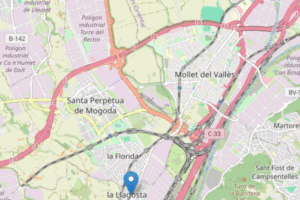
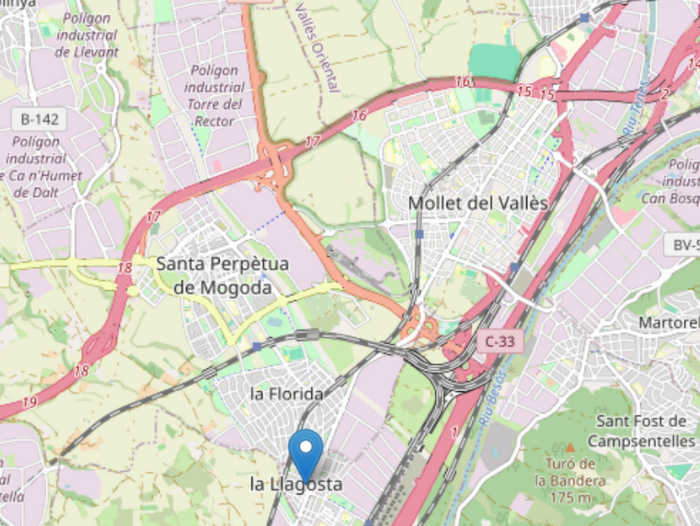
- A team from the Environment Centre Laboratory (LCMA) of the Universitat Politècnica de Catalunya - BarcelonaTech (UPC) is taking part in a study commissioned by the city councils of la Llagosta, Mollet and Santa Perpètua (in Vallès Occidental), with the main objective of identifying the impact of industrial plants on the generation of unpleasant odours and continuously monitoring air quality in these municipalities.