

SEASLAG: A new biomaterial to regenerate marine ecosystems based on byproducts of the steel and agrifood industries
September 19, 2023
Energy information in digital administration: design of a model of Building Renovation Passport based on BIM and Blockchain
October 11, 202329/09/2023
The specific research centre Intelligent Data Science and Artificial Intelligence (IDEAl) at the UPC and the International Centre for Numerical Methods in Engineering (CIMNE) are taking part in the creation of a virtual assistant focused on informing and helping citizens to process social grants via the mobile phone. Gavá and Mataró town councils will be the first to make this service available to their population.
The ‘Gavius’ project, which is led by Gavá Town Council, is focused on developing a virtual assistant to inform citizens about financial aid and social grants that they may be eligible for, and to automate the process of applying for and receiving them. Through a mobile application that is accessible via smartphones, touch screens and digital display totems distributed throughout the city, and through the use of artificial intelligence, citizens can find out about grants, apply for them and manage them in a convenient, fast and simple way.
Users of the application identify themselves using their biometric data and can obtain information, apply for and manage grants on the spot. To be able to automate processes with this tool, an artificial intelligence system, which learns constantly from the various types of use, identifies potential target users. In this way, ‘Gàvius’ enables digital identification through facial or biometric recognition, while maintaining the privacy of the user and easy usability.
At the same time, an assistant has been designed for those who work in social services and citizens services, so that they can inform users of the grants that are available to them, depending on each person’s situation, and proceed with the payment automatically.
The new virtual assistant is designed to be implemented in many other use cases, to improve the current relationship between citizens and government bodies. In this way, a shift can be brought about from a reactive government to a proactive government, which offers services in a more personalised, approachable way, and determines citizens’ needs through the use of data.
Smart government at the service of the citizens
‘Gavius’ is designed to create a smarter, more modern and accessible government that is adapted to the digital transformation and always focused on citizens. In the framework of the project, the proposal is to create a tool that provides solutions at different levels:
- Citizens: simplify and improve bureaucratic procedures with the city council.
- Government teams: help in decision-making, based on the interpretation of data.
- Municipal teams: improve productivity, speed and efficacy in the management of citizens’ procedures.
- Other government bodies: test a model based on automatic learning (machine learning) and artificial intelligence for the modernisation of the public sector.
Participants in the project include Intelligent Data Science and Artificial Intelligence (IDEAl) at the Universitat Politècnica de Catalunya - BarcelonaTech (UPC) and the Centre for Numerical Methods in Engineering (CIMNE), a research centre that is the result of a consortium between the Government of Catalonia and the UPC.
IDEAI is leading the work package to design and implement the data management of the system and the predictive models to help citizens. Its work is focused on the algorithmic development of decision support systems, the ethical analysis of the entire system and the training of technicians to use the system. CIMNE provides the project with the identification and gathering of relevant information from the available data sources, to use it for the models that will be developed. In this way, it will provide the data extraction and transformation. In addition, it will help in the development of the interaction interface between citizens and city council services.
Budget and funding
The project has European funding from the Urban Innovative Actions (UIA) programme. Other participants are the XNet platform, Admnistració Oberta de Catalunya (AOC), GFI and Ernst & Young. The project’s pilot tests have been carried out in Gavá and Mataró since the last quarter of 2021 and their implementation is planned for the end of 2023.

Image: Gavius project.

Image: Gavius project.
Related Projects
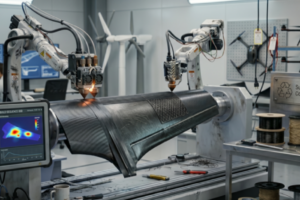
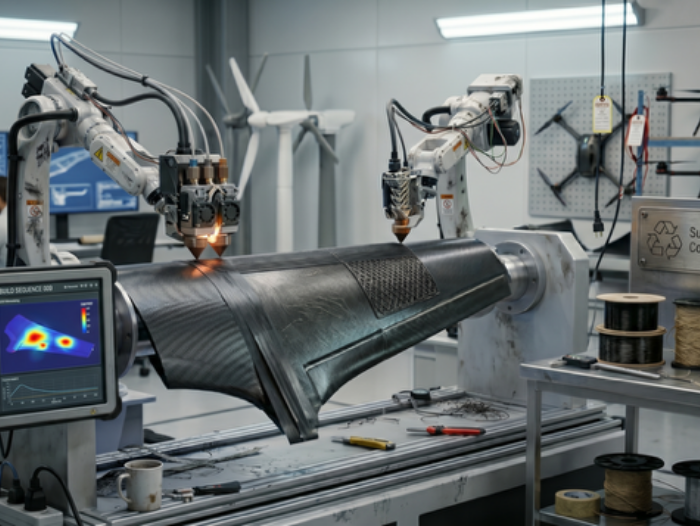
- The Control, Data and Artificial Intelligence (CoDAlab) research group at the Universitat Politècnica de Catalunya - BarcelonaTech (UPC) is taking part in the ATHENS project, which is developing recyclable thermoplastic composite materials with advanced real-time monitoring systems to improve the manufacture, safety and service life of lightweight structures.
- The MICROTECH LAB - Microtechnology for the Industry research subgroup, part of the Centre for Advanced Technologies in Mechanics (CATMech) at the Universitat Politècnica de Catalunya - BarcelonaTech (UPC), is leading the technical development of a minimally invasive platform to monitor biomarkers and physiological indicators related to stress and emotional wellbeing.
- A research team from the Universitat Politècnica de Catalunya - BarcelonaTech (UPC) has participated in the M3LEC project, coordinated by the Centro de Astrobiología (CAB), a joint centre of the Spanish National Research Council (CSIC) and the Instituto Nacional de Técnica Aeroespacial (INTA), with the Universidad de Sevilla (US) / Instituto de Microelectrónica de Sevilla (IMSE) also participating. M3LEC aimed to contribute to the characterisation of the Martian atmosphere and meteorology, and to investigate new instrumentation for future planetary exploration missions.
- The Interdisciplinary Group on Building Science and Technology (GICITED) and the Energy, Catalysis, Process and Reaction Engineering (ENCORE) research group at the Universitat Politècnica de Catalunya - BarcelonaTech (UPC) are participating in the European ArchiSpace project, to develop infrastructure prototypes for human settlements in extraterrestrial environments using materials and conditions analogous to those on the Moon and Mars.