ProjectsProjectsProjectsProjects
  • CIT UPC
    • What is CIT UPC?
    • Transparency
    • Networks
    • Work with us
    • What do we do?
  • Technologies
    • Areas
      • Energy
      • Environment
      • Health
      • Advanced Manufacturing
      • Materials
      • Digital Transformation
      • Urbanism and Sustainability
      • Infrastructures
      • Logistics and Mobility
      • Agrotech
      • Chemistry
    • Topics
      • Audiovisual
      • Data Space
      • Optics and Photonics
      • Water
      • Automotive
      • Circular Economy
      • Frontier Materials
      • Cybersecurity
      • Industry 4.0
      • Internet of Things
      • Smart City
      • See More
  • Projects
    • Sectors
      • Aeronautics
      • Food, agriculture and the marine environment
      • Automotive Sector
      • Building
      • Circular Economy
      • Distribution and mass consumption
      • See more
    • Areas
      • Energy
      • Envrioment
      • Health
      • Advanced Manufacturing
      • Materials
      • Digital Transformation
      • Urbanism and Sustainability
      • Infrastructures
      • Logistics and Mobility
      • Agrotech
      • Chemistry
    • Topics
      • Circular Economy
      • Frontier Materials
      • Cybersecurity
      • Industry 4.0
      • Artificial Intelligence
      • Internet of Things
      • Mobile Technologies
      • Smart City
      • See More
  • Publications
    • Catalogues
    • TechDocuments
    • Annual reports
  • Highlights
    • News
    • Newsletter
  • Contact
English
  • Catalan
  • Spanish
✕

Projects

By area

By sector

By topic

 
  • Minimise the environmental impact of construction with walls of corn and sunflower stalks
    Investigadores del Grup Interdisciplinar de Ciència i Tecnologia a l'Edificació (GICITED) de la UPC participen en el projecte Estructuració d'un sector transfronterer de valorització de tiges de blat de moro i gira-sol per a la construcció (SAVASCO).
  • Collaborative positioning techniques: integration into network optimisation systems and application to IoT environments
    To address the need to optimize the resources available in wireless networks TELCO4IOT project has emerged, led by the Research Group on Cellular Communications Networks (GRXCA) of the Universitat Politècnica de Catalunya (UPC).
  • Hospitals 4.0 with more effective management due to machine learning algorithms
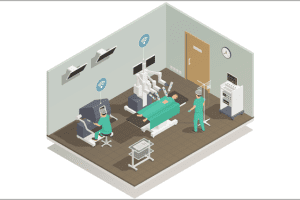
    The project involves the participation of the Center for Innovation in Electronics, Motion Control and Industrial Applications (MCIA) of the UPC. The main aim is to construct a digital twin to monitor, visualise and manage the state of maintenance of hospital equipment.
  • RODIN: Robust methods for statistical inference, data integrity and interference management in 5G communication networks and applications
    The RODIN project, in which the Signal Processing and Communications Group (SPCOM) of the Universitat Politècnica de Catalunya (UPC) participates, seeks to solve two major challenges that hinder the communication and processing of large volumes of data.
  • Predictive eBoost’s project aims to improve the performance of electric vehicles’ powertrain and batteries
    The inLab FIB of the Universitat Politècnica de Catalunya (UPC) collaborates with SEAT and the Volkswagen Group Innovation in the Predictive eBoost project.

  • Spectral confocal microscope
    BIOPHOCH: Photonic technologies and machine learning to improve the diagnosis of visual, neurological and hematological diseases
    BIOPHOCH, led by the Centre for Sensors, Instruments and Systems Development (CD6), is designed to develop new tools and methodologies for image analysis and processing of data in the health area using photonic techniques.
  • IRIS: A platform to assess, detect and respond to vulnerabilities and threats in ICT networks
    As smart cities are developed and, as a result, platforms enabled for the internet of things (IoT) and artificial intelligence expand, new and complex threats to their security increase exponentially. The new IRIS platform will increase the security and privacy of these ICT-based systems and will respond to attacks through a collaborative approach.
  • CoCoUnit: Processors of the future for cognitive computing
    The Architectures and Compilers (ARCO) research group is working on the CoCoUnit project to design new architectures for computing systems that are energy efficient, particularly for applications that make intensive use of cognitive functionalities, such as voice recognition, automatic translation, speech synthesis, image classification or object recognition.
  • Cardiovascular Scale and other devices for fast, remote
    cardiovascular monitoring
    Researchers from the Instrumentation, Sensors and Interfaces (ISI) research group are specialised in the development of electronic instrumentation to characterise a person's cardiovascular system in just a few seconds. The reason for this is clear: cardiovascular diseases cause around three out of every ten deaths in the world, which represents over 17 million deaths annually, according to statistics published by the World Health Organization.
  • An application to assist the diagnosis of injuries to the anterior cruciate ligament of the knee
    The Multimedia Applications Laboratory (LAM UPC) has developed an application that measures the anteroposterior movement of the tibia with respect to the femur to help in the diagnosis of anterior cruciate ligament knee injuries.
  • An APP to assist with the differential diagnosis of patients with Parkinson’s disease and essential tremor
    15/02/2022rightno-repeat;left top;;auto El Laboratorio de Aplicaciones Multimedia (LAM UPC) ha desarrollado una aplicación móvil que ayuda en el diagnóstico diferencial ente pacientes con Parkinson y Temblor […]
  • Digital twins with applications in the contructions sector
    Researchers in the Analysis and Technology of Structures and Materials (ATEM), the Geomatic Engineering (EGEO) and Construction Engineering (EC) groups, led by Rolando Chacón from the UPC Department of Civil and Environmental Engineering, are taking part in ASHVIN. The aim of this project is to provide a digital platform that will be completely ready to set up digital twins. It will be interoperable with a wide range of designs and engineering applications in the construction sector
  • New high-value materials based on recycled PET
    The research group e-PLASCOM is participating in the project RevalPET'UP, whose aim is to develop innovative, high-added value materials with a long useful life based on recycled opaque PET.
  • LogiSmile Project Kick-off meeting – Testing Autonomous Delivery Systems Across Europe
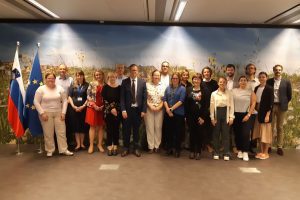
    The kick-off meeting of LogiSmile, a project co-funded by the EIT Urban Mobility, was held on 17-18 January in a hybrid format. This 2-days assembly was an opportunity for the whole consortium to meet all together and understand all the needs and requirements of the activities planned in the project. Moreover, the City mayor of the first city pilot test – Esplugues de Llobregat – also participated in the event, representing the willingness of public institutions to collaborate in this type of activity.
  • UPC and CARNET create a prototype of an autonomous vehicle for delivering goods that will be tested in Esplugues de Llobregat
    A UPC team, CARNET, and its industrial partners, coordinated by the Institute of Robotics and Industrial Informatics (IRI), has designed and manufactured a prototype of an Autonomous Delivery Device (ADD), to automate last-mile logistics. The vehicle will be tested this year in various pilot tests in Esplugues de Llobregat, Hamburg (Germany) and Debrecen (Hungary).
  • A pioneering system to facilitate clothes recycling
Load more
  • Technology Center UPC ©
  • Legal warning
  • Privacy policy
  • Cookies policy

CONTACTO

Ed. K2M (Floor 1, Office 106)
C/ Jordi Girona 1-3
08034 Barcelona (Spain)

+34 93 405 44 03
info.cit@upc.edu

Copyright © CIT UPC. All rights reserved.

English
  • Catalan
  • Spanish
  • English