

APPLICATION SECTORS

ENABLING TECHNOLOGIES
- Artificial intelligence
- Smart devices
- Data science
- Data infraestructure
- 5G / 6G
- Connectivity
- Digital twins
- Robotics
- Virtual reality (VR), augmented reality (AR) and mixed reality (MR)
- Blockchain
- Digital services
- City platforms
- laaS & PaaS

ENERGY & ENVIRONMENT
- Climate emergency
- Greenhouse gas detection
- Food & agriculture
- Water and waste management
- Green spaces
- CleanTech
- New energetic models
- Energy management
- Zero waste

MOBILITY
- Public transport
- E-Mobility
- Micro & Shared
- Transportation networks
- Mobility as a Service (MaaS)
- Mobility's future
- Autonomous vehicles
- Drones
- Connected vehicles
- Vehicle mobility plans
- Governance
- Seamless transportation

LIVING & INCLUSION
- Cities for everybody
- Digital, social and gender inclusion
- Health
- Education
- Green buildings

GOVERNANCE & ECONOMY
- Circular economy
- Innovation ecosystems
- Industry 4.0
- Talent attraction

INFRASTRUCTURE & BUILDING
- Smart buildings
- Sustainable construction
- Innovative materials
- Nearly Zero-Energy Buildings (NZEB)
- Urban planifications
- BIM (Building Information Modeling)

SAFETY & SECURITY
- Cibersecurity
- Data security
- Digital rights
- Fraud detection - urban security
- Ethics of the city and security
- Risk predictions and emergency response
- Safety in critical infrastructures
RELATED PROJECTS
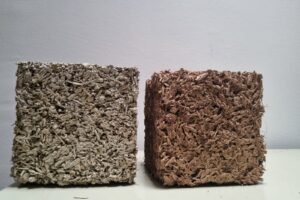
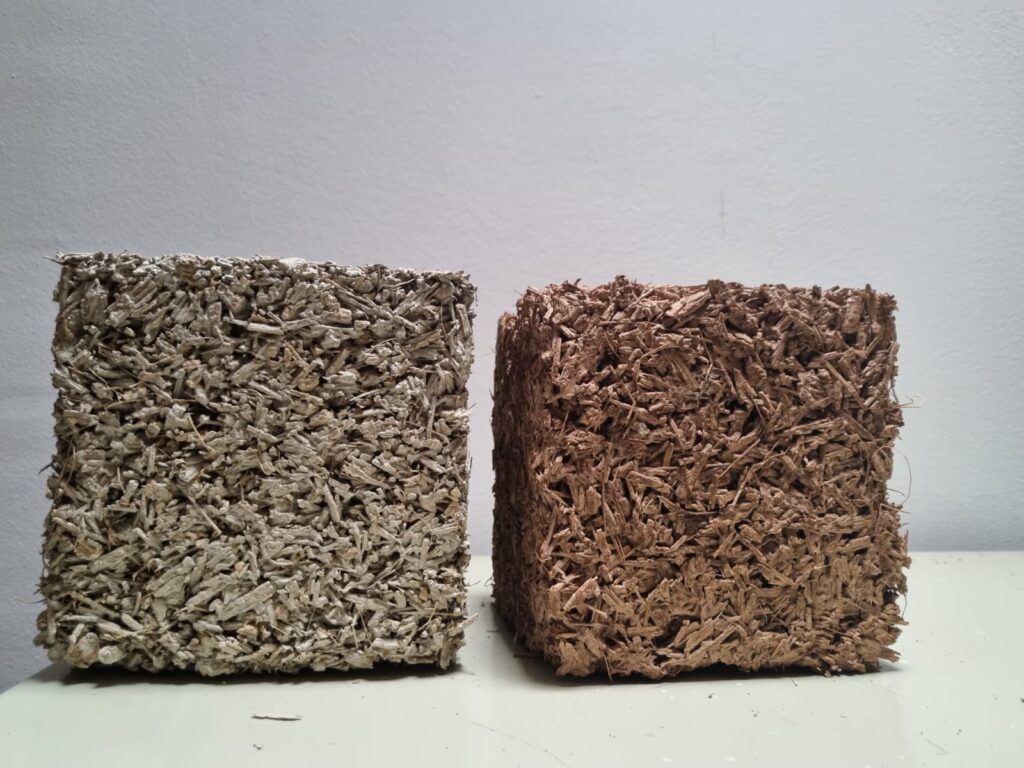
- A research team from the Interdisciplinary Group on Building Science and Technology (GICITED) at the Universitat Politècnica de Catalunya – BarcelonaTech (UPC) is leading the BioSAFE project, which aims to develop sustainable building envelopes —mainly façades— designed according to sustainability, comfort and safety criteria, with particular attention to their acoustic behaviour and fire performance.
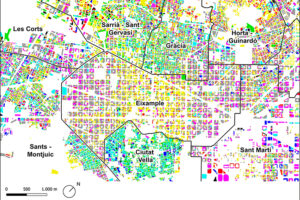
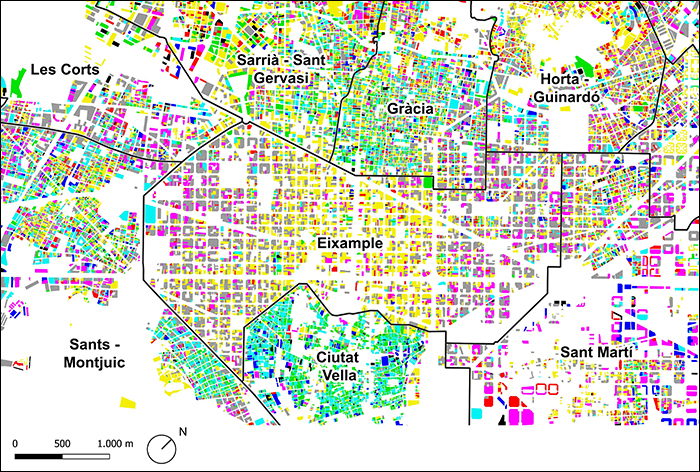
- The Architecture, Energy and Environment (AiEM) research group at the Universitat Politècnica de Catalunya - BarcelonaTech (UPC) has characterised Barcelona’s residential buildings according to their capacity to adapt to climate change. This study is part of the project ‘VeUvE: Urban havens for vulnerable zones’. The work highlights the climate inequality conditions present across different areas of the city and will help to better define the priorities and energy renovation strategies for its districts.
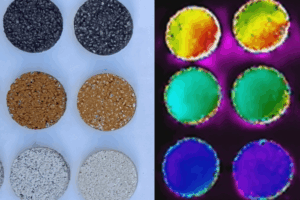
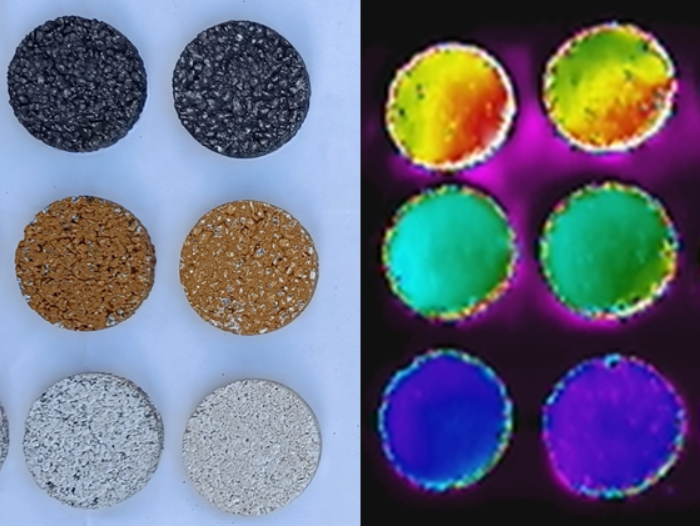
- The Construction Materials and Roads (MATCAR) research group at the Universitat Politècnica de Catalunya - BarcelonaTech (UPC) has carried out the RELUM project with the aim of researching and developing innovative solutions to help prevent global warming, through the design of sustainable pavements with reflective and photoluminescent properties, in collaboration with the company Sorigué.
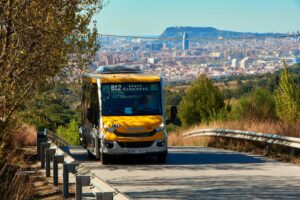
- The Barcelona Innovative Transportation (BIT), the Research Center in Automotive and Advanced Mobility (CER-AMA) and The Future Mobility Research Hub (CARNET) research groups from the Universitat Politècnica de Catalunya - BarcelonaTech (UPC) are participating in the E-MED project, which aims to optimise energy and resource efficiency in public transport systems by addressing energy price fluctuations through smart and participatory solutions across the Mediterranean region.