

UPC innovations to improve life in cities, at the Smart City Expo World Congress 2022
November 15, 2022
AIRA, the Artificial Intelligence Research Alliance in Catalonia, is founded
November 24, 2022UPC innovations to improve life in cities, at the Smart City Expo World Congress 2022
November 15, 2022AIRA, the Artificial Intelligence Research Alliance in Catalonia, is founded
November 24, 202217/11/2022

The UPC, through CIT UPC, presented its technological capabilities and solutions and some of the latest projects developed by its research groups and centres at the Smart City Expo World Congress 2022 (#SCEWC22), held from 15 to 17 November.
Cities should be made more liveable and resilient. With this objective, the UPC presented its innovative technologies in the fields of urban design, artificial intelligence and new materials, among others, at the Smart City Expo World Congress (#SCEWC22). For the first time, at this edition the University exhibited a 12 m² model of the city of Barcelona, which was created by the model workshop of the Vallès School of Architecture (ETSAV) and provided by the Architects’ Association of Catalonia (COAC). The model showed how climate change affects the city, based on the results of the X-ClimPlan project developed by the Centre for Land Policy and Valuations (CER-CPSV).
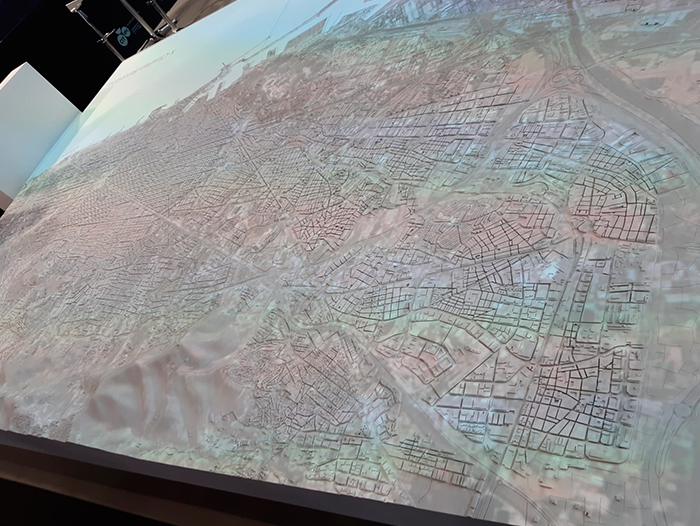
Detail of the results of the X-ClimPlan project, developed by the CER-CPSV, projected on the model of Barcelona showcased at the UPC stand.
To improve life in cities, the urban space must be adapted to heat waves, more sustainable materials must be used in the construction industry and spaces such as the roofs of buildings must be transformed to adapt them to new uses by neighbours. Other solutions include promoting sustainable tourism, safe and efficient mobility and using artificial intelligence to improve the services offered by local government to citizens.
In this context, researchers from the UPC presented at #SCEWC22 the latest technological innovations that they are developing to respond to these challenges. This took place at the session “People-centred solutions to make cities more liveable and resilient”, held at the UPC stand on 16 November.
The projects that were presented are listed below:
- Blanca Arellano, researcher at the Centre for Land Policy and Valuation (CPSV). Project: X-ClimPlan: urban heat islands and heat waves. How can we adapt our cities to climate change?
- Pere Joan Ravetllat, coordinator in charge of the Architectural Rehabilitation and Restoration (REARQ) group. Project: REV-TER: revive the rooftops.
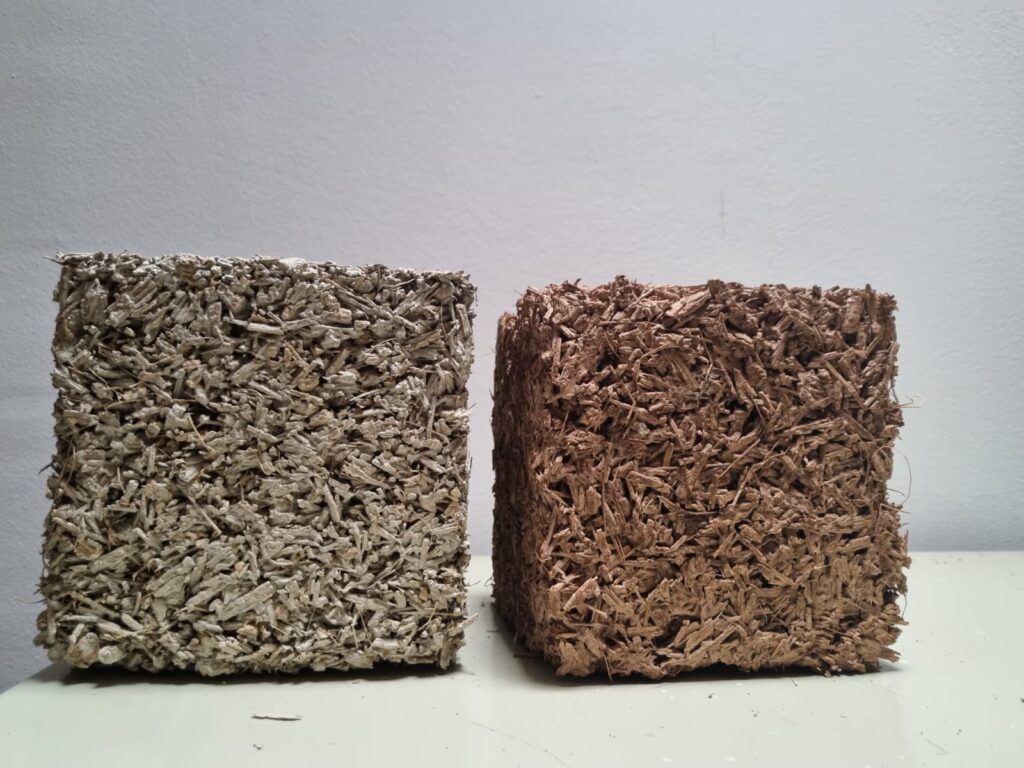
- Mariana Palumbo, researcher at the Interdisciplinary Group on Building Science and Technology (GICITED). Project: SAVASCO. A building made of corn and sunflower. Biology-based solutions for decarbonisation of the construction sector.
- Josep Lluís Larriba, director of the Data Management Group (DAMA). Project: Diskover. Towards a new tourism model: personalised, “slow” and of quality.
- Ramon Morros, researcher of the Image and Video Processing Group (GPI). Project: RideSafeUM: smart solutions for micromobility.
- Deniz Kizildag, researcher at the Heat and Mass Transfer Technological Centre (CTTC). Project: TOOL4HEAT. A tool to assess urban infrastructure and the effects of mobility on heat islands.
- Karina Gibert, director of the Intelligent Data Science and Artificial Intelligence (IDEAI) research centre. Project: INSESS-COVID19. Artificial intelligence as a knowledge tool for a sustainable, people-centred city.
Related Projects
- A research team from the inLab FIB at the Universitat Politècnica de Catalunya - BarcelonaTech (UPC), together with the Asociación de Personas con Movilidad Reducida (AsoPMR), has taken part in the Spot4Dis project to enhance the mobility and autonomy of people with reduced mobility.
- The La Volta project foresees the construction of a large Catalan vault pergola within the Llars Mundet campus, in the Montbau neighbourhood (Horta-Guinardó district). This structure will become a new architectural landmark for Barcelona, combining traditional construction techniques with contemporary innovation. The project involves the Rehabilitation and Architectural Restoration Research Group (REARQ), at the Universitat Politècnica de Catalunya - BarcelonaTech (UPC), and is led by the Architects’ Association of Catalonia (COAC) and the Barcelona Provincial Council.
SATE-VEG: A system for energy renovation of buildings that helps reduce the urban heat island effect
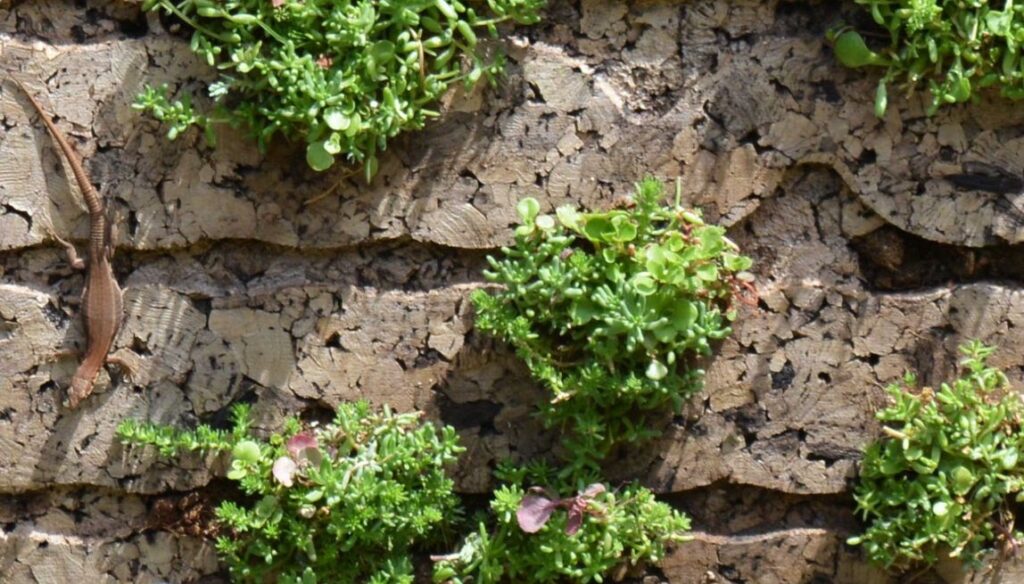
Researchers from the Architecture, Energy and Environment (AiEM) group at the Universitat Politècnica de Catalunya - BarcelonaTech (UPC) have developed SATE-VEG, an external thermal insulation system with a vegetal coating that offers seasonally adaptive thermal behaviour, enhances urban biodiversity and promotes positive health effects. The system is made from organic materials, requires low maintenance and consumes minimal water.- A research team from the Interdisciplinary Group on Building Science and Technology (GICITED) at the Universitat Politècnica de Catalunya – BarcelonaTech (UPC) is leading the BioSAFE project, which aims to develop sustainable building envelopes —mainly façades— designed according to sustainability, comfort and safety criteria, with particular attention to their acoustic behaviour and fire performance.