

6G-EWOC: Artificial intelligence and 6G technologies to achieve safe, more interconnected mobility
January 30, 2024
ETEXHEALTH: Smart textiles for applications in the health sector
February 16, 202406/02/2024
A team of researchers from the ISI group at the UPC is developing technology to be able to monitor animals’ cardiovascular parameters in a non-invasive way. This tool is designed to facilitate the work of vets and professionals who look after animals, as it can be used to measure vital signs in as little time as possible and provides more information than current electrocardiogram systems.
The Instrumentation, Sensors and Interfaces Group (ISI) at the Universitat Politècnica de Catalunya - BarcelonaTech (UPC) is developing technology to determine the cardiovascular status of animals non-invasively in the shortest time possible. With just four electrodes, the new system can measure simultaneously the animal’s electrocardiogram and a pulse wave based on the measurement provided by electrical impedance plethysmography. Using these measurements, the analysis of signals, their variability and the times between the characteristic parameters of the signals can be obtained in real time.
The usual procedures for measuring these parameters in humans involve putting electrodes on their body and keeping still while tests are carried out. These procedures cannot be carried out on many animals. Consequently, frequently the only solution is to anesthetise the animal, with all the problems that this entails. To avoid these difficulties, the measurement interface must be designed optimally and adapted to each animal. The ISI group has developed interfaces for mammals, rodents and birds.
The system has been used successfully to measure these parameters in chimpanzees. The measurements were made in collaboration with the Fundación Mona, an entity that works for the well-being and recovery of primates. Heart disease is the main cause of death of chimpanzees in captivity. This new device that has been developed marks a turning point in monitoring the cardiac health of the animals that the Foundation looks after in captivity, as it enables carers to undertake more comprehensive, flexible monitoring of the primates’ vital signs, which can literally save their lives.
In this case, the measurement technology has been incorporated into gloves, which are the interface with the animals and enable carers to measure the electrocardiogram and the electrical impedance plethysmography signal just by touching two specific points of the animal. In the case of chimpanzees that live in the foundation, being able to carry out check-ups just by touching a finger on each of the animal’s hands is a crucial tool in their survival. Once the sensors come into contact with the skin, only a few seconds are needed to obtain the results.
The new diagnostic system was presented in November at the meeting of the European Alliance of Rescue Centres and Sanctuaries (EARS) that the Fundación Mona hosted. EARS enables criteria and quality standards to be shared to care for animals in captivity. The aim is to work together to achieve animal well-being and conservation.


Technology
Topic
You want to know more?
Related Projects
- Researchers from the Computer Networks and Distributed Systems (CNDS) research group at the Universitat Politècnica de Catalunya - BarcelonaTech (UPC) are developing new artificial intelligence-based solutions to obtain more accurate and reliable data from IoT sensor networks, with applications in air quality monitoring, anomaly detection and industrial predictive maintenance.
- The Casa Bosc project explores a lightweight, modular and prefabricated timber construction system designed to reduce the environmental impact of housing while making it easier to build and adapt to different contexts. The project has been developed by researchers from the Architectural Rehabilitation and Restoration Research Group (REARQ) at the Universitat Politècnica de Catalunya - BarcelonaTech (UPC) and the company ÀGORA.
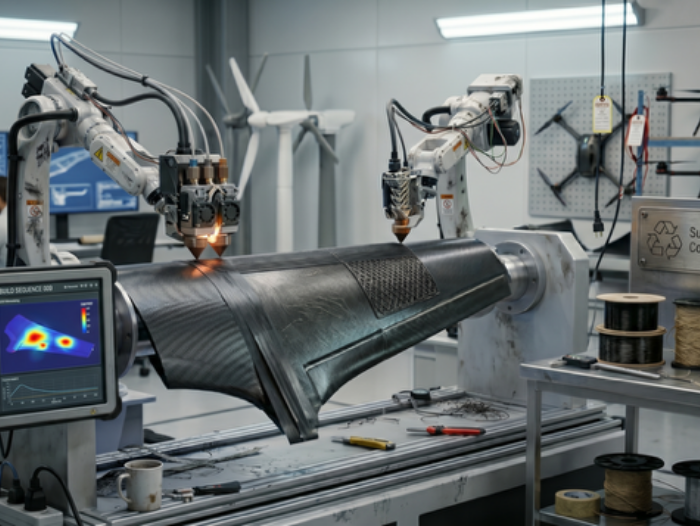
- The Control, Data and Artificial Intelligence (CoDAlab) research group at the Universitat Politècnica de Catalunya - BarcelonaTech (UPC) is taking part in the ATHENS project, which is developing recyclable thermoplastic composite materials with advanced real-time monitoring systems to improve the manufacture, safety and service life of lightweight structures.
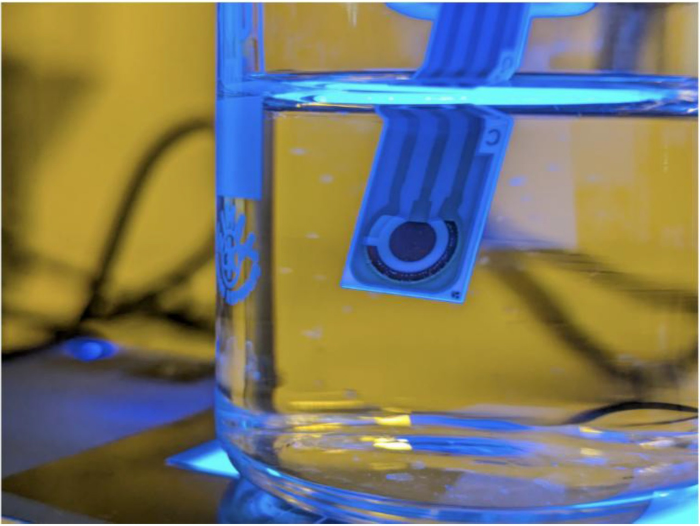
- The MICROTECH LAB - Microtechnology for the Industry research subgroup, part of the Centre for Advanced Technologies in Mechanics (CATMech) at the Universitat Politècnica de Catalunya - BarcelonaTech (UPC), is leading the technical development of a minimally invasive platform to monitor biomarkers and physiological indicators related to stress and emotional wellbeing.