

ETEXHEALTH: Smart textiles for applications in the health sector
February 16, 2024
FIERCE: Flying Internet of Everything Communication Enhancements
February 20, 202419/02/2024
A team of researchers from the Acoustical and Mechanical Engineering Laboratory (LEAM) in the Centre for Advanced Technologies in Mechanics (CATMech) at the Universitat Politècnica de Catalunya - BarcelonaTech (UPC) is participating in the development of a method that can generate and update noise maps for cities via mobile acoustic sensors.
The fast development of communication networks and the reduction in price of electronic components has put many European cities in a race to gather large amounts of data (on noise, air quality and traffic) and share them with inhabitants through web and mobile applications. In addition, the constant evolution of the Smart City concept is leading to an improvement in citizens’ comfort levels.
Among the main polluting factors, noise pollution is often overlooked as a health and environmental problem. However, according to the WHO, exposure to high, continuous levels of noise can cause serious illnesses such as cardiovascular problems.
To calculate the population’s exposure to environmental noise and to design and apply action plans to reduce it, European Directive 2002/49/EC defines an environmental noise map as an image of the levels of noise from different sources and time intervals. According to this directive, from 2019 it is compulsory to calculate noise maps by simulation, using the CNOSSOS-EU model. However, concerns have emerged regarding this method, as the results depend on the calculation procedure and a large amount of data are required to obtain a noise map.
In this context, the MASANOM project emerged. The main objective is to develop a method to generate and automatically update noise maps in cities, using a set of low-cost mobile acoustic sensors, which emit a low background noise and can be mounted on vehicles that move continuously around the city, for example, bicycles and electric scooters.
As part of the project, annual values of Lden and Ln (the average noise level during the day, evening and night) will be measured, as they should be plotted on a noise map according to the European directive. However, noises limited in time and space or those that occur at specific times and specific places are not detected.
The network of mobile sensors will move continuously around the city and thus provide, over time, the spatial and temporal sampling requirements needed to produce accurate noise maps. In addition, the noise maps drawn up with this system will be updated continuously by adding recently received data. This will be an advantage in terms of the five years of validity and compulsory renovation of noise maps established by the directive.
Due to this continuous updating, it will be possible to detect excesses in the capacity maps (maximum levels of noise permitted in an area) in a shorter time. This will mean that maps can be updated with greater speed and therefore more accurate action plans can be proposed to reduce the noise pollution and increase citizens’ quality of life.
In addition, the use of low-cost measurement stations will reduce the expenditure associated with the creation of noise maps and make them more attainable for developing countries, in which traffic noise is a considerable problem due to the presence of very dense traffic jams and an older fleet of vehicles.
Budget and funding
MASANOM has a total budget of €173,500, through the call for subsidies Knowledge Generation Projects 2022 (Spanish State Research Agency) of the State Plan of Scientific and Technical Research and Innovation 2021-2023 (Ministry of Science and Innovation). Its duration is three years (2023-2026).


You want to know more?
Related Projects
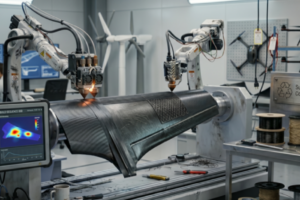
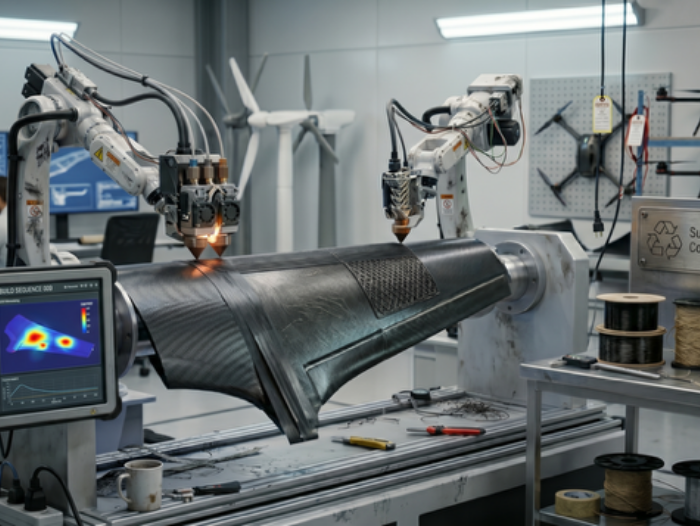
- The Control, Data and Artificial Intelligence (CoDAlab) research group at the Universitat Politècnica de Catalunya - BarcelonaTech (UPC) is taking part in the ATHENS project, which is developing recyclable thermoplastic composite materials with advanced real-time monitoring systems to improve the manufacture, safety and service life of lightweight structures.
- The MICROTECH LAB - Microtechnology for the Industry research subgroup, part of the Centre for Advanced Technologies in Mechanics (CATMech) at the Universitat Politècnica de Catalunya - BarcelonaTech (UPC), is leading the technical development of a minimally invasive platform to monitor biomarkers and physiological indicators related to stress and emotional wellbeing.
- A research team from the Universitat Politècnica de Catalunya - BarcelonaTech (UPC) has participated in the M3LEC project, coordinated by the Centro de Astrobiología (CAB), a joint centre of the Spanish National Research Council (CSIC) and the Instituto Nacional de Técnica Aeroespacial (INTA), with the Universidad de Sevilla (US) / Instituto de Microelectrónica de Sevilla (IMSE) also participating. M3LEC aimed to contribute to the characterisation of the Martian atmosphere and meteorology, and to investigate new instrumentation for future planetary exploration missions.
- The Interdisciplinary Group on Building Science and Technology (GICITED) and the Energy, Catalysis, Process and Reaction Engineering (ENCORE) research group at the Universitat Politècnica de Catalunya - BarcelonaTech (UPC) are participating in the European ArchiSpace project, to develop infrastructure prototypes for human settlements in extraterrestrial environments using materials and conditions analogous to those on the Moon and Mars.