

LIFE BIOGASNET: A new cost-effective and low-carbon biogas purification technology
October 29, 2024
GAISSA: An energy card to assess and improve energy efficiency and performance of AI
November 21, 202429/10/2024
The adoption of 6G applications will have a positive impact, transforming our society in the future. Among these are the use of autonomous vehicles and the potential to reduce accidents, more efficient emergency services, and connected drones that facilitate the delivery of medical supplies between healthcare centres. The implementation of these new technologies requires test infrastructures that closely mimic real environments to ensure their subsequent application.
In this context, several research groups from the CCABA (Advanced Broadband Communications Center), CER (Specific Research Centre) at the Universitat Politècnica de Catalunya - BarcelonaTech (UPC) are working on the ELEGANT and 6G-OpenLab projects, which aim to create a research and experimental environment dedicated to the development and testing of sustainable infrastructures.
To achieve this, a 6G hybrid network will be built, combining a high-capacity fibre optic network with an evolvable 5G+ mobile network, enabling the transition towards 6G to support mobility and artificial intelligence projects. This advancement will be made possible by integrating multi-technology systems, dual 5G networks (with two frequency bands, reaching up to 26 GHz), expanded mobile networks, and ultra-low latency capabilities. All of this will be implemented through flexible and scalable systems capable of adapting to the growth demands that 6G applications require. A unique feature of this infrastructure is its network distributed across two UPC campuses 32 km apart: the North Campus in Barcelona and the Castelldefels Campus.
A multidisciplinary team of several UPC research groups will bring their expertise to tackle these complex challenges, as it involves a hybrid network of optical communications and mobile networks. This complexity will facilitate the development of ambitious projects such as the 6G-EWOC autonomous vehicles initiative, as well as the intelligent crop control project in the Agròpolis area. This testbed will be available to companies and organisations upon request from early 2026.
The total budget for both projects amounts to 4 million euros, funded through European Funds channelled via the ÚNICO 5G I+D programme of the Ministry for Digital Transformation and Public Administration. The ELEGANT project began in April 2023 and the 6G-OpenLab in September 2022, with completion expected by 2026.



Related Projects
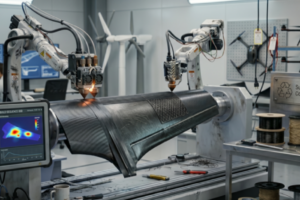
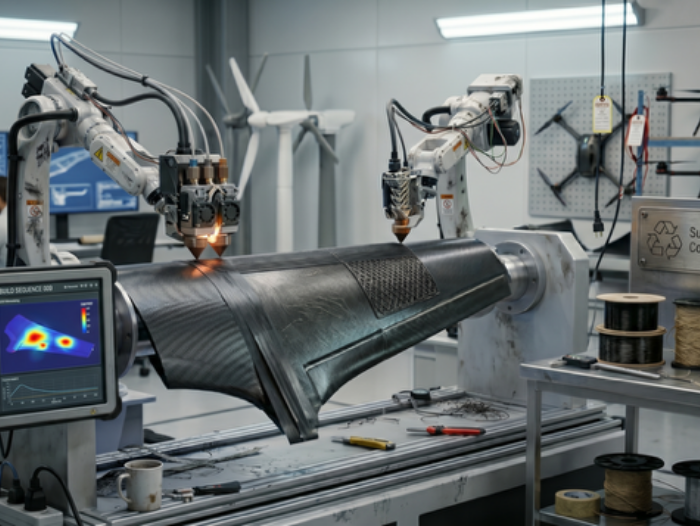
- The Control, Data and Artificial Intelligence (CoDAlab) research group at the Universitat Politècnica de Catalunya - BarcelonaTech (UPC) is taking part in the ATHENS project, which is developing recyclable thermoplastic composite materials with advanced real-time monitoring systems to improve the manufacture, safety and service life of lightweight structures.
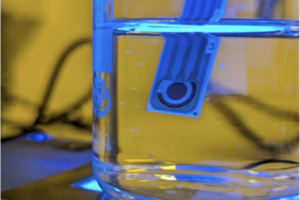
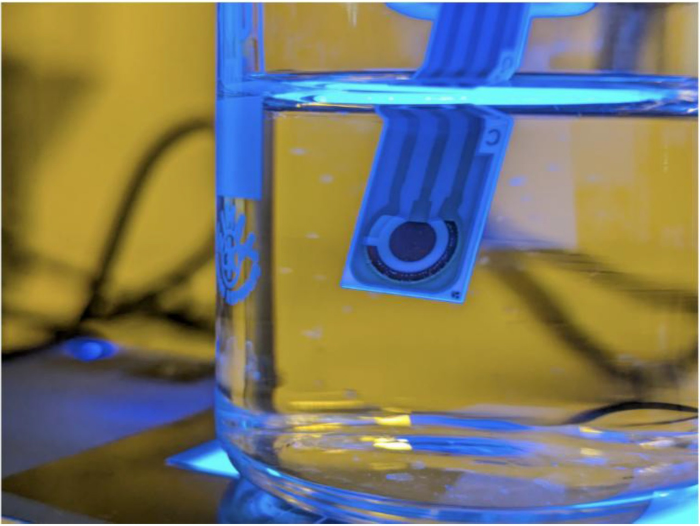
- The MICROTECH LAB - Microtechnology for the Industry research subgroup, part of the Centre for Advanced Technologies in Mechanics (CATMech) at the Universitat Politècnica de Catalunya - BarcelonaTech (UPC), is leading the technical development of a minimally invasive platform to monitor biomarkers and physiological indicators related to stress and emotional wellbeing.
- A research team from the Universitat Politècnica de Catalunya - BarcelonaTech (UPC) has participated in the M3LEC project, coordinated by the Centro de Astrobiología (CAB), a joint centre of the Spanish National Research Council (CSIC) and the Instituto Nacional de Técnica Aeroespacial (INTA), with the Universidad de Sevilla (US) / Instituto de Microelectrónica de Sevilla (IMSE) also participating. M3LEC aimed to contribute to the characterisation of the Martian atmosphere and meteorology, and to investigate new instrumentation for future planetary exploration missions.
- The Interdisciplinary Group on Building Science and Technology (GICITED) and the Energy, Catalysis, Process and Reaction Engineering (ENCORE) research group at the Universitat Politècnica de Catalunya - BarcelonaTech (UPC) are participating in the European ArchiSpace project, to develop infrastructure prototypes for human settlements in extraterrestrial environments using materials and conditions analogous to those on the Moon and Mars.