

INDUSAC: Conclusion of a Pioneering Model for Industry–Academia Collaboration
September 29, 2025
INVISITAGS: Integrated labels for the traceability of textile garments
October 7, 202502/10/2025
The company Friselva S.A., Corporació Alimentària Guissona (bonÀrea), together with the Food Service Cluster and inLab FIB at the Universitat Politècnica de Catalunya - BarcelonaTech (UPC), are participating in the Hydroless project, which aims to optimise water consumption in meat production plants. The project includes an innovative solution to monitor and optimise water use at bonÀrea’s plant in Guissona, as well as the design and development of a digital twin of Friselva’s facilities in Riudellots de la Selva.
The current situation of the meat industry is characterised by several challenges, including pressure on water resources and the need to improve environmental sustainability. Meat processing facilities show a very high water consumption, required in different stages of the process such as meat washing, cooling, and other operations.
To address this challenge, the project sets out two main objectives. On the one hand, a solution will be developed to monitor and optimise the water consumption used during the production process at bonÀrea’s plant in Guissona. On the other hand, a digital twin of a subsystem of Friselva’s facilities in Riudellots de la Selva will be designed and developed as a proof of concept of the advantages of having a digital twin. The digital twin will allow the control of a virtual replica of the study area and the monitoring of (virtual) water consumption in order to explore design alternatives, such as specific water recirculation or configurations adapted to a specific production plan, thus optimising the water consumption of the real plant.
Budget and Funding
The project is funded within the framework of the Strategic Plan of the CAP 2023-2027 of the Government of Catalonia, with a total budget of €115,000. It has a duration of 18 months (December 2024 – May 2026).
Action of the Strategic Plan of the CAP 2023-2027 co-funded by:

Technology
You want to know more?
Related Projects
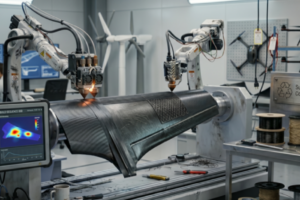
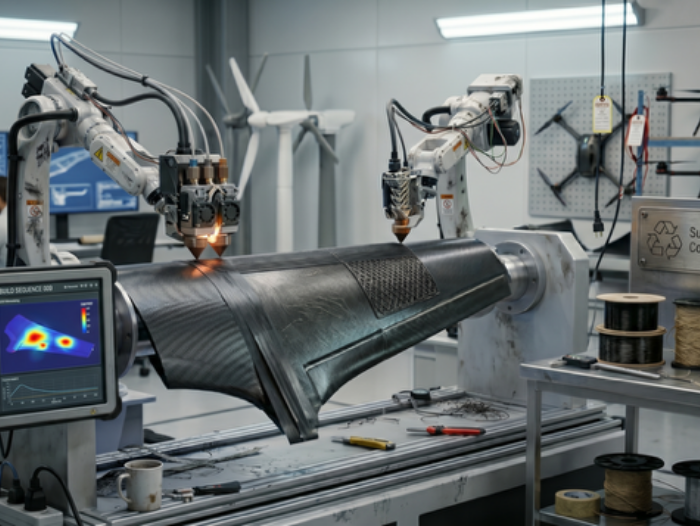
- The Control, Data and Artificial Intelligence (CoDAlab) research group at the Universitat Politècnica de Catalunya - BarcelonaTech (UPC) is taking part in the ATHENS project, which is developing recyclable thermoplastic composite materials with advanced real-time monitoring systems to improve the manufacture, safety and service life of lightweight structures.
- The MICROTECH LAB - Microtechnology for the Industry research subgroup, part of the Centre for Advanced Technologies in Mechanics (CATMech) at the Universitat Politècnica de Catalunya - BarcelonaTech (UPC), is leading the technical development of a minimally invasive platform to monitor biomarkers and physiological indicators related to stress and emotional wellbeing.
- A research team from the Universitat Politècnica de Catalunya - BarcelonaTech (UPC) has participated in the M3LEC project, coordinated by the Centro de Astrobiología (CAB), a joint centre of the Spanish National Research Council (CSIC) and the Instituto Nacional de Técnica Aeroespacial (INTA), with the Universidad de Sevilla (US) / Instituto de Microelectrónica de Sevilla (IMSE) also participating. M3LEC aimed to contribute to the characterisation of the Martian atmosphere and meteorology, and to investigate new instrumentation for future planetary exploration missions.
- The Interdisciplinary Group on Building Science and Technology (GICITED) and the Energy, Catalysis, Process and Reaction Engineering (ENCORE) research group at the Universitat Politècnica de Catalunya - BarcelonaTech (UPC) are participating in the European ArchiSpace project, to develop infrastructure prototypes for human settlements in extraterrestrial environments using materials and conditions analogous to those on the Moon and Mars.