

AI applied to safety in indoor climbing
January 20, 2026
AI and Music Festival (S+T+ARTS): musical creativity with AI
January 30, 202622/01/2026
The Visualisation, Virtual Reality and Graphic Interaction Research Group (ViRVIG) at the Universitat Politècnica de Catalunya - BarcelonaTech (UPC) has participated in the XR4ED project, an initiative that connects the educational technology (EdTech) and Extended Reality (XR) sectors, with the aim of transforming learning and training across Europe.

The European EdTech sector plays an increasingly important role in Europe’s digital transformation, covering areas such as formal education, vocational training, and lifelong learning. According to various estimates, the sector experienced a 15% increase in investments in 2021, and global investment is expected to exceed 87 billion dollars in the next decade. However, this ecosystem remains highly fragmented within the European Union, with numerous small-scale players and few companies with a global presence. In this context, XR4ED (eXtended Reality for Education) emerged as a European project exploring the potential of Extended Reality to enhance learning and teaching processes.
Meanwhile, the European Extended Reality industry has maintained an international leadership position, particularly in software and content development. The application of XR technologies in education allows for the expansion of practical learning experiences, going beyond abstract knowledge and thus supporting competency-based pedagogical models. Nonetheless, the development of educational XR applications currently requires highly specialised knowledge, as well as significant investments of time and financial resources.
The XR4ED project has specifically addressed the following challenges:
- Bringing together the community and resources from the EdTech and XR sectors, reducing existing fragmentation and accelerating innovation to achieve personalised, innovative, efficient, and inclusive learning through XR technologies.
- Creating a European reference platform connecting educators, developers, and organisations in an open marketplace, acting as a central access point to facilitate adoption, scalability, and accessibility of XR solutions applied to learning, training, and education.
The project will enable:
- The deployment of innovative, cutting-edge XR applications for education and training across Europe.
- Start-ups, SMEs, and the EdTech industry to evolve XR solution prototypes into market-ready products.
- A central access point to XR content, tools, and solutions based on open standards.
- The connection and visibility of relevant existing European initiatives and projects, including platforms, catalogues, and repositories.
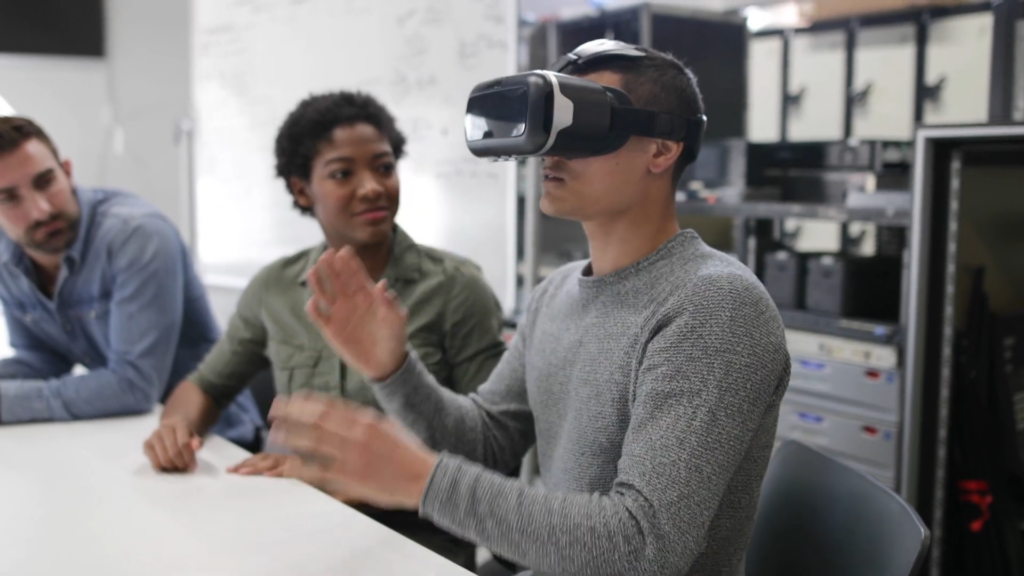
The ViRVIG group at UPC has contributed to this project by developing animation modules for virtual humanoids (avatars) that provide a virtual body for the user, tracking their movements within the Virtual Reality environment. These animation modules are available in the platform’s marketplace and work with various virtual reality headset models. They offer solutions for both six 6-DOF tracker setups and the more common three-tracker setups, designed for cases where only a headset and two hand controllers are available.
Consortium, budget, and funding
The XR4ED consortium consists of a multidisciplinary and complementary team of 11 partners. In addition to UPC, participants include: CYENS Centre of Excellence (Cyprus), project coordinator; Konnekt Able Technologies Limited (Ireland); Epistimi Epikoinonia (Greece); F6S Network Ireland Limited (Ireland); Infinitivity Design Labs (France); Kainotomia & Sia EE (Greece); Nurogames GmbH (Germany); VASS EU Services (Luxembourg); Software Imagination and Vision SRL (Romania); and Cellock Ltd (Cyprus).
The project had a total budget of €8,568,075, funded by the European Commission’s Horizon Europe 2021–2027 programme (HORIZON-101093159-XR4ED), and ran for 3 years (January 2023 – December 2025).


Technology
Sector
You want to know more?
Related Projects
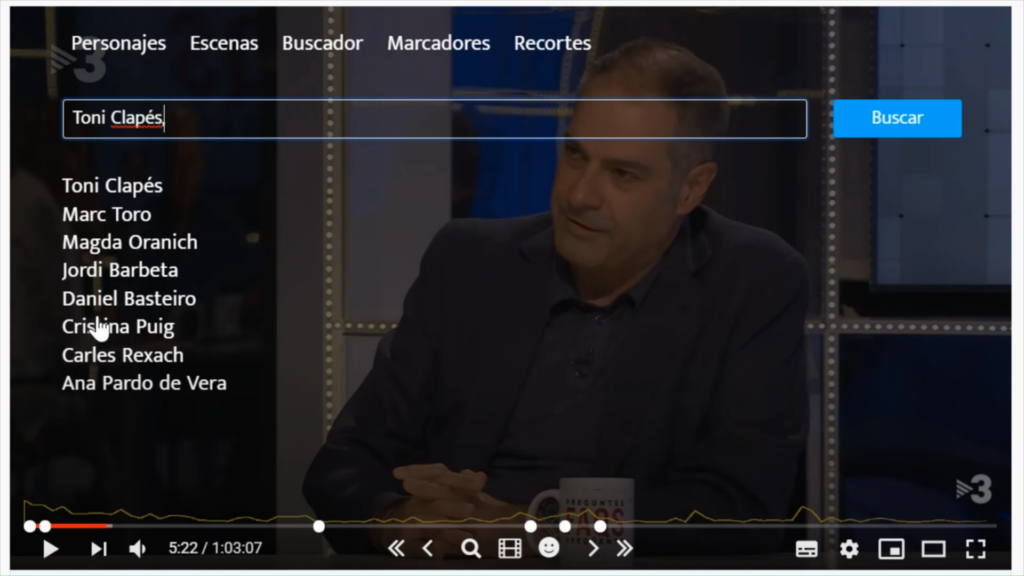
- The AgroTech research group at UPC, in collaboration with its spin-off Ugiat Technologies, has developed uPlayer, a new multimedia player concept that enables more intuitive video navigation and viewing, intelligently enhancing the user experience, especially on YouTube and other platforms, by integrating as a plugin or advanced player.
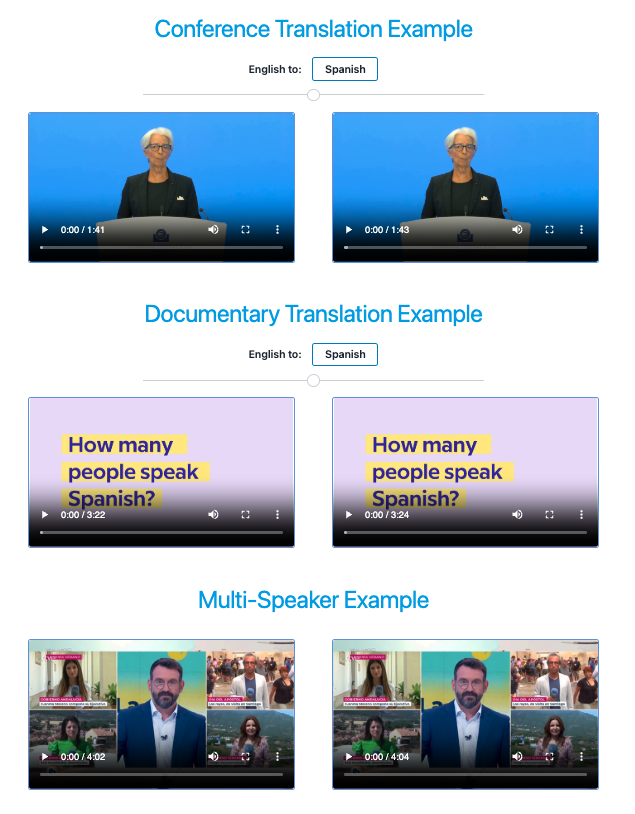
- The AgroTech research group at the Universitat Politècnica de Catalunya – BarcelonaTech (UPC), together with its spin-off Ugiat Technologies, have driven DoblAI, an AI platform that integrates transcription, translation, subtitling and video dubbing into a single workflow. The solution, which uses deep learning technology and cloned or default voice models, is specifically designed for the journalism and communications sector.
- The Image and Video Processing Group (GPI), part of the IDEAI-UPC research group, and the Digital Culture and Creative Technologies Research Group (DiCode) from the Image Processing and Multimedia Technology Center (CITM) at the Universitat Politècnica de Catalunya – BarcelonaTech (UPC), have co-organised the AI and Music Festival (S+T+ARTS) together with Sónar+D and Betevé, to explore the creative use of artificial intelligence in music.
- The Visualisation, Virtual Reality and Graphic Interaction Research Group (ViRVIG) at the Universitat Politècnica de Catalunya - BarcelonaTech (UPC) has participated in the XR4ED project, an initiative that connects the educational technology (EdTech) and Extended Reality (XR) sectors, with the aim of transforming learning and training across Europe.