


PREVENTBot: An Autonomous Robotic System to Enhance Real-Time Crop Monitoring and Exploration
December 19, 2024
EFICIENT3D: Low Energy Consumption Food Preparation and Cooking Processes
December 27, 202420/12/2024
The Biomaterials, Biomechanics, and Tissue Engineering (BBT) Research Group at the Institute for Health Research and Innovation (IRIS) of the Universitat Politècnica de Catalunya – BarcelonaTech (UPC) is leading DYNAMIC, a project aimed at creating multifunctional, stimuli-responsive biomaterials that not only promote bone regeneration but also intelligently and effectively combat bacterial infections.
DYNAMIC focuses on three main objectives:
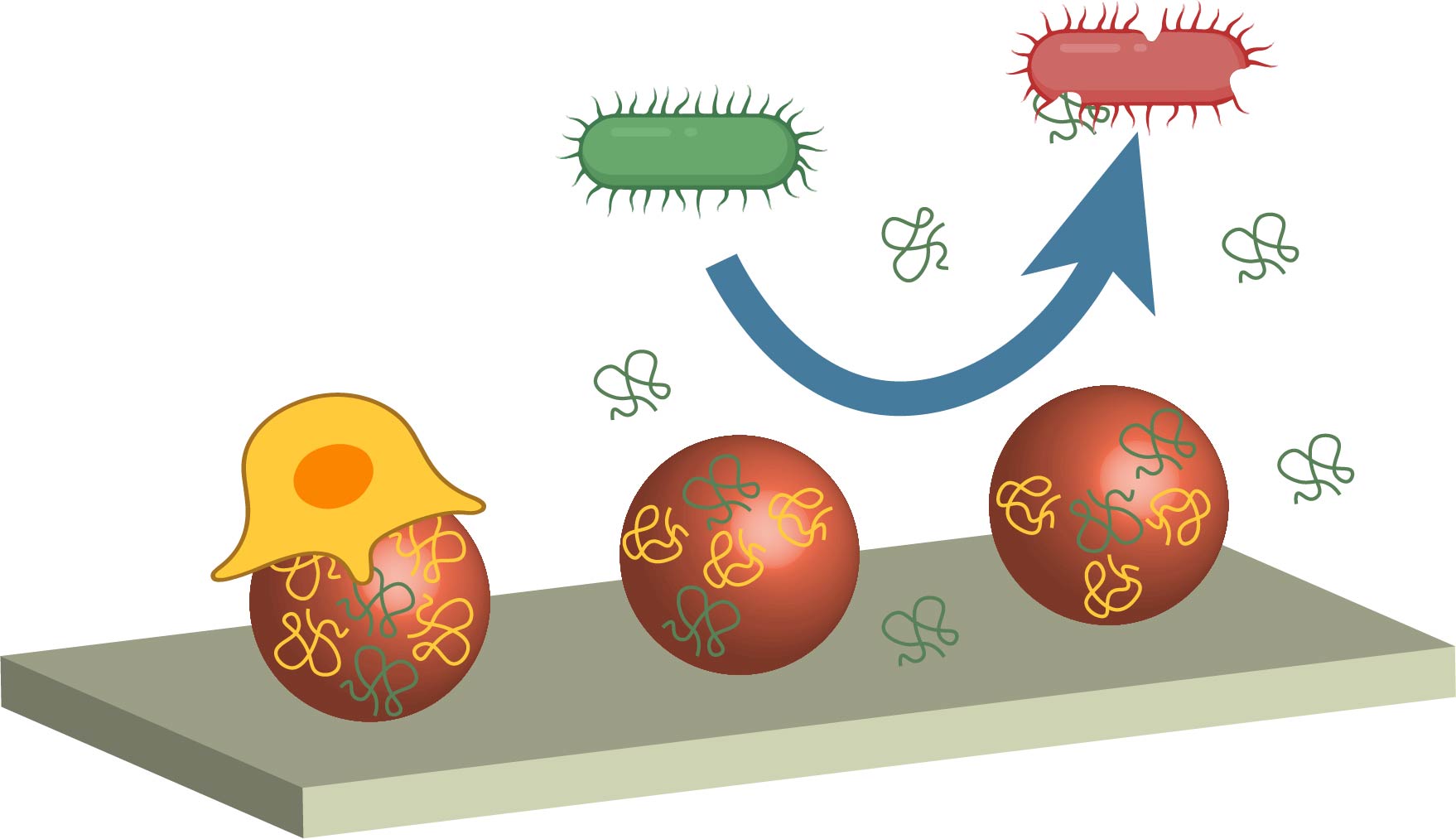
- Development of smart molecules: The design of linkers (molecular connectors) that activate only in the presence of a bacterial infection, releasing antibacterial peptides in a controlled and temporary manner. These molecules will detect specific signals from the infection environment, such as certain enzymes or changes in pH.
- Creation of advanced biomaterials: The combination of these smart molecules (linkers + antibacterial peptides) with peptides that promote cellular adhesion or polydopamine nanoparticles to produce multifunctional biomaterials (titanium implants and hydrogels). These combinations will have unique properties to help cells adhere and dynamically fight bacteria.
- Advanced interaction studies: Using these materials as advanced platforms to study, in real time, the interactions between cells and bacteria, aiming to develop new biomaterials that improve bone regeneration in complex infected environments.
To achieve this, firstly, degradable linkers will be synthesised under specific conditions, such as the acidic pH typical of bacterial infections or the action of proteases, and an antibacterial peptide (LF1-11) will be added. At the same time, these linkers will be combined with cell adhesion peptides on peptide platforms or with polydopamine nanoparticles to enhance tissue fixation.
Secondly, titanium surfaces and hydrogels will be functionalised with multifunctional coatings to create dynamic materials with osteointegrative and antibacterial properties.
Thirdly, their effectiveness will be evaluated by testing these materials with stem cells and various types of bacteria to analyse their performance under controlled conditions. Finally, the best combinations will be tested in a proximal tibia bone infection repair model to assess the ability of the biomaterials to induce bone formation in vivo under infection conditions.
DYNAMIC proposes an innovative and unprecedented approach to developing multifunctional biomaterials that stimulate bone growth and deliver antibacterial agents in a controlled and temporary manner in the context of infection. This strategy offers a novel solution for bone tissue regeneration and represents a substantial advancement in the field.
Budget and Funding
The project will run for 3 years (September 2024–August 2027) with a budget of €200,000, funded by the 2023 Knowledge Generation Projects programme (PID2023-148538OB-I00) (Spanish State Research Agency).
Sector
You want to know more?
Related Projects
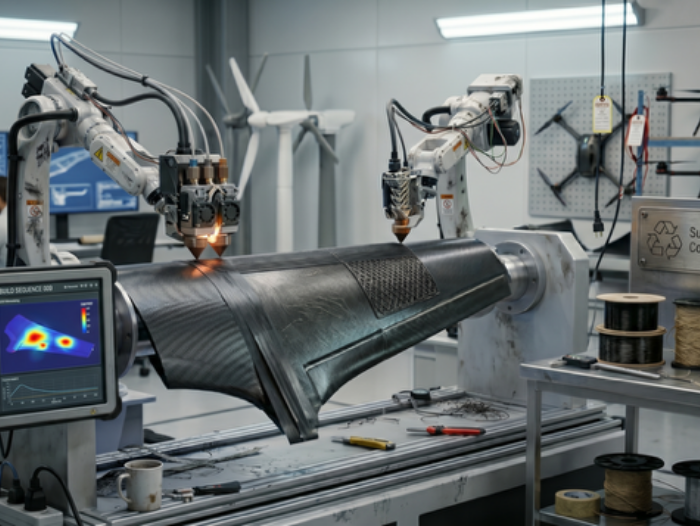
- The Control, Data and Artificial Intelligence (CoDAlab) research group at the Universitat Politècnica de Catalunya - BarcelonaTech (UPC) is taking part in the ATHENS project, which is developing recyclable thermoplastic composite materials with advanced real-time monitoring systems to improve the manufacture, safety and service life of lightweight structures.
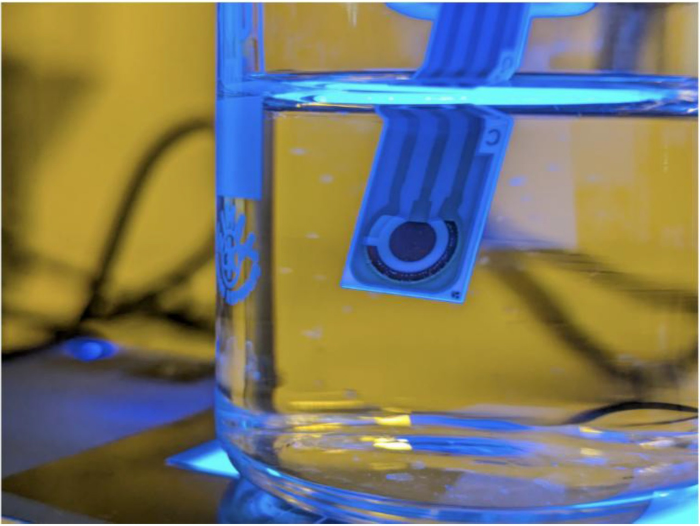
- The MICROTECH LAB - Microtechnology for the Industry research subgroup, part of the Centre for Advanced Technologies in Mechanics (CATMech) at the Universitat Politècnica de Catalunya - BarcelonaTech (UPC), is leading the technical development of a minimally invasive platform to monitor biomarkers and physiological indicators related to stress and emotional wellbeing.
- A research team from the Universitat Politècnica de Catalunya - BarcelonaTech (UPC) has participated in the M3LEC project, coordinated by the Centro de Astrobiología (CAB), a joint centre of the Spanish National Research Council (CSIC) and the Instituto Nacional de Técnica Aeroespacial (INTA), with the Universidad de Sevilla (US) / Instituto de Microelectrónica de Sevilla (IMSE) also participating. M3LEC aimed to contribute to the characterisation of the Martian atmosphere and meteorology, and to investigate new instrumentation for future planetary exploration missions.
- The Interdisciplinary Group on Building Science and Technology (GICITED) and the Energy, Catalysis, Process and Reaction Engineering (ENCORE) research group at the Universitat Politècnica de Catalunya - BarcelonaTech (UPC) are participating in the European ArchiSpace project, to develop infrastructure prototypes for human settlements in extraterrestrial environments using materials and conditions analogous to those on the Moon and Mars.