


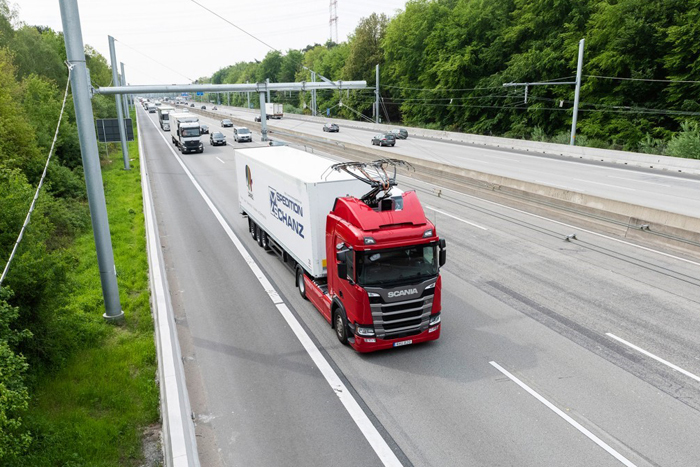
A study examines recharging electrical vehicles on motorways using overhead lines
July 26, 2021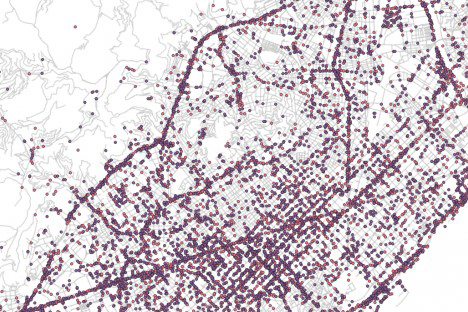
Mobidata: A new paradigm to determine patterns of mobility in the city of Barcelona
September 14, 2021Researchers at the Institute of Robotics and Industrial Informatics (IRI) and the Agricultural Machinery Unity (UMA) of the UPC are working on the European project CANOPIES,whose aim is to explore a new paradigm of collaboration between people and robots in the context of precision agriculture for permanent crops. The focus is the operation of harvesting and pruning dessert grape vines.
Collaboration between robots and people in the industrial sector is increasingly common in the context of Industry 4.0. However, this is not the case in the agricultural environment, where the development of innovative technologies based on robotics and artificial intelligence is still in the early days, even though it is considered fundamental for the sustainable agriculture of the future.
Robots that are developed in this project will be able to help each other and collaborate with people. IRI’s task in the project will be focused on perfecting the robots’ systems of perception through computer vision technologies, in collaboration with the research group Artificial Vision and Intelligent Systems (VIS). This will enable the robots to identify on the vines the grapes that are at the ideal stage of maturity to be collected, and to determine which branches need to be pruned and how this should be done. These tasks require a high level of precision.
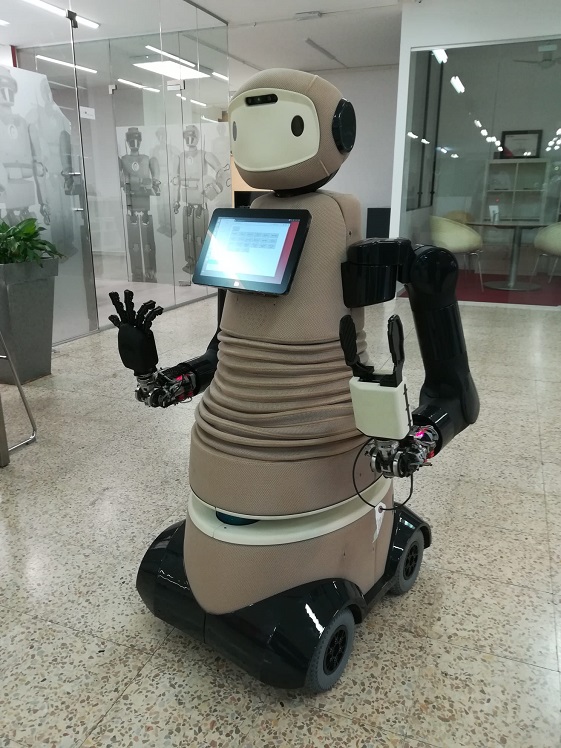
UMA’s participation in the project is focused on implementing the various operations and processes involved in agriculture so that the robots can integrate all the functions of agricultural machinery, adapted in this case to the tasks of harvesting, pruning and transport of the grapes.
The challenge of the use of robotics in harvesting and pruning requires the development of complex processes of perception, communication, shared planning of agreements, prediction of human intentions, interaction and action. Under these premises, CANOPIES fills the current gap in the development of robotic solutions that are totally autonomous for permanent crops, with a great impact on industry and society.
CANOPIES provides a great opportunity to attain a more sustainable agricultural paradigm. In addition, it offers new opportunities and leading solutions to revolutionise a millennial agricultural tradition and carry out the work of harvesting high quality dessert grapes more efficiently, at the same time as productivity is increased.
Nine other European partners are involved in this four-year European project of the H2020 programme, with a budget of 6.9 million euros. They are coordinated by theUniversità degli Studi Roma Tre.


Technology
Topic
You want to know more?
Related Projects
- The Resource Recovery and Environmental Management (R2EM) of the Center for Research in Multiscale Science and Engineering (CCEM) at the Universitat Politècnica de Catalunya - BarcelonaTech (UPC) is leading the HARMONIZE project, which focuses on the recovery and valorisation of ammonia from urban and industrial waste streams. The project is part of a larger initiative, MemTecWare, coordinated by the UCM.
- The Tecnologia Orientada a la Comunitat (TOC) research group at UPC, in collaboration with the Centre d'Estudis Porcins de Catalunya, leads the AEROFER project, which aims to demonstrate the viability of liquid fertilisers derived from pig manure in aeroponic cultivation, with the intention of later extrapolating it to conventional crops, thereby closing the loop from waste to resource, with a positive environmental impact on the region.
- The Agricultural Mechanization Unit (UMA) coordinates RENOVATE, a European project aimed at fostering the exchange of practical knowledge among farmers to optimize sustainable crop management through innovation.
- The project, led by the Paper Engineering Research Group (CELBIOTECH) at the Universitat Politècnica de Catalunya - BarcelonaTech (UPC), aims to obtain different subproducts from the waste generated during industrial hemp cultivation, also known as hemp fibre. The proposed processes are technologies already used in biorefineries and the paper industry but with different raw materials.


