

Predictive eBoost’s project aims to improve the performance of electric vehicles’ powertrain and batteries
April 21, 2022
Hospitals 4.0 with more effective management due to machine learning algorithms
May 2, 2022Future challenges in data processing and connectivity
Future infocommunication services will need to address the challenge of processing the large volume of data produced by new communication networks (the future Internet of Everything, IoE). In turn, these networks must strive to deliver increasingly fast, reliable, immediate and ubiquitous connectivity.
The RODIN project, in which the Signal Processing and Communications Group (SPCOM) participates, seeks to provide solutions to two major challenges that hinder the communication and processing of large volumes of data: interference management on wireless networks and information processing against integrity and security threats.

First challenge: interference cancellation
Regarding interference management, opportunistic communication systems will be designed to monitor free radio resources (cognitive radio) and adapt the transmitted signal dynamically to avoid interference with other network users. In addition, in massive multiple access systems, which consist of multiple devices connected simultaneously with a central node, interference cancellation schemes will be developed with latency and energy-consumption constraints. In full-duplex communications (two-way simultaneous connection in the same band), self-interference cancellation schemes will be designed in the case of multi-antenna transceivers.
Second challenge: integrity and security of data
Regarding the integrity and security of information, new methods for detecting corrupted data, anomalies and attacks will be designed to protect big databases (e.g. the IoT). In addition, algorithms will be developed to detect hidden dependencies in large databases, using statistical analysis and information theory tools such as correlation and mutual information. Finally, new methods for protecting databases against potential attacks will be studied, as well as the machine learning algorithms used to process them.
RODIN 2020 - 2023
The Signal Processing and Communications Group (GPSC) of the University of Vigo is also a partner of the RODIN project and project coordinator. The project lasts for three years (June 2020 to May 2023) and is funded by the Ministry of Science and Innovation with a budget (UPC) of 117,854 euros.
Technology
Would you like to know more?
Projectes Relacionats
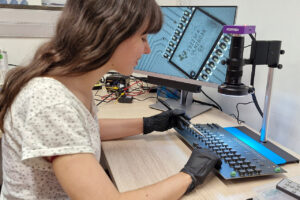
- A team from the Matrix Analysis and Discrete Potential Theory (MAPTHE) research group at the Universitat Politècnica de Catalunya - BarcelonaTech (UPC), and the Department of Mathematics at CUNEF Universidad in Madrid, have participated in the development of MARIA, a prototype of a portable, flexible and radiation-free device designed to improve the early detection of breast cancer. The device can identify tumours through electrical conductivity, with the aim of enabling its future use in primary care settings.
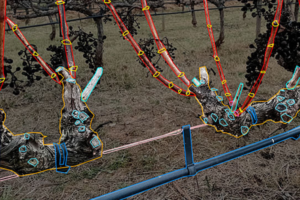
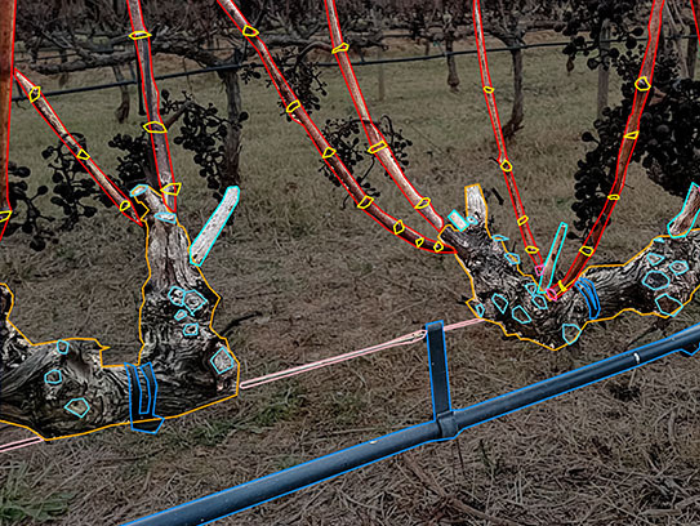
- The Center for Industrial Equipment Design (CDEI-UPC) at the Universitat Politècnica de Catalunya - BarcelonaTech (UPC) is participating in a cross-border project aimed at promoting the use of advanced digital technologies in viticulture in regions on both sides of the Pyrenees. The initiative seeks to improve specialist training, technical advice and decision-making in vineyard management.
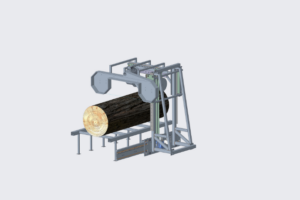
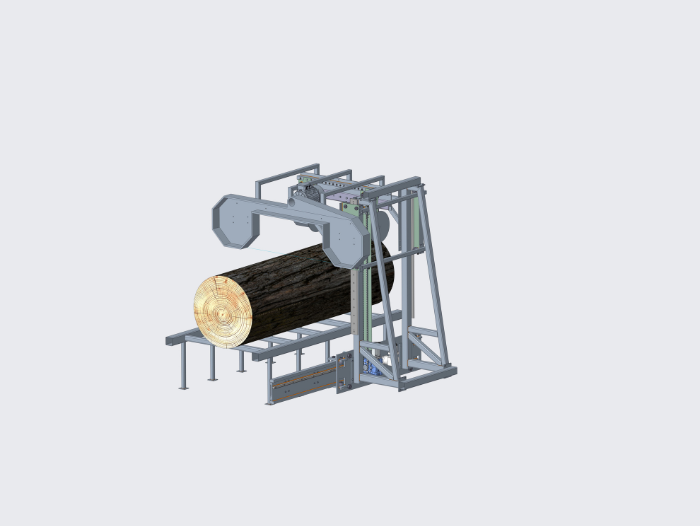
- The Centre for Industrial Equipment Design (CDEI) at the Universitat Politècnica de Catalunya - BarcelonaTech (UPC), together with the IRI, Institut de Robòtica i Informàtica Industrial (CSIC-UPC), is participating in the development of a pre-commercial prototype of an automatic portable sawmill that integrates computer vision, artificial intelligence and computer numerical control to improve productivity, efficiency and safety in local wood processing for the company Envall Coop. S.L.
STOR-HY: More flexible, efficient and resilient hydropower storage for the European electricity grid
The Center for Industrial Diagnostics (CDIF) at the Universitat Politècnica de Catalunya - BarcelonaTech (UPC) coordinates the European STOR-HY project, which develops digital tools, monitoring systems and advanced models to optimise the operation of pumped-storage hydropower plants and reduce their investment and maintenance costs.