


CIRC-BOOST: Circular solutions in the construction sector
September 8, 2025
GridForLoads: Stabilising the power grid through grid-forming loads
September 18, 202515/09/2025
A team from the Environment Centre Laboratory (LCMA) of the Universitat Politècnica de Catalunya - BarcelonaTech (UPC) is taking part in a study commissioned by the city councils of la Llagosta, Mollet and Santa Perpètua (in Vallès Occidental), with the main objective of identifying the impact of industrial plants on the generation of unpleasant odours and continuously monitoring air quality in these municipalities.
The study arises as a response to the growing public concern over episodes of unpleasant odours in several areas of Vallès Occidental. The situation escalated in the summer of 2022, when la Llagosta experienced an episode of unpleasant odours lasting 10 days. Faced with residents’ outrage and the environmental impact, civil protection teams, local police, mayors and councillors were mobilised, and the following year the municipalities of Mollet, la Llagosta and Santa Perpètua signed an agreement with the UPC to launch a technical study aimed at analysing the origin and intensity of odours in the three municipalities.
The project’s main goal is to identify the impact of both nearby and distant industrial estates on the generation of unpleasant odours, mainly derived from volatile organic compounds (VOCs). The first phase has focused on the use of advanced mathematical models incorporating meteorological data to simulate the dispersion of odours in each municipality. The results indicate that the highest relative concentrations would occur in la Llagosta and Santa Perpètua between June and August, and in Mollet between November and February, coinciding with the influence of the closest industrial estates. All three municipalities share a common pattern: odours are more intense at night, between 9 p.m. and 6 a.m.
The project also includes innovative actions to improve odour detection and management. Over the coming months, a second phase will be carried out consisting of a specific modelling study for each municipality, taking into account the most relevant industrial activities. In addition, the UPC has developed the Odour Report System (ORS) web application, which is already operational and available to download, which allows residents to immediately and geolocatedly report incidents and complaints related to odours and air pollution. Another notable action will be the installation, in the last quarter of 2025, of the first VOC sensor stations in various locations across the three municipalities. These stations will make it possible to determine the origin and characteristics of odour episodes.
Impact
The project represents a decisive step towards more efficient and transparent environmental management. The results obtained will allow informed decision-making, identification of specific emission sources and the application of corrective measures with greater precision. The project represents a key support tool for municipalities to improve air quality and public health, strengthen public trust and foster collaboration between science, administration and the community.
Budget and funding
The project will be undertaken by the UPC at the Environment Centre Laboratory (LCMA) within the Department of Chemical Engineering. It has a duration of four years (May 2024 – May 2028).
Sector
Topic
You want to know more?
Related Projects
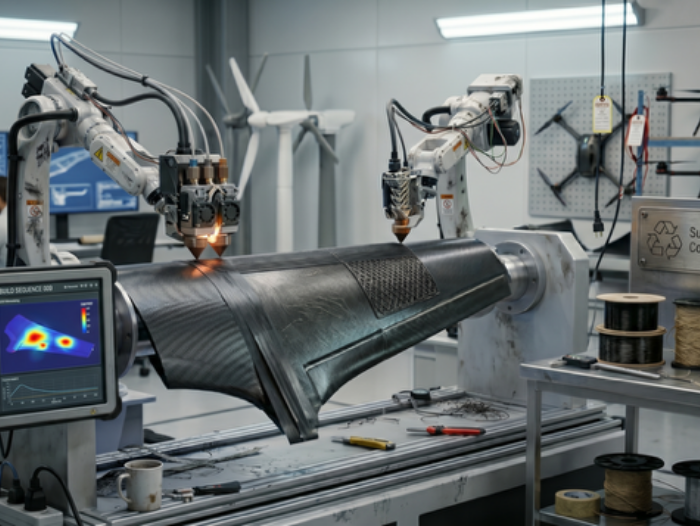
- The Control, Data and Artificial Intelligence (CoDAlab) research group at the Universitat Politècnica de Catalunya - BarcelonaTech (UPC) is taking part in the ATHENS project, which is developing recyclable thermoplastic composite materials with advanced real-time monitoring systems to improve the manufacture, safety and service life of lightweight structures.
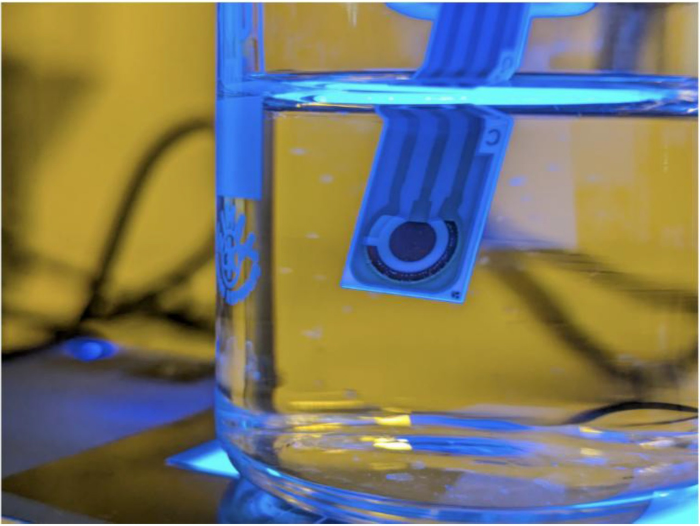
- The MICROTECH LAB - Microtechnology for the Industry research subgroup, part of the Centre for Advanced Technologies in Mechanics (CATMech) at the Universitat Politècnica de Catalunya - BarcelonaTech (UPC), is leading the technical development of a minimally invasive platform to monitor biomarkers and physiological indicators related to stress and emotional wellbeing.
- A research team from the Universitat Politècnica de Catalunya - BarcelonaTech (UPC) has participated in the M3LEC project, coordinated by the Centro de Astrobiología (CAB), a joint centre of the Spanish National Research Council (CSIC) and the Instituto Nacional de Técnica Aeroespacial (INTA), with the Universidad de Sevilla (US) / Instituto de Microelectrónica de Sevilla (IMSE) also participating. M3LEC aimed to contribute to the characterisation of the Martian atmosphere and meteorology, and to investigate new instrumentation for future planetary exploration missions.
- The Interdisciplinary Group on Building Science and Technology (GICITED) and the Energy, Catalysis, Process and Reaction Engineering (ENCORE) research group at the Universitat Politècnica de Catalunya - BarcelonaTech (UPC) are participating in the European ArchiSpace project, to develop infrastructure prototypes for human settlements in extraterrestrial environments using materials and conditions analogous to those on the Moon and Mars.