

Odour Recognition with AI in Embedded Devices
May 12, 2025
FIREPRIME: Tools and Services to Improve Wildfire Safety and Prevention in Europe
May 20, 202513/05/2025
The Resource Recovery and Environmental Management (R2EM) of the Center for Research in Multiscale Science and Engineering (CCEM) at the Universitat Politècnica de Catalunya - BarcelonaTech (UPC) is leading the HARMONIZE project, which focuses on the recovery and valorisation of ammonia from urban and industrial waste streams. The project is part of a larger project, MemTecWare, led by the UCM.
In a circular economy scenario, water recycling, separation, and concentration technologies are crucial issues in both municipal and industrial environments. In fact, advanced separation technologies are key processes in the new Circular Economy Action Plan (CEAP II), one of the fundamental pillars of the European Green Deal, under which activities related to wastewater treatment (WWT) should seek new technologies that can recover both water and nutrients.
In parallel, the European Sustainable Process Industry through Resource and Energy Efficiency (SPIRE) plan, which focuses on actions to avoid, valorise, and reuse waste streams to create new business models and move towards a circular economy (zero waste), requires circular value chains and the development of cost-effective separation and purification operations. In this sense, membrane operations are highly relevant due to their high efficiency and low environmental impact; however, it is essential to improve membrane technologies and materials so that they can recover these value-added elements at the quality and concentration levels required by the market.
In this context, the MemTecWare project focuses on integrated and efficient solutions that contribute to minimising liquid waste (zero liquid discharge, ZLD), valorising residual streams, and sustainably producing water and energy. The project proposes the combination of advanced membrane separation technologies for the treatment of wastewater with high salinity and/or ammonia content: membrane distillation (MD), osmotic membrane distillation (OMD), vacuum membrane distillation (VMD), membrane crystallisation (MCr), reverse electrodialysis (RED), and pressure-retarded osmosis (PRO).
MemTecWare, coordinated by the Complutense University of Madrid (UCM), is divided into three subprojects:
- Subproject 1: MemTecWare-SOMEWATER - Development of self-heating membranes (led by the Complutense University of Madrid, UCM).
- Subproject 2: MemTecWare-PROFUSION - Implementation and optimisation of PRO processes (led by the University of Las Palmas de Gran Canaria, ULPGC).
- Subproject 3: MemTecWare-HARMONIZE - Improvement of OMD and VMD processes for the selective recovery of ammonia and ammonium salts (led by the Universitat Politècnica de Catalunya - BarcelonaTech, UPC).
Specifically, the HARMONIZE subproject, whose main goal is to valorise the recovered ammonia both as fertiliser (e.g., ammonium salts) and as a CO₂-free fuel (NH3 (g)), will:
- Study the effects and optimise operational parameters and factors affecting ammonia flow, selectivity, and product quality in OMD and VMD configurations.
- Explore new OMD and VMD configurations and optimised module designs to reduce the transmembrane water flux in order to increase ammonia flow, selectivity, and product concentration.
- Study and optimise the crystallisation process to obtain better-quality ammonium salt crystals for fertiliser production.
- Develop new, more selective OMD and VMD membranes for ammonia.
- Extend existing physical models and develop new experimental-based models to evaluate and optimise the Opex (e.g., energy and chemical consumption, fouling, etc.) and Capex (e.g., membrane area) of the OMD-MCr process for ammonium salt production.
Budget and funding
The project is funded by the Agencia Estatal de Investigación through the State Plan for Scientific, Technical, and Innovation Research 2021-2023 (PID2022-138389OB-C33). It has a budget of €100,000 and a duration of three years (September 2023 – August 2026).


You want to know more?
Related Projects
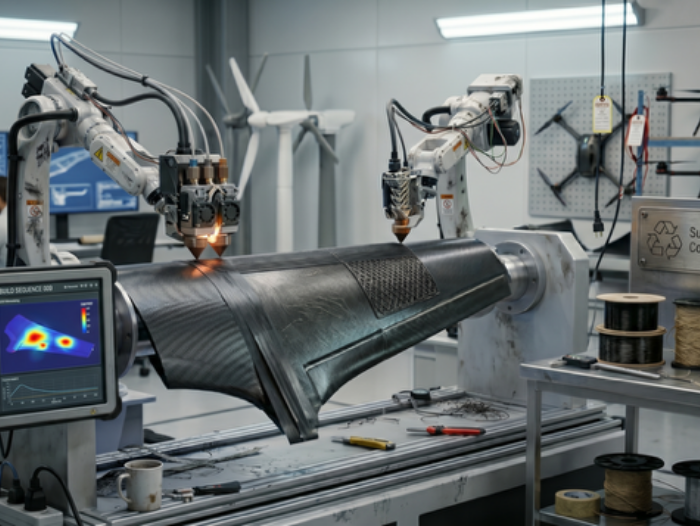
- The Control, Data and Artificial Intelligence (CoDAlab) research group at the Universitat Politècnica de Catalunya - BarcelonaTech (UPC) is taking part in the ATHENS project, which is developing recyclable thermoplastic composite materials with advanced real-time monitoring systems to improve the manufacture, safety and service life of lightweight structures.
- The MICROTECH LAB - Microtechnology for the Industry research subgroup, part of the Centre for Advanced Technologies in Mechanics (CATMech) at the Universitat Politècnica de Catalunya - BarcelonaTech (UPC), is leading the technical development of a minimally invasive platform to monitor biomarkers and physiological indicators related to stress and emotional wellbeing.
- A research team from the Universitat Politècnica de Catalunya - BarcelonaTech (UPC) has participated in the M3LEC project, coordinated by the Centro de Astrobiología (CAB), a joint centre of the Spanish National Research Council (CSIC) and the Instituto Nacional de Técnica Aeroespacial (INTA), with the Universidad de Sevilla (US) / Instituto de Microelectrónica de Sevilla (IMSE) also participating. M3LEC aimed to contribute to the characterisation of the Martian atmosphere and meteorology, and to investigate new instrumentation for future planetary exploration missions.
- The Interdisciplinary Group on Building Science and Technology (GICITED) and the Energy, Catalysis, Process and Reaction Engineering (ENCORE) research group at the Universitat Politècnica de Catalunya - BarcelonaTech (UPC) are participating in the European ArchiSpace project, to develop infrastructure prototypes for human settlements in extraterrestrial environments using materials and conditions analogous to those on the Moon and Mars.