

PhotonHub Europe: innovate with the technology of light!
May 18, 2023
Multifunctional biodegradable aerogels as an alternative to plastic
May 29, 202322/05/2023
Researchers in the Polymer Materials and Textile Chemistry (POLQUITEX) research group of the Department of Chemical Engineering at the Universitat Politècnica de Catalunya - BarcelonaTech (UPC) participate in the WAVE project, who aim is to recycle elastomeric waste (such as tyres and scraps from building roofs), for its subsequent reuse and recovery in various industrial sectors (automotive, civil, electrical).
In WAVE, a devulcanizing process has been developed, so that this elastomeric waste can be integrated in production processes, and the recycled material can be used in the same way as the original material.
The project is a new development of the group’s research line. This has progressed from mixing ground tire rubber with thermoplastics, to devulcanization, a process that enables a further step to be taken in the possibilities of reusing and recovering this waste, in line with the concepts of the circular economy and sustainability.
WAVE is designed to contribute to reducing the over 20 million tonnes of elastomeric waste that is generated every year worldwide and to minimising the amount of this waste that is still dumped in landfill. To achieve this, elastomeric waste is recovered and recycled through environmentally friendly processes of devulcanization. These involve thermal and mechanical processes, electromagnetic radiation and chemical agents at low temperature. The process is optimised depending on the type of elastomer waste. In addition, the industrial viability of the results obtained in the various devulcanization processes will be assessed through characterization techniques.
The project is relevant, considering its link to the new Spanish national plan on waste management (PEMAR) 2016-2022, which sets guidelines for waste management in Spain in the coming years and complements the Spanish Waste Prevention Programme 2014-2020. This programme includes many of the objectives to which the Spanish government made a commitment at the Glasgow COP26 (2021) summit on decarbonization of the planet.
Results and impact
The WAVE project is expected to promote:
- Understanding the influence on the devulcanization process of the most commonly used additives in elastomers: carbon and silicon dioxide.
- Integration of devulcanized waste in manufacturing processes through mixes with virgin elastomers to produce components that are similar to the original ones.
- Formulation of mixtures using percentages of devulcanized elastomer of between 30 and 70% to obtain equivalent properties to those of the initial elastomer.
- Understanding of the electrical behaviour of these materials for potential high-added value applications.
- Study of the properties obtained through the various mixes of devulcanized elastomer with virgin elastomer and assess the viability in various industrial sectors (automobile, civil, packaging, electrical).
Budget and funding
The project has a budget of €96,800 and has obtained funding through the ‘State Plan for Scientific and Technical Research and Innovation 2017-2020’ (Spanish State Research Agency). Its duration is three years (September 2022 – August 2025).


You want to know more?
Related Projects
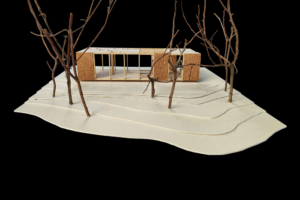
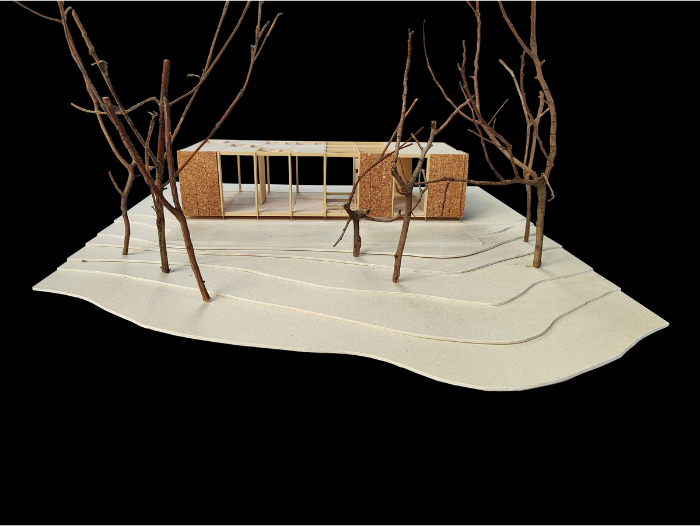
- The Casa Bosc project explores a lightweight, modular and prefabricated timber construction system designed to reduce the environmental impact of housing while making it easier to build and adapt to different contexts. The project has been developed by researchers from the Architectural Rehabilitation and Restoration Research Group (REARQ) at the Universitat Politècnica de Catalunya - BarcelonaTech (UPC) and the company ÀGORA.
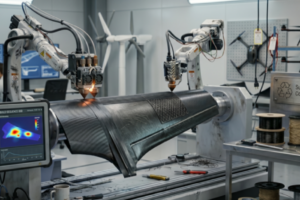
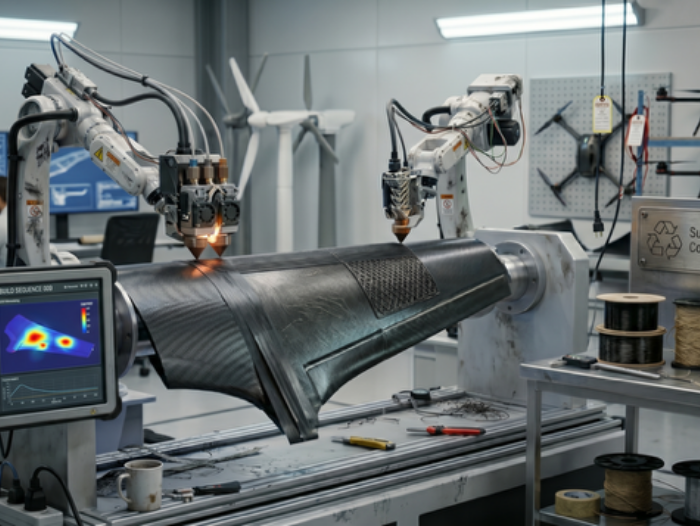
- The Control, Data and Artificial Intelligence (CoDAlab) research group at the Universitat Politècnica de Catalunya - BarcelonaTech (UPC) is taking part in the ATHENS project, which is developing recyclable thermoplastic composite materials with advanced real-time monitoring systems to improve the manufacture, safety and service life of lightweight structures.
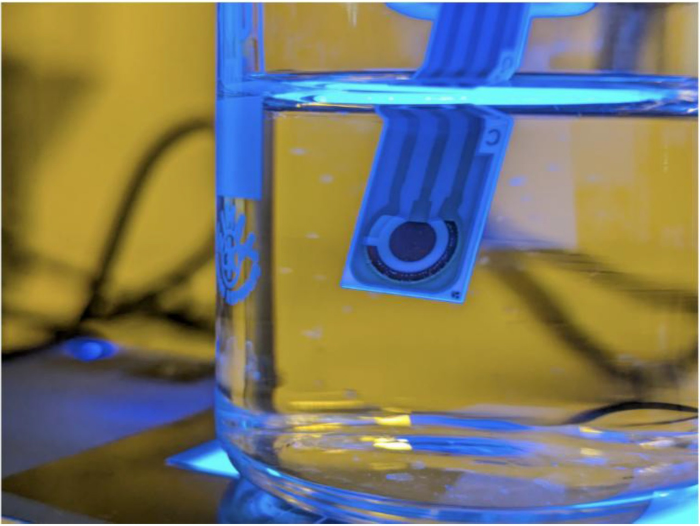
- The MICROTECH LAB - Microtechnology for the Industry research subgroup, part of the Centre for Advanced Technologies in Mechanics (CATMech) at the Universitat Politècnica de Catalunya - BarcelonaTech (UPC), is leading the technical development of a minimally invasive platform to monitor biomarkers and physiological indicators related to stress and emotional wellbeing.
- A research team from the Universitat Politècnica de Catalunya - BarcelonaTech (UPC) has participated in the M3LEC project, coordinated by the Centro de Astrobiología (CAB), a joint centre of the Spanish National Research Council (CSIC) and the Instituto Nacional de Técnica Aeroespacial (INTA), with the Universidad de Sevilla (US) / Instituto de Microelectrónica de Sevilla (IMSE) also participating. M3LEC aimed to contribute to the characterisation of the Martian atmosphere and meteorology, and to investigate new instrumentation for future planetary exploration missions.