

MOST: A unique hybrid device to generate electricity and store thermal energy in an efficient and sustainable manner
November 25, 2024
ROOTBot: An Autonomous Robotic System with Radar for Studying the Root Systems of Fruit Trees
December 9, 202429/11/2024
The Group of Environmental Engineering and Microbiology (GEMMA) at UPC is leading the PROALGAE project, aimed at producing new alternative proteins from biomass derived from microalgae and cyanobacteria cultivated using by-products from the agri-food industry. These alternative proteins aim to provide a sustainable ingredient to meet the growing global demand for protein, applicable in the development of food and feed.
PROALGAE addresses both the bioremediation of agri-food by-products/effluents (decontamination through bioprocesses) and the production of valuable biomass for the preparation of food and feed through algae-based processes. The ultimate goal is to recover nutrients from agri-food by-products to create new protein sources, closing the loop of the agri-food sector within a circular economy approach.
The project scope includes evaluating the feasibility of cultivating microalgae in specific agri-food by-products, characterising the produced biomass, and assessing its application as food and feed. Environmental sustainability will also be evaluated, and potential production will be estimated under future scenarios.
The project is divided into two subprojects:
- The first, led by the GEMMA group at UPC, focuses on nutrient recovery from freshwater agri-food effluents (specifically from the brewing industry) using microalgae cultures. It aims to optimise protein content and enhance the organoleptic properties of the microalgae. It also involves developing protein-rich biscuits using microalgae biomass as an ingredient, with their sensory and nutritional quality evaluated. Finally, a comprehensive analysis of economic, environmental, and social sustainability will be conducted to ensure feasibility.
- The second, led by the Environmental Engineering Group (GIA) at the University of Cantabria, focuses on cultivating microalgae in agri-food effluents for animal feed production. It addresses the bioremediation of high-salinity agri-food by-products (such as whey and aquaculture effluents) using microalgae, defining optimal cultivation conditions. A mathematical model will also be developed to simulate microalgae growth in industrial scenarios, and the impact of alternative proteins derived from these microalgae on fish growth and composition in aquaculture systems will be assessed.
Through PROALGAE, reliance on conventional proteins is expected to decrease by up to 30% by using microalgae grown in effluents, leading to more sustainable and efficient production with benefits for both the environment and the food and feed industries.
The project spans three years (September 2023 – August 2026) with a budget of €277,035. It is funded by the Spanish Research Agency through the State Programme for R&D&I of the Ministry of Science, Innovation and Universities, with additional funds of the European Union from the Next Generation EU programme.

You want to know more?
Related Projects
- A team from the e-PLASCOM and eb-POLICOM research groups, alongside the Barcelona Research Center in Multiscale Science and Engineering (CCEM) at the Universitat Politècnica de Catalunya - BarcelonaTech (UPC), is involved in the EcoPolyRub project in partnership with the Centre Català del Plàstic (CCP). The initiative aims to create innovative elastomeric materials based on recycled tyre rubber, enhanced recycled plastics, and natural rubber for high-performance mechanical and thermal applications.
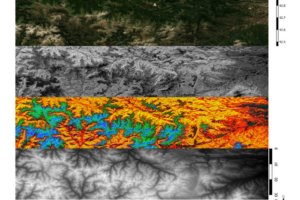
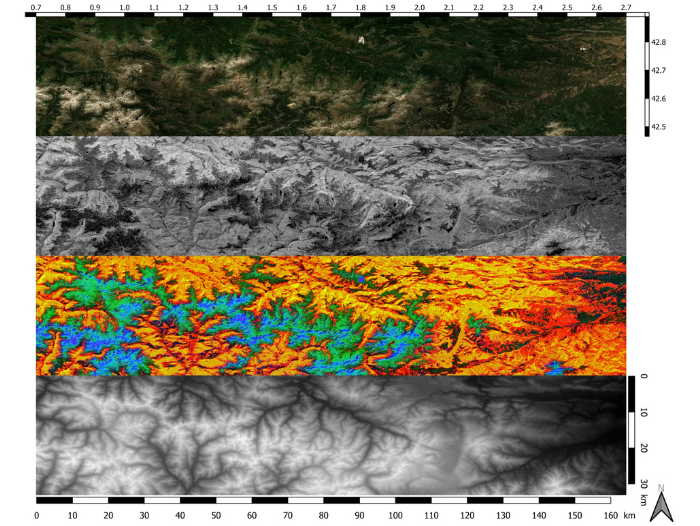
- Un equip de recerca de la UPC, integrat pel CommSensLab-UPC i el Remote Sensing Lab (RSLAB) de la Universitat Politècnica de Catalunya - BarcelonaTech (UPC), juntament amb l’Institut d’Estudis Espacials de Catalunya (IEEC), ha participat en el projecte AI4EO, amb l’objectiu d’impulsar solucions i posar en pràctica eines d’intel·ligència artificial aplicades a dades d’observació de la Terra en diversos casos d’ús sobre el territori català.
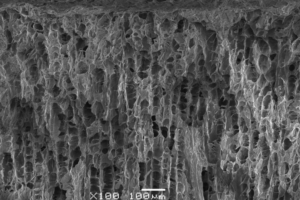
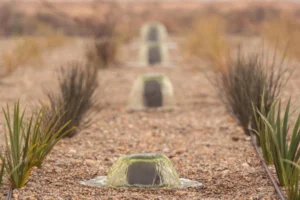
- The e-PLASCOM research group at the Universitat Politècnica de Catalunya - BarcelonaTech (UPC) is developing a solution based on biodegradable sodium alginate and gelatin aerogels for the purification of non-potable water and desalination using solar energy.
- A research team from the Group of Environmental Engineering and Microbiology (GEMMA), and the Department of Civil and Environmental Engineering, at the Universitat Politècnica de Catalunya - BarcelonaTech (UPC), has collaborated with Raimat on the development of an innovative water treatment system based on natural processes, requiring minimal, almost zero, energy consumption and generating no waste. The project has enabled the Lleida winery to take another step in its sustainability strategy and improve its environmental efficiency through the creation of wetlands in the middle of its vineyards, purifying 80,000 litres of water per day while also enhancing the biodiversity of the surrounding area.