

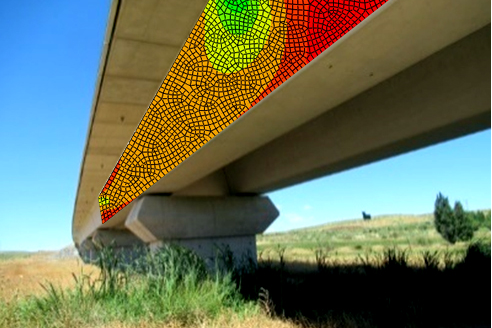
UPC works with digital twins to make the construction industry more efficient, more reliable and safer
April 28, 2021
COREWIND: improving the performance of floating wind technology in the open sea
May 7, 2021The Database Technologies and Information Management Group (DTIM) is coordinating 'An Automatic Data Discovery Approach to Enhance Barcelona’s Data Ecosystem’, a project that will create a platform based on open data on Barcelona to support users in the process of developing intelligent applications.
The importance of data is not new, and the predicted economic value that can be extracted is very high. In this context, Barcelona is today a major centre for data science and artificial intelligence (AI) at European level. Small and medium-sized companies, large organisations, emerging companies and research groups are working on solutions for different sectors (tourism, health and mobility) based on data in a rich, constantly evolving ecosystem.
To become a data-driven society, Barcelona needs to facilitate access to and use of its data. The general aim of this project is for other people to be able to easily access, contextualise and cross the large amount of data the city offers. This will benefit suppliers and consumers of information and will enable the city’s management to improve from the perspective of data-driven public services.

The project has two main proposals, under Barcelona City Council’s control in both cases. One is the creation of a data hub in which public and private stakeholders can publish their datasets, as is the case of the Open Data BCN catalogue. The other is an innovative semi-automatic method to cross heterogeneous, intersectoral data sources.
The dataset and its hidden relations will be analysed to characterise the whole automatically. Graph Neural Networks (GNNs) will be used: an advanced AI technique that generalises the deep neural network model to exploit other aspects such as the topology of concepts and connectivity between data sources. Today this is innovative research that has still not been explored in the context of Data Discovery.
The project has received the Awards for Scientific Research into Urban Challenges in Barcelona 2020, which is given by Barcelona City Council, for contributing solutions to the challenges of COVID-19 and generally reconsidering the model of the city.
Related news item: The Scientific Research Awards recognise four UPC research projects to face the challenges of COVID-19 in Barcelona
Technology
You want to know more?
Related Projects
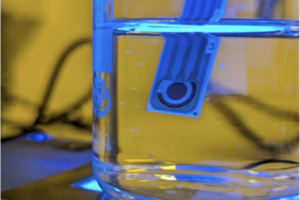
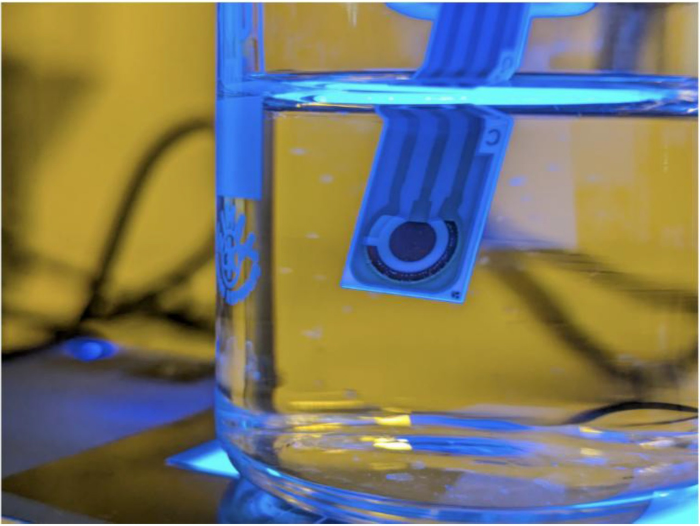
- The MICROTECH LAB - Microtechnology for the Industry research subgroup, part of the Centre for Advanced Technologies in Mechanics (CATMech) at the Universitat Politècnica de Catalunya - BarcelonaTech (UPC), is leading the technical development of a minimally invasive platform to monitor biomarkers and physiological indicators related to stress and emotional wellbeing.
- A research team from the Universitat Politècnica de Catalunya - BarcelonaTech (UPC) has participated in the M3LEC project, coordinated by the Centro de Astrobiología (CAB), a joint centre of the Spanish National Research Council (CSIC) and the Instituto Nacional de Técnica Aeroespacial (INTA), with the Universidad de Sevilla (US) / Instituto de Microelectrónica de Sevilla (IMSE) also participating. M3LEC aimed to contribute to the characterisation of the Martian atmosphere and meteorology, and to investigate new instrumentation for future planetary exploration missions.
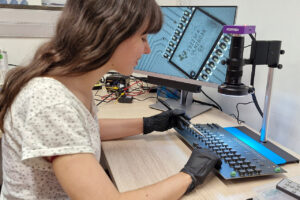
- A team from the Matrix Analysis and Discrete Potential Theory (MAPTHE) research group at the Universitat Politècnica de Catalunya - BarcelonaTech (UPC), and the Department of Mathematics at CUNEF Universidad in Madrid, have participated in the development of MARIA, a prototype of a portable, flexible and radiation-free device designed to improve the early detection of breast cancer. The device can identify tumours through electrical conductivity, with the aim of enabling its future use in primary care settings.
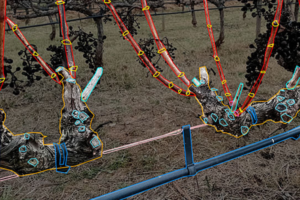
- The Center for Industrial Equipment Design (CDEI-UPC) at the Universitat Politècnica de Catalunya - BarcelonaTech (UPC) is participating in a cross-border project aimed at promoting the use of advanced digital technologies in viticulture in regions on both sides of the Pyrenees. The initiative seeks to improve specialist training, technical advice and decision-making in vineyard management.