

IoT to improve the efficacy of batteries in fire detection systems
October 16, 2023
GESTHERB: Decision support system for weed management
October 20, 202316/10/2023
A consortium comprised of researchers from the Institute of Robotics and Industrial Informatics (IRI, CSIC-UPC) and the Centre for Language and Speech Technologies and Applications (TALP) at the Universitat Politècnica de Catalunya - BarcelonaTech (UPC), Suara Cooperativa and Datision are participating in the development of a robot that can converse and undertake everyday and care tasks
Robots form an increasing part of our everyday life and are considered a very effective tool to address current social problems. Helping older people to live at home as they age is one of these problems.
In this context, the project ROB-IN is focused on creating a robot that can improve the wellbeing of users, mitigate problems associated with ageing and cognitive decline, help maintain independence and serve for monitoring and early diagnosis of potential physical and mental problems.
ROB-IN enables the testing of a robot prototype that has tools to help older adults to remain in their homes as they age, and to improve carers’ efficacy so that they can provide better care services. The ROB-IN robot prototype will serve for various purposes at the same time (initiating new human-robot relations, providing care, undertaking specific everyday activities and tasks, and supervising and understanding human activity). It will be able to communicate with the carer, who could introduce some patterns in the robot’s behaviour and receive reports on changes in the older adult’s habits and routines.
In the context of the ROB-IN project, new enabling technologies will be developed in three main aspects:
- Personalisation to take decisions that are adapted to the needs and preferences of the user and the carer.
- Understanding of continuing dialogue and the capacity to start-up conversations in which the robot can extract useful information about users, by asking specific questions or chatting.
- Explainability to generate trust and help the user to understand why the robot takes certain decisions and which data it is gathering, to ensure the control of privacy.
The specific applications will form the initial set of robot capabilities, which will be expanded with ideas contributed by the carers and the elderly people, in a user-centred design approach. As it observes and measures parameters of tasks and learns from conversations, ROB-IN will be able to provide valuable information for carers to improve early assessment.
The application of ROB-IN will be focused on the following activities:
1) physical assistance, such as bringing objects, helping to eat and helping to drink,
2) participation in social interactions, such as inducing calls to relatives or showing photographs of relatives,
3) promoting physical and cognitive training, using the robot to administer and assess specific exercises, and
4) gathering information to help carers.
Consortium, budget and funding
A multidisciplinary team participates in ROB-IN. It is comprised of robotics experts from the Institute of Robotics and Industrial Informatics (IRI, CSIC-UPC) and experts in speech technology from the Centre for Language and Speech Technologies and Applications (TALP) at the UPC that forms part of IDEAI, care providers (SUARA), and data analysis developers (DATISION). The project has a budget of €161,882.93. It was funded by the Spanish Government’s Ministry of Science and Innovation (Spanish State Research Agency), in the framework of grants for the State Plan of Scientific and Technical Research and Innovation 2017-2020 (PLEC2021-007859 MCIN/AEI/10.13039 /501100011033), and the European Union’s Next Generation funds (Recovery, Transformation and Resilience Plan). The project will be executed from December 2021 to November 2024.


Technology
You want to know more?
Related Projects
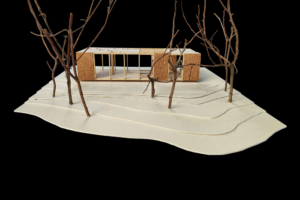
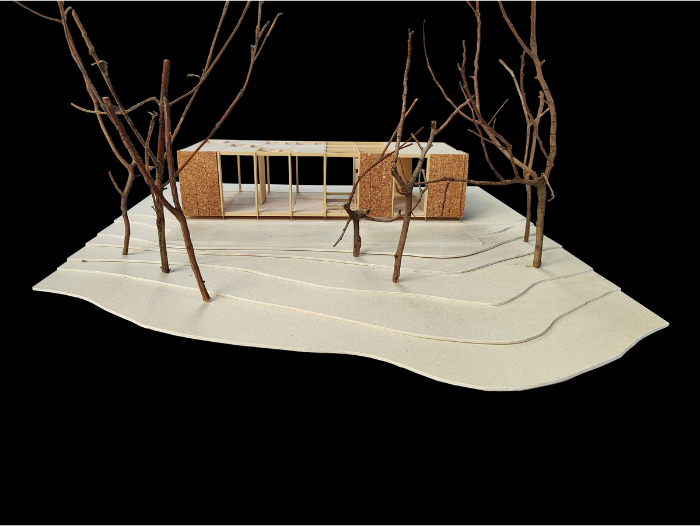
- The Casa Bosc project explores a lightweight, modular and prefabricated timber construction system designed to reduce the environmental impact of housing while making it easier to build and adapt to different contexts. The project has been developed by researchers from the Architectural Rehabilitation and Restoration Research Group (REARQ) at the Universitat Politècnica de Catalunya - BarcelonaTech (UPC) and the company ÀGORA.
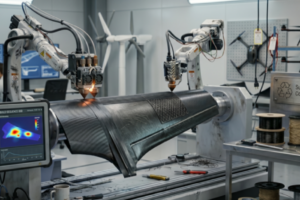
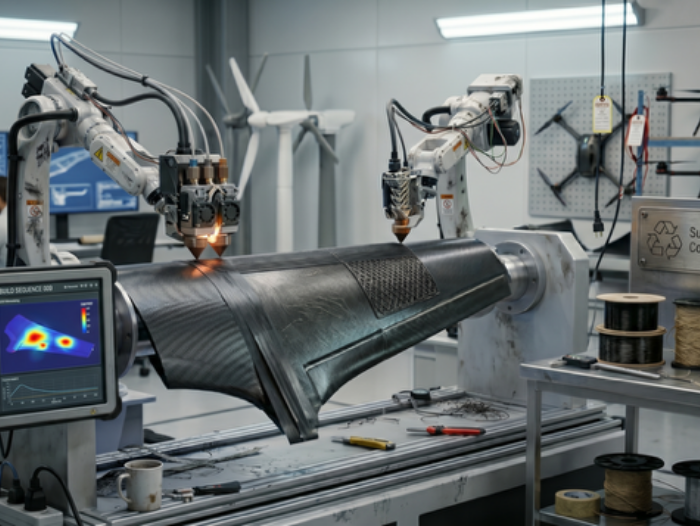
- The Control, Data and Artificial Intelligence (CoDAlab) research group at the Universitat Politècnica de Catalunya - BarcelonaTech (UPC) is taking part in the ATHENS project, which is developing recyclable thermoplastic composite materials with advanced real-time monitoring systems to improve the manufacture, safety and service life of lightweight structures.
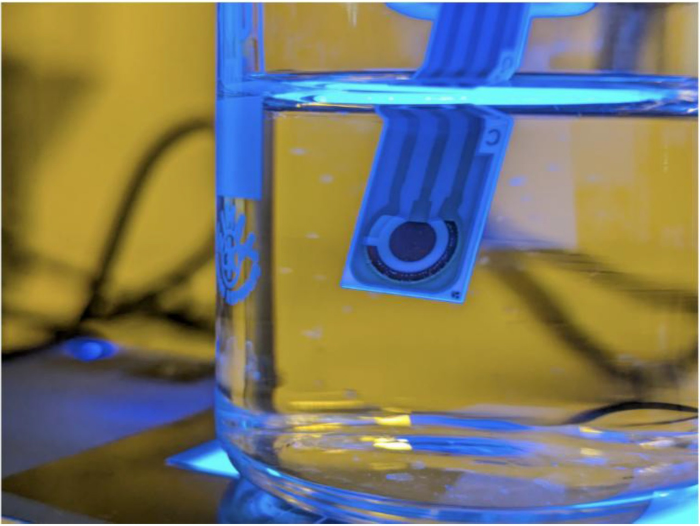
- The MICROTECH LAB - Microtechnology for the Industry research subgroup, part of the Centre for Advanced Technologies in Mechanics (CATMech) at the Universitat Politècnica de Catalunya - BarcelonaTech (UPC), is leading the technical development of a minimally invasive platform to monitor biomarkers and physiological indicators related to stress and emotional wellbeing.
- A research team from the Universitat Politècnica de Catalunya - BarcelonaTech (UPC) has participated in the M3LEC project, coordinated by the Centro de Astrobiología (CAB), a joint centre of the Spanish National Research Council (CSIC) and the Instituto Nacional de Técnica Aeroespacial (INTA), with the Universidad de Sevilla (US) / Instituto de Microelectrónica de Sevilla (IMSE) also participating. M3LEC aimed to contribute to the characterisation of the Martian atmosphere and meteorology, and to investigate new instrumentation for future planetary exploration missions.