- The UPC POLQUITEX research group is working, along with the company CARINSA, on the research and development of fragrance microcapsules with biodegradable polymer materials for use in fabric softeners, to avoid the release of microplastics into the environment.
- Cities are responsible for 80% of global energy consumption, 70% of total waste generation and 60% of greenhouse gas emissions of the planet. For this reason, measures need to be taken to transform cities into more sustainable, circular ecosystems.
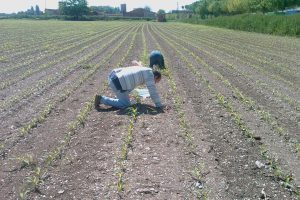
- A team of researchers from the Department of Agri-Food Engineering and Biotechnology of the Barcelona School of Agri-Food and Biosystems Engineering (EEABB), associated with the Specific Research Centre for Agri-Food Technology (Agrotech UPC), and the Design and Assessment group of Broadband Networks and Services (BAMPLA) at the Castelldefels School of Telecommunications and Aerospace Engineering (EETAC), Universitat Politècnica de Catalunya - BarcelonaTech (UPC), are participating in the development of a monitoring and decision support system for weed management in crops.
- A consortium comprised of researchers from the Institute of Robotics and Industrial Informatics (IRI, CSIC-UPC) and the Centre for Language and Speech Technologies and Applications (TALP) at the Universitat Politècnica de Catalunya - BarcelonaTech (UPC), Suara Cooperativa and Datision are participating in the development of a robot that can converse and undertake everyday and care tasks
- Researchers from the Electronic and Biomedical Instrumentation (IEB) group of the Biomedical Engineering Research Centre (CREB) at the UPC are working with the company Detnov Security SL on a project to improve battery performance in fire detection systems.
- Researchers at the Centre for Land Valuation Policy (CPSV), from the research group Quality of Urban Life: Innovation, Sustainability and Social Engagement (QURBIS) at the UPC, have participated in the design of the theoretical model of the Building Renovation Passport based on BIM and Blockchain for the public administration.
- The specific research centre Intelligent Data Science and Artificial Intelligence (IDEAl) at the UPC and the International Centre for Numerical Methods in Engineering (CIMNE) are taking part in the creation of a virtual assistant focused on informing and helping citizens to process social grants via the mobile phone. Gavá and Mataró town councils will be the first to make this service available to their population.
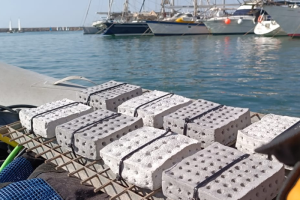
- The Technological Development Centre for Remote Acquisition and Data Processing Systems (SARTI) at the Universitat Politècnica de Catalunya - BarcelonaTech (UPC) participates in the SEASLAG project, which contributes to measurement and test systems to assess the characteristics of the biomaterials developed in the project, to regenerate marine ecosystems. This material incorporates byproducts from the metal and agrifood industries.
- A team of UPC researchers is working to develop a solution to standardise and improve quality control in fermentation processes in the Agrotech area.
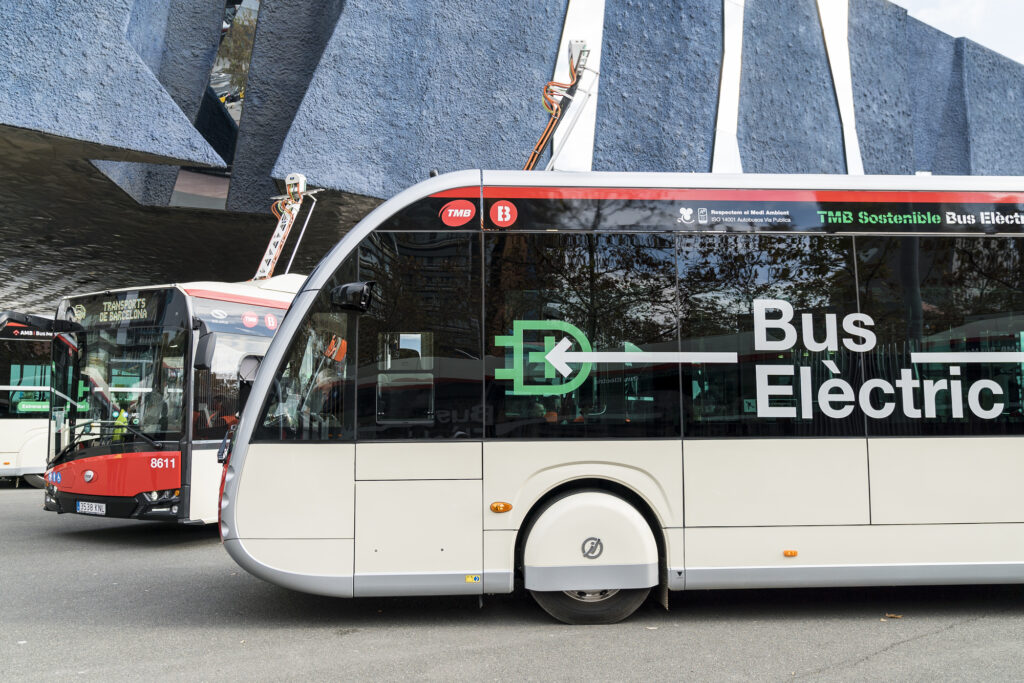
- The research group Barcelona Innovative Transportation (BIT) and the innovation and research laboratory of Barcelona School of Informatics (inLab FIB) at the Universitat Politècnica de Catalunya - BarcelonaTech (UPC) is taking part in the project eBRT2030 (European Bus Rapid Transit of 2030: electrified, automated, connected).
- Currently, buildings are becoming smart organisms due to a wide range of distributed sensors and software programmes that provide them with a certain degree of intelligence. In this context, SUST(AI)N emerged. Participants in this project include researchers from the Instrumentation, Sensors and Interfaces Group (ISI) and the Components and Systems for Communications Research Group (CSC) at the Universitat Politècnica de Catalunya - BarcelonaTech (UPC).
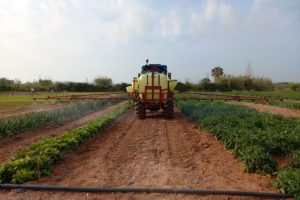
- The microÚs project, in which the Agricultural Machinery Unit (UMA) at the Universitat Politècnica de Catalunya - BarcelonaTech (UPC) participates, is designed to demonstrate the use of a certain formulation of copper-based microcapsules to increase the retention of this metal in leaves in intensive production of horticultural crops such as onion, lettuce and tomato. This enables a reduction in the use of the product and an improvement in the sustainability of the process.
- The research group IMEM-BRT of the UPC leads the TherGel project, which aim is to combine the properties of both materials in a conductive polymer hydrogel that could be used in water evaporation systems, as filtration membranes and as solid-state electrolytes that are active in electrochemical cells of capacitive deionisation of salt water.
- Participants in the HybridNeuro project include researchers from the group BIOART, which is part of the CREB of the UPC. The project is designed to establish a new way of analysing the motor system and human musculoskeletal movements, and the transfer of academic research to clinical practice and industry.
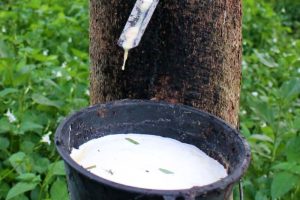
- The research group Plastics and Ecological Composites (e-PLASCOM) of the Universitat Politècnica de Catalunya - BarcelonaTech (UPC), and the Catalan Plastics Center (CCP), work in a project that aims to design ad hoc natural rubber-based composites, with specific compositions and geometries, to be optimally integrated into both EC and BC technologies at prototype level.
- The research group Eco-friendly Plastics and Composites (e-PLASCOM) at the Universitat Politècnica Catalunya - BarcelonaTech (UPC) is participating in the European Advanced Engineering and Research of aeroGels for Environment and Life Sciences (AERoGELS) project. This project is designed to bring together the knowledge of academic, industrial and regulatory experts on the research and technology of aerogels at European scale.