

FEVER: A project to transform the European energy system and adapt it to renewable energies
February 13, 2023
SCAPE: Towards standardisation, cost reduction and improved features of power conversion systems for electric vehicles
February 16, 202314/02/2023
It is the first open source library that enables multi-hop and peer-to-peer data routing in a LoRa communication mesh network.
The research group Computer Networks and Distributed Systems (CNDS) of the Universitat Politècnica de Catalunya - BarcelonaTech (UPC) is working on LoRaMesher. The main objective of this project is to implement a data routing protocol that enables the interconnection of IoT applications on LoRa wireless communication technology. IoT devices connected by LoRa construct a mesh, so that they can communicate between each other through the nodes of the network, as occurs on the Internet.
Consequently, with the LoRaMesher library, these devices can communicate between each other in a two-way manner. This enables services to be offered to nodes in the network, such as receiving updates or executing actions.
This opens up the opportunity for applications that are stored on the Internet to be able to connect to IoT devices. It expands their functionality beyond merely emitting data that are gathered by the IoT devices’ sensors.
Collaborators in the LoRaMesher project are Hacking Ecology S.L. (Spain), in the framework of the European project LoRaTRUST for obtaining reliable IoT data, and Puretek Innovations LTD (United Kingdom). LoRaMesher provides both companies with the communication layer between IoT devices.
LoRaMesher has been developed at the UPC during 2022 and is currently operating in real devices.
Impact and results
LoRaMesher is a library that facilitates the implementation of communication between IoT devices with an efficient routing protocol. It enables fast, reliable data exchange and is flexible and scalable. In addition, it is easier to implement than other technologies in any IoT project. It is an essential tool for developers of high quality IoT solutions.
The code that is developed is available in an open repository of GitHub in this link.
In addition, a demo application has been developed that is known as LoRaChat, which is also available here.
The project has obtained funding from the Spanish Government’s Ministry of Science and Innovation through the State Research Agency (project PID2019-106774RB-C21, project PCI2019-111851-2 (LeadingEdge CHIST-ERA), and the project PCI2019-111850-2 (DiPET CHIST-ERA) and PDC2023-145809-I00).


Technology
You want to know more?
Related Projects
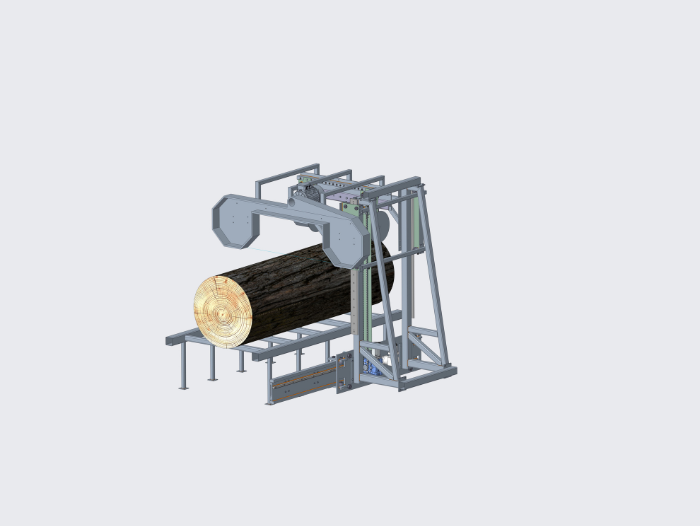
- The Centre for Industrial Equipment Design (CDEI) at the Universitat Politècnica de Catalunya - BarcelonaTech (UPC), together with the IRI, Institut de Robòtica i Informàtica Industrial (CSIC-UPC), is participating in the development of a pre-commercial prototype of an automatic portable sawmill that integrates computer vision, artificial intelligence and computer numerical control to improve productivity, efficiency and safety in local wood processing for the company Envall Coop. S.L.
STOR-HY: More flexible, efficient and resilient hydropower storage for the European electricity grid
The Center for Industrial Diagnostics (CDIF) at the Universitat Politècnica de Catalunya - BarcelonaTech (UPC) coordinates the European STOR-HY project, which develops digital tools, monitoring systems and advanced models to optimise the operation of pumped-storage hydropower plants and reduce their investment and maintenance costs.- The Advanced Network Architectures Lab (CRAAX) at the Universitat Politècnica de Catalunya - BarcelonaTech (UPC) is participating in the ACCOMPLISH project, which is developing an innovative AI-based compliance and certification framework to simplify, integrate and automate compliance in operations, assets, solutions and organisational processes related to data and artificial intelligence.
- A team from the Resources Recovery and Environmental Management (R2EM) group, of the Barcelona Research Center in Multiscale Science and Engineering (CCEM), at the Universitat Politècnica de Catalunya - BarcelonaTech (UPC), is participating in the MagNa project, which is developing an innovative system to recover magnesium from the brines generated by the seawater desalination process. The recovered materials will be used for industrial purposes and will help reduce Europe’s trade dependence.