- The LENA project emerged with the aim of creating continuous learning algorithms in the field of artificial intelligence (AI) that are robust and flexible. This project is led by the Mobile Robotics and Artificial Intelligence Group (RAIG) from the Institute of Robotics and Industrial Informatics (IRI, CSIC-UPC) at the Universitat Politècnica de Catalunya - BarcelonaTech (UPC). LENA is focused on developing innovative technologies that overcome the current limitations in AI algorithms that, once trained, tend to show a certain degree of rigidity in the face of new, unexpected situations.
- A team of researchers from the Manufacturing Technologies Research Group (TECNOFAB) at the Universitat Politècnica de Catalunya - BarcelonaTech (UPC) has participated in BRUVIT. The aim of this project is to develop and validate the ball burnishing process assisted by ultrasonic vibration to improve the hardness and surface integrity of parts on a parallel lathe.
- The research and innovation laboratory at the Barcelona School of Informatics (inLab FIB) of the Universitat Politècnica de Catalunya - BarcelonaTech (UPC) is taking part, along with the distribution company Assolim, in the design of a test of concept to create optimised routes for each vehicle for transport on demand.
- The inLab FIB of the UPC is participating with the company Kapture Intelligence in a project to improve quality control systems in manufacture processes, based on a model of an artificial intelligence algorithm that detects when a part or product has suffered from a drop in quality level.
- The Wireless Communications and Technologies Research Group (WiComTec) at the Universitat Politècnica de Catalunya - BarcelonaTech (UPC) is participating in a project to develop and implement solutions based on the Internet of Everything to make mobile drone communication safer and more efficient.
- A team of researchers from the Acoustic and Mechanical Engineering Laboratory (LEAM) in the Centre for Advanced Technologies in Mechanics (CATMech) at the Universitat Politècnica de Catalunya - BarcelonaTech (UPC) is participating in the development of a method that can generate and update noise maps for cities via mobile acoustic sensors.
- The Radio Frequency Identification and Flexible Electronics (RFLEX) group at the Universitat Politècnica de Catalunya - BarcelonaTech (UPC) is participating in ETEXHEALTH. The project is focused on finding solutions based on the application of electronic textile sensors (e-textile) to monitor biometric variables of the human body and the evolution of diseases in a minimally invasive way.
- A team of researchers from the ISI group at the UPC is developing technology to be able to monitor animals’ cardiovascular parameters in a non-invasive way. This tool is designed to facilitate the work of vets and professionals who look after animals, as it can be used to measure vital signs in as little time as possible and provides more information than current electrocardiogram systems.
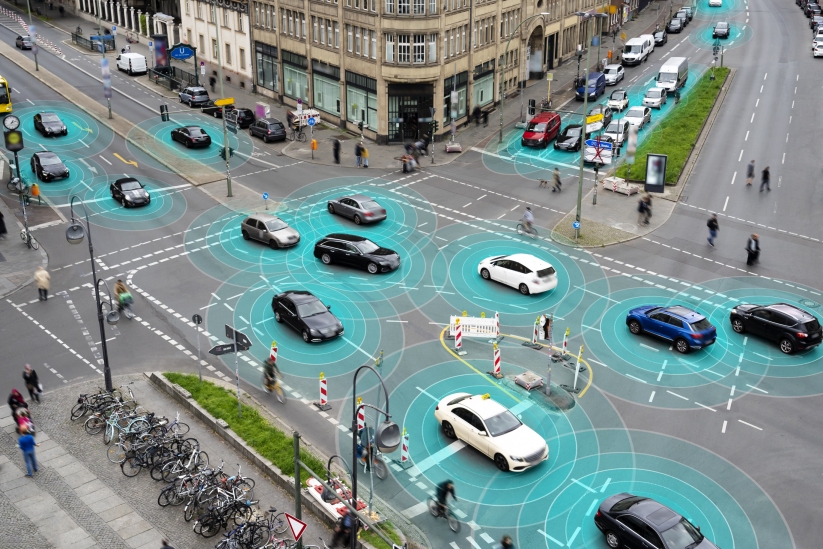
- A multidisciplinary team at the Universitat Politècnica de Catalunya - BarcelonaTech (UPC) is working on the European project AI - Enhanced Fibre -Wireless Optical 6G Network in Support for Connected Mobility (6G-EWOC) to develop technologies and a 6G optical network that will combine artificial intelligence with 6G technologies, remote sensing systems and optical communication (wireless and by optical fibre). The result will be a network that will enable autonomous and human-driven vehicles to circulate safely, avoiding accidents in zones that have a lot of traffic or are very busy.
- The technology of the CP4C project, based on hydrogels treated with plasma gas, is being developed by the team of researchers at the PlasmaMedLab and the Biomaterials, Biomechanics and Tissue Engineering Group (BBT) of CREB at the UPC. CP4C is one of the University projects that has obtained a grant from Barcelona Deep Tech Node to accelerate its launch on the market.
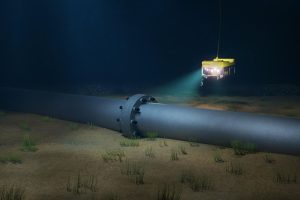
- CD6 researchers at the UPC participate in a project to design and construct a proof of concept of a system that has laser technology and sensors to detect and map the underwater environment.
- A multidisciplinary team whose participants include the Microbiology Service of the Vall d’Hebrón University Hospital, the Microbiology research group of the Vall d’Hebron Research Institute (VHIR), the Computational Biology and Complex Systems Group (BIOCOM-SC UPC), the Image and Video Processing Group (GPI) and the Database Technologies and Information Management Group (DTMI) at the Universitat Politècnica de Catalunya - BarcelonaTech (UPC), and Fundación Probitas, have presented a new diagnostic method for malaria based on artificial intelligence.
- The Construction Research and Innovation Group (GRIC) at the UPC is driving the N2B2 project to develop new technology so that heating and air conditioning can be turned on and off via predictive control.
- Researchers at the Universitat Politècnica de Catalunya - BarcelonaTech (UPC), in collaboration with the MINOS group of the URV, are participating in a project on the reliable, high-performance and low-cost production of ammonia sensors for livestock farming.
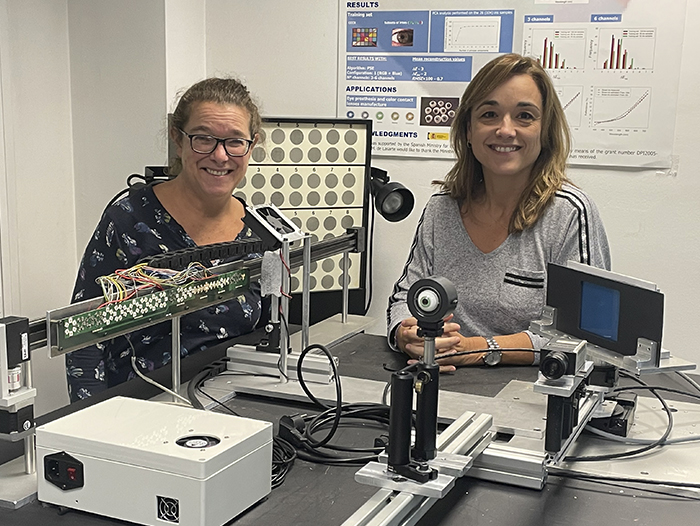
- An international consortium of universities, hospitals and companies, led by the Centre for Sensors, Instruments and Systems Development (CD6) at the UPC, is developing new technologies based on light and artificial intelligence to improve the diagnosis of various diseases.
- The protection of infrastructures is a commercial and environmental challenge as it enables the useful life of these elements to be lengthened and avoids the early generation of residues.