

- All
- Agricultura
- agrotech (antiguo)
- Agrotech (antiguo)
- Agua
- Aigua
- Alimentación, agricultura y medio marino
- Audiovisual
- Automoción
- Big Data
- Biomateriales
- blockchain
- Ciberseguridad
- Economía Circular
- Enertronic
- Enertrònica
- Food, agriculture and the marine environment
- Green Car
- IAQ
- ict
- Indoor air quality
- Industria 4.0
- Industry
- Inteligencia Artificial
- Internet of Things
- Materiales de frontera
- Materiales de frontera
- microxips
- Mobile Technologies
- Open innovation
- Óptica y fotónica
- Qualitat de l’aire interior (IAQ)
- Realidad Virtual y Realidad Aumentada
- Robótica y Visión
- Sector Salut
- Smart City
- Smart Grids
- Technology
- Tecnologías de Agrotech
- Tecnologías de Infraestructuras
- Tecnologías de la Energía
- Tecnologías de la Producción
- Tecnologías de la Química
- Tecnologías de la Química
- Tecnologías de la Salud
- Tecnologías de la Transformación Digital
- Tecnologías de Logística y Movilidad
- Tecnologías de los Materiales
- Tecnologías de Urbanismo y Sostenibilidad
- Tecnologías del Medio Ambiente
- Tecnologías Químicas y de la Alimentación
- UPCxels
- Water
- Wood
- X
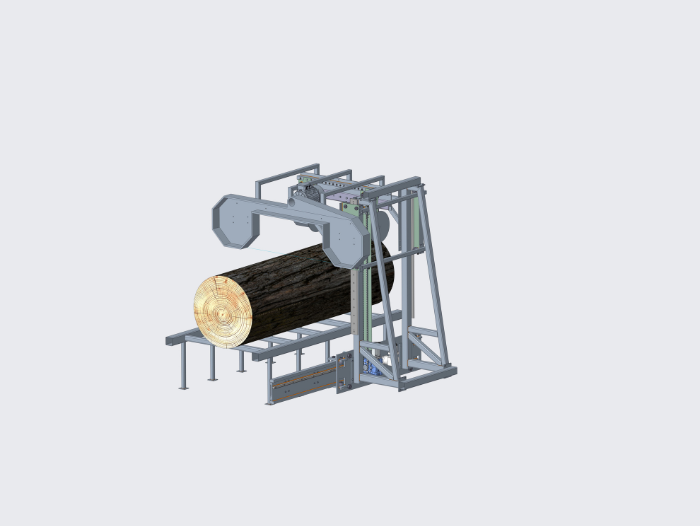
- The Centre for Industrial Equipment Design (CDEI) at the Universitat Politècnica de Catalunya - BarcelonaTech (UPC), together with the IRI, Institut de Robòtica i Informàtica Industrial (CSIC-UPC), is participating in the development of a pre-commercial prototype of an automatic portable sawmill that integrates computer vision, artificial intelligence and computer numerical control to improve productivity, efficiency and safety in local wood processing for the company Envall Coop. S.L.
- The Advanced Network Architectures Lab (CRAAX) at the Universitat Politècnica de Catalunya - BarcelonaTech (UPC) is participating in the ACCOMPLISH project, which is developing an innovative AI-based compliance and certification framework to simplify, integrate and automate compliance in operations, assets, solutions and organisational processes related to data and artificial intelligence.
- A research team from the UPC, in collaboration with the company B. Braun Surgical, has created a ceramic and biocompatible catalyst that captures greenhouse gases and transforms them into useful chemical products in a more sustainable way and at a lower cost than current technologies. The technology has successfully passed the pilot phase through joint projects with companies from different sectors.
- The digitalisation of human senses has advanced significantly in areas such as vision, hearing and touch. However, smell and taste continue to present a technological challenge, as their analysis relies on the identification of volatile or dissolved chemical compounds. While there are various sensors on the market capable of detecting specific gases and substances, they often lack the versatility required for comprehensive recognition of complex odours, showing limitations in adapting to different combinations of compounds.
- The company Natural Machines and the Heat and Mass Transfer Technological Centre (CTTC-UPC) at the UPC have completed the EFICIENT3D project, during which a low-energy cooking system was developed by integrating advanced heat transfer technologies into the 3D food printer, Foodini, commercialised by Natural Machines.
- Every year, over four million patients acquire an infection associated with a hospital stay, according to the European Centre for Disease Prevention and Control and the World Health Organisation. The data indicate that the impact of these infections has led to direct or indirect mortality of 137,000 patients and a cost of seven billion euros annually.
- Increase the flexibility of energy demand of industrial processes to accelerate the energy transition to a more sustainable model.
- The Service and Industrial Robotics (SIR) group participates in CaRo, the aim of this project is to advance in the development of core capabilities for dual-arm co-workers robots.
- The UPC's Institute for Textile Research and Industrial Cooperation in Terrassa (INTEXTER) is creating a platform based on blockchain technology that will directly affect the entire value chain of textile products.
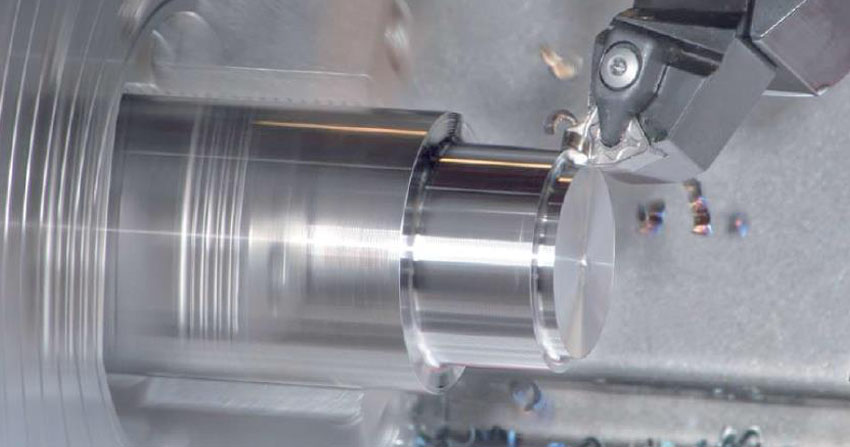
- The AVINT project, in which CIEFMA UPC has participated, has the objective of developing and implementing an application for predicting the roughness and surface finishing of machined parts for optimal surface integrity.