

- All
- Agricultura
- agrotech (antiguo)
- Agrotech (antiguo)
- Agua
- Aigua
- Alimentación, agricultura y medio marino
- Audiovisual
- Automoción
- Big Data
- Biomateriales
- blockchain
- Ciberseguridad
- Economía Circular
- Enertronic
- Enertrònica
- Food, agriculture and the marine environment
- Green Car
- IAQ
- ict
- Indoor air quality
- Industria 4.0
- Industry
- Inteligencia Artificial
- Internet of Things
- Materiales de frontera
- Materiales de frontera
- microxips
- Mobile Technologies
- Open innovation
- Óptica y fotónica
- Qualitat de l’aire interior (IAQ)
- Realidad Virtual y Realidad Aumentada
- Robótica y Visión
- Sector Salut
- Smart City
- Smart Grids
- Technology
- Tecnologías de Agrotech
- Tecnologías de Infraestructuras
- Tecnologías de la Energía
- Tecnologías de la Producción
- Tecnologías de la Química
- Tecnologías de la Química
- Tecnologías de la Salud
- Tecnologías de la Transformación Digital
- Tecnologías de Logística y Movilidad
- Tecnologías de los Materiales
- Tecnologías de Urbanismo y Sostenibilidad
- Tecnologías del Medio Ambiente
- Tecnologías Químicas y de la Alimentación
- UPCxels
- Water
- Wood
- X
- The Barcelona Innovative Transportation (BIT), the Research Center in Automotive and Advanced Mobility (CER-AMA) and The Future Mobility Research Hub (CARNET) research groups from the Universitat Politècnica de Catalunya - BarcelonaTech (UPC) are participating in the E-MED project, which aims to optimise energy and resource efficiency in public transport systems by addressing energy price fluctuations through smart and participatory solutions across the Mediterranean region.
- A team led by the Electronic and Biomedical Instrumentation (IEB) research group at the Universitat Politècnica de Catalunya - BarcelonaTech (UPC) is developing an electronic chip that enables more objective detection of potential infractions in race walking, which are currently judged solely by visual observation. The technology, already tested in official competitions, provides accurate, objective, and fair data on race walkers’ loss of ground contact.
- The digitalisation of human senses has advanced significantly in areas such as vision, hearing and touch. However, smell and taste continue to present a technological challenge, as their analysis relies on the identification of volatile or dissolved chemical compounds. While there are various sensors on the market capable of detecting specific gases and substances, they often lack the versatility required for comprehensive recognition of complex odours, showing limitations in adapting to different combinations of compounds.
- The Center for Technological Innovation in Static Converters and Drives (CITCEA) at the Universitat Politècnica de Catalunya – BarcelonaTech (UPC) has designed a smart wireless application developed to optimize the electricity consumption of high-power devices.
- UPC, the Port of Barcelona and Siport21 will create an innovative operational traffic management system based on artificial intelligence and machine learning. This will be developed within the Compass+ project, which has been recognised as a pre-commercial project in the second call of the innovation fund managed by Ports of the State − Ports 4.0. The aim of the fund is to enhance efficiency and safety in port operations by integrating disruptive technologies that will drive the ports of the future.
- The Centre for Advanced Technologies in Mechanics (CATMech) at the Universitat Politècnica de Catalunya - BarcelonaTech (UPC) is involved in a project to explore additive manufacturing technology with concrete to provide innovative solutions to the construction market. The project, called ADRIANO, aims to develop a real-time control system for the concrete manufacturing process, to estimate the expected outcome and anticipate decision-making on its various stages.
- The innovation and research laboratory of the Barcelona Faculty of Computer Science (inLab FIB) at the Universitat Politècnica de Catalunya - BarcelonaTech (UPC) collaborated with ModpoW, a company specialised in wireless technologies, sensors and general electronics, to create a solution that optimises water and fertilizer usage in agriculture. This solution, which can potentially save over 30% of annual water and fertilizer consumption, monitors underground water data to draw up an irrigation recommendation for farmers, according to the real-time conditions of each plot.
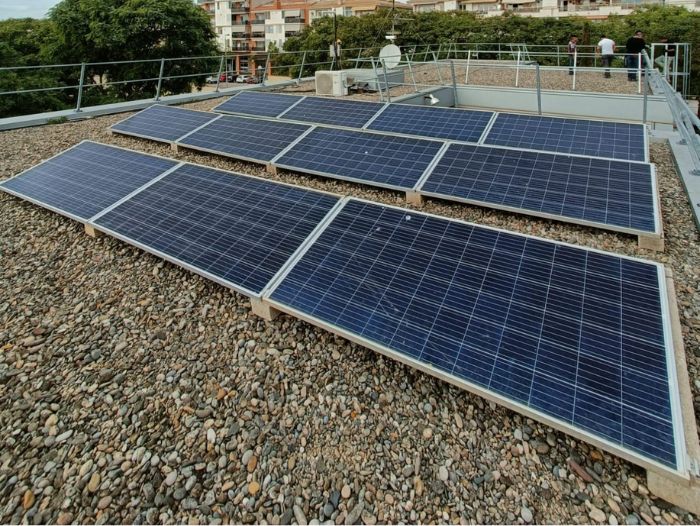
- The Technological Development Center for Remote Acquisition and Data Processing Systems (SARTI) at the Universitat Politècnica de Catalunya - BarcelonaTech (UPC) participated in GIRASOL II, a project to develop a digital twin for photovoltaic plants by applying internet of things (IoT) technology, artificial intelligence techniques and immersive human-machine interfaces.
- The Radio Frequency Identification and Flexible Electronics (RFLEX) group of the Universitat Politècnica de Catalunya - BarcelonaTech (UPC) is participating in the TELEBREATH project to better address the demand for long-term care in vulnerable groups, such as elderly and dependent people.
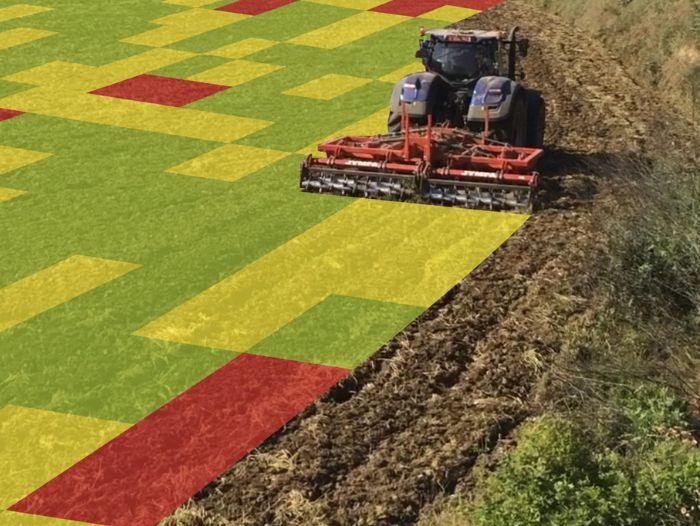
- The Agricultural Machinery Unit (UMA) at the Universitat Politècnica de Catalunya - BarcelonaTech (UPC) participated in the CULTISENSOR project to design, manufacture and validate a sensing subsoiler prototype for soil decompaction. This instrument allows mapping and interpretation of the physical conditions of soil when fieldwork activities are being carried out.
- The Wireless Communications and Technologies Research Group (WiComTec) at the Universitat Politècnica de Catalunya - BarcelonaTech (UPC) is participating in a project to develop and implement solutions based on the Internet of Everything to make mobile drone communication safer and more efficient.
- Researchers from the Electronic and Biomedical Instrumentation (IEB) group of the Biomedical Engineering Research Centre (CREB) at the UPC are working with the company Detnov Security SL on a project to improve battery performance in fire detection systems.
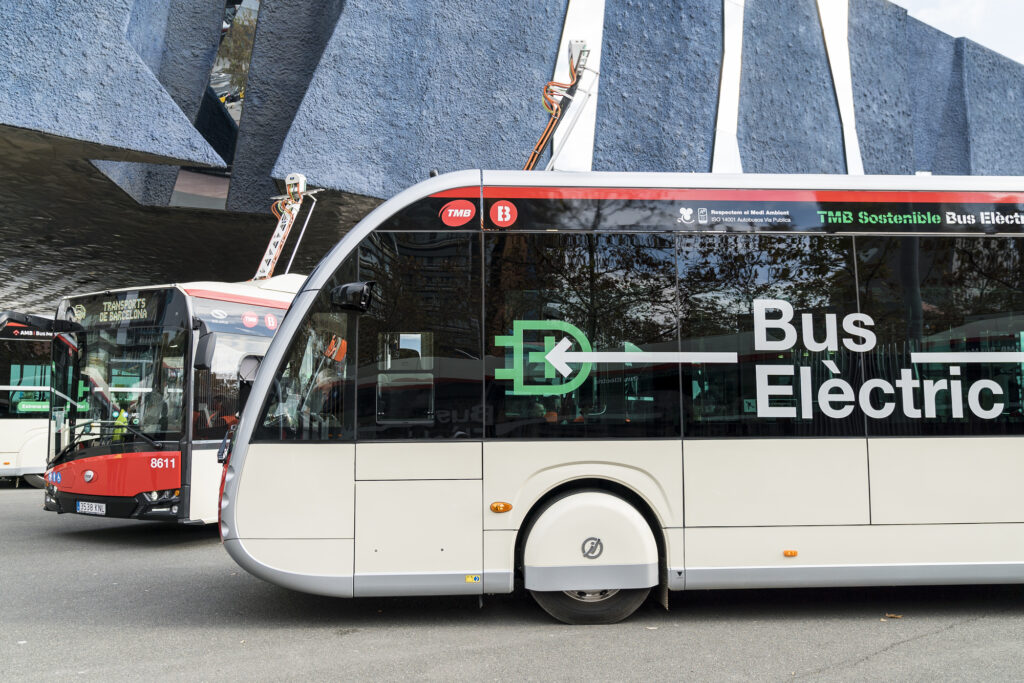
- The research group Barcelona Innovative Transportation (BIT) and the innovation and research laboratory of Barcelona School of Informatics (inLab FIB) at the Universitat Politècnica de Catalunya - BarcelonaTech (UPC) is taking part in the project eBRT2030 (European Bus Rapid Transit of 2030: electrified, automated, connected).
- The UPC Department of Computer Architecture coordinates the European project Vitamin-V, in which a complete set of hardware-software is developed for cloud services, based on the latest open-source technologies for RISC-V processors.
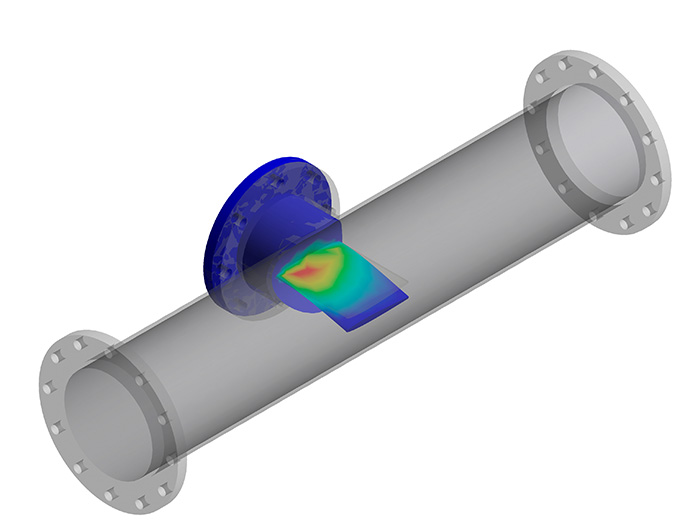
- The research group Barcelona Fluids & Energy Lab (IFLUIDS) and the Centre for Technological Innovation in Static Converters and Drives (CITCEA) of the UPC participate in the European project H-HOPE, which is focused on the development of solutions to produce clean energy based on water sources that have still not been exploited, such as pipes and water channels.
- The research group Computer Networks and Distributed Systems (CNDS) of the Universitat Politècnica de Catalunya - BarcelonaTech (UPC) is working on LoRaMesher. The main objective of this project is to design a data routing protocol that enables the interconnection of IoT devices on LoRa wireless communication technology. IoT devices connected by LoRa construct a mesh, so that they can communicate between each other through the nodes of the network, as occurs on the Internet.