

- All
- Agricultura
- agrotech (antiguo)
- Agrotech (antiguo)
- Agua
- Aigua
- Alimentación, agricultura y medio marino
- Audiovisual
- Automoción
- Big Data
- Biomateriales
- blockchain
- Ciberseguridad
- Economía Circular
- Enertronic
- Enertrònica
- Food, agriculture and the marine environment
- Green Car
- IAQ
- ict
- Indoor air quality
- Industria 4.0
- Industry
- Inteligencia Artificial
- Internet of Things
- Materiales de frontera
- Materiales de frontera
- microxips
- Mobile Technologies
- Open innovation
- Óptica y fotónica
- Qualitat de l’aire interior (IAQ)
- Realidad Virtual y Realidad Aumentada
- Robótica y Visión
- Sector Salut
- Smart City
- Smart Grids
- Technology
- Tecnologías de Agrotech
- Tecnologías de Infraestructuras
- Tecnologías de la Energía
- Tecnologías de la Producción
- Tecnologías de la Química
- Tecnologías de la Química
- Tecnologías de la Salud
- Tecnologías de la Transformación Digital
- Tecnologías de Logística y Movilidad
- Tecnologías de los Materiales
- Tecnologías de Urbanismo y Sostenibilidad
- Tecnologías del Medio Ambiente
- Tecnologías Químicas y de la Alimentación
- UPCxels
- Water
- Wood
- X
- A research team from the UPC, in collaboration with the company B. Braun Surgical, has created a ceramic and biocompatible catalyst that captures greenhouse gases and transforms them into useful chemical products in a more sustainable way and at a lower cost than current technologies. The technology has successfully passed the pilot phase through joint projects with companies from different sectors.
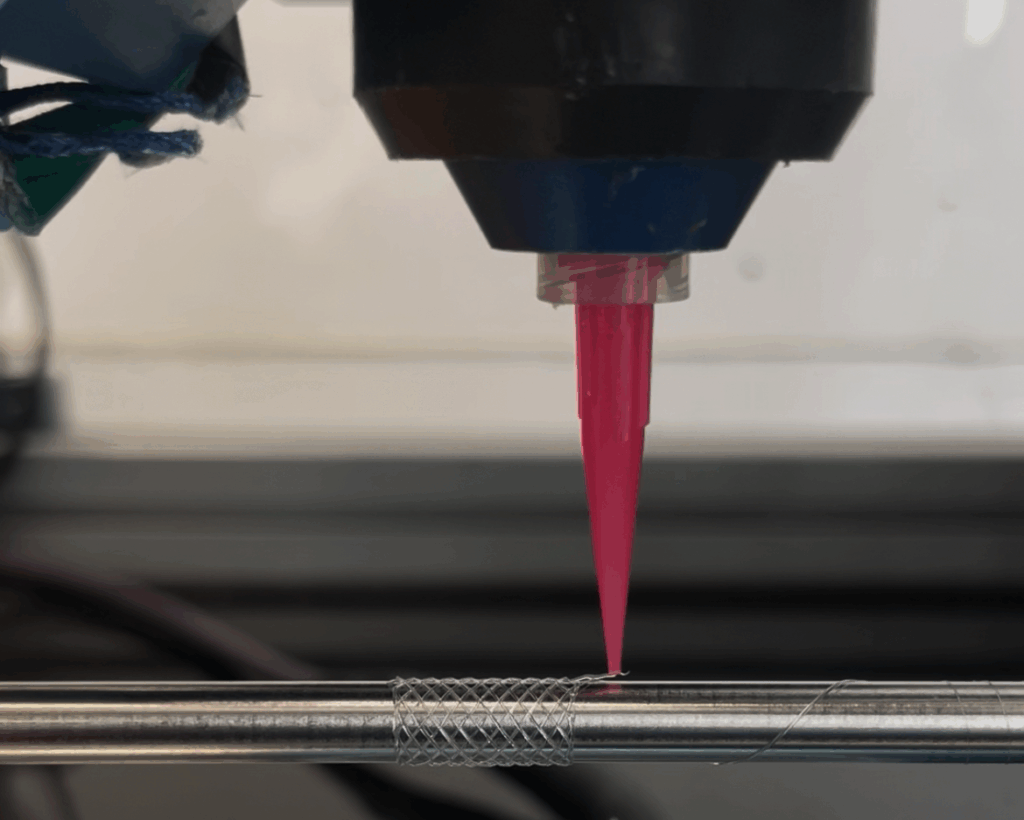
- The research groups in Biomaterials, Biomechanics and Tissue Engineering (BBT) and the Barcelona Research Center in Multiscale Science and Engineering (CCEM) at the Universitat Politècnica de Catalunya – BarcelonaTech (UPC) have developed biodegradable shape-memory stents for pediatric patients with aortic coarctation.
- A team from the Bioinspired Oral Biomaterials and Interfaces (BOBI) research group at the Department of Materials Science and Engineering (CEM) of the Universitat Politècnica de Catalunya - BarcelonaTech (UPC) is taking part in the European project HYDROHEAL, which explores how to transform bone fracture treatment using smart and advanced biomaterials, aiming to reduce the risk of infection and implant rejection, as well as shortening fracture recovery times.
- The Resource Recovery and Environmental Management (R2EM) of the Center for Research in Multiscale Science and Engineering (CCEM) at the Universitat Politècnica de Catalunya - BarcelonaTech (UPC) is leading the HARMONIZE project, which focuses on the recovery and valorisation of ammonia from urban and industrial waste streams. The project is part of a larger initiative, MemTecWare, coordinated by the UCM.
- The Biological Treatment of Gaseous Pollutants and Odours Group (BIOGAP) at UPC is participating in the BIOMETCRI project, which aims to implement an innovative biotechnological process to recycle batteries from electric and hybrid vehicles, recovering valuable metals such as cobalt, lithium, nickel, and manganese.
- The Biomaterials, Biomechanics, and Tissue Engineering (BBT) Research Group at the Institute for Health Research and Innovation (IRIS) of the Universitat Politècnica de Catalunya – BarcelonaTech (UPC) is leading DYNAMIC, a project aimed at creating multifunctional, stimuli-responsive biomaterials that not only promote bone regeneration but also intelligently and effectively combat bacterial infections.
- The Group of Environmental Engineering and Microbiology (GEMMA) at UPC is leading the PROALGAE project, aimed at producing new alternative proteins from biomass derived from microalgae and cyanobacteria cultivated using by-products from the agri-food industry. These alternative proteins aim to provide a sustainable ingredient to meet the growing global demand for protein, applicable in the development of food and feed.
- The technology of the CP4C project, based on hydrogels treated with plasma gas, is being developed by the team of researchers at the PlasmaMedLab and the Biomaterials, Biomechanics and Tissue Engineering Group (BBT) of CREB at the UPC. CP4C is one of the University projects that has obtained a grant from Barcelona Deep Tech Node to accelerate its launch on the market.
- Participants in the HybridNeuro project include researchers from the group BIOART, which is part of the CREB of the UPC. The project is designed to establish a new way of analysing the motor system and human musculoskeletal movements, and the transfer of academic research to clinical practice and industry.
- Researchers from the Plasmas for BioMedical Applications Laboratory (PlasmaMED Lab) of the Department of Materials Science and Engineering of the Universitat Politècnica de Catalunya - BarcelonaTech (UPC), are working to develop a new treatment for bone cancer, which avoids the secondary effects of conventional treatments – such as chemotherapy – and enables bone regeneration when the tumour has been surgically resected.
- The production of biogas through anaerobic digestion has been increasing exponentially in Europe in recent years. This is because it can be produced locally and has a clear positive effect on waste recycling, the generation of clean energy, sustainable development or climate action. In this context, the FertiLab project was launched, with the participation of researchers from the Department of Agri Food Engineering and Biotechnology (DEAB) of the UPC.
- The Construction Engineering (EC) Research Group of the Universitat Politècnica de Catalunya (UPC) is participating in the NEUROCRETE project.
- Investigadores del Grup Interdisciplinar de Ciència i Tecnologia a l'Edificació (GICITED) de la UPC participen en el projecte Estructuració d'un sector transfronterer de valorització de tiges de blat de moro i gira-sol per a la construcció (SAVASCO).