

- All
- Agricultura
- agrotech (antiguo)
- Agrotech (antiguo)
- Agua
- Aigua
- Alimentación, agricultura y medio marino
- Audiovisual
- Automoción
- Big Data
- Biomateriales
- blockchain
- Ciberseguridad
- Economía Circular
- Enertronic
- Enertrònica
- Food, agriculture and the marine environment
- Green Car
- IAQ
- ict
- Indoor air quality
- Industria 4.0
- Industry
- Inteligencia Artificial
- Internet of Things
- Materiales de frontera
- Materiales de frontera
- microxips
- Mobile Technologies
- Open innovation
- Óptica y fotónica
- Qualitat de l’aire interior (IAQ)
- Realidad Virtual y Realidad Aumentada
- Robótica y Visión
- Sector Salut
- Smart City
- Smart Grids
- Technology
- Tecnologías de Agrotech
- Tecnologías de Infraestructuras
- Tecnologías de la Energía
- Tecnologías de la Producción
- Tecnologías de la Química
- Tecnologías de la Química
- Tecnologías de la Salud
- Tecnologías de la Transformación Digital
- Tecnologías de Logística y Movilidad
- Tecnologías de los Materiales
- Tecnologías de Urbanismo y Sostenibilidad
- Tecnologías del Medio Ambiente
- Tecnologías Químicas y de la Alimentación
- UPCxels
- Water
- Wood
- X
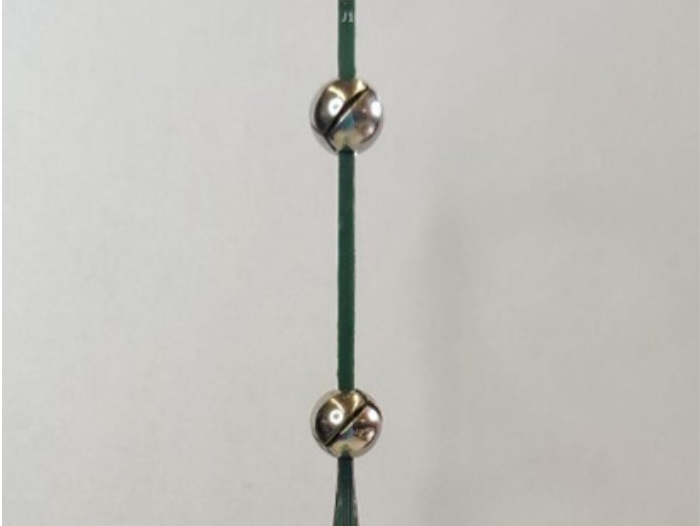
- A research team from the Universitat Politècnica de Catalunya - BarcelonaTech (UPC) has participated in the M3LEC project, coordinated by the Centro de Astrobiología (CAB), a joint centre of the Spanish National Research Council (CSIC) and the Instituto Nacional de Técnica Aeroespacial (INTA), with the Universidad de Sevilla (US) / Instituto de Microelectrónica de Sevilla (IMSE) also participating. M3LEC aimed to contribute to the characterisation of the Martian atmosphere and meteorology, and to investigate new instrumentation for future planetary exploration missions.
- The Interdisciplinary Group on Building Science and Technology (GICITED) and the Energy, Catalysis, Process and Reaction Engineering (ENCORE) research group at the Universitat Politècnica de Catalunya - BarcelonaTech (UPC) are participating in the European ArchiSpace project, to develop infrastructure prototypes for human settlements in extraterrestrial environments using materials and conditions analogous to those on the Moon and Mars.
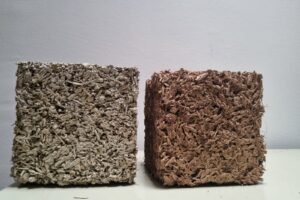
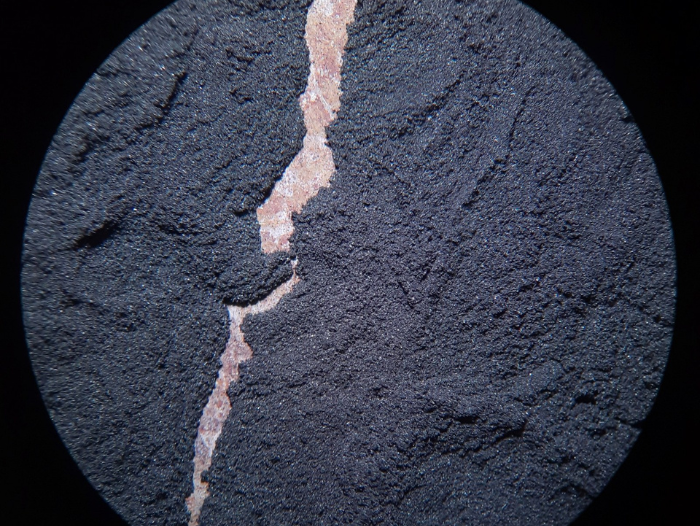
- The Research Group in Smart and Sustainable Resources and Industries (RIIS) at the Universitat Politècnica de Catalunya - BarcelonaTech (UPC) is developing the ZeroCarbonPave project, which aims to assess the feasibility of incorporating biochar as filler and/or as the fine fraction of granular material in bituminous mixtures, with the objective of reducing the carbon footprint associated with the manufacture and laying of road pavements.
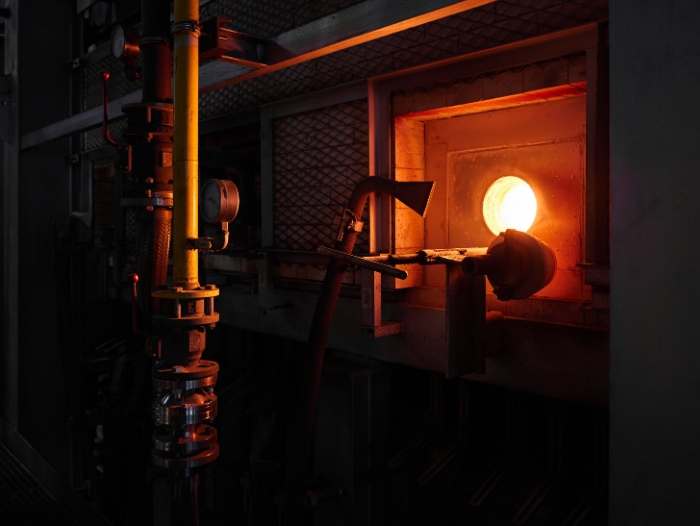
- The Centre for Technological Innovation in Static Converters and Drives (CITCEA) at the Universitat Politècnica de Catalunya - BarcelonaTech (UPC) participates in the H2GLASS project, which aims to accelerate decarbonisation in the glass industry through the development and application of the new technologies needed to achieve complete hydrogen (H₂) combustion in glass or steel production facilities.
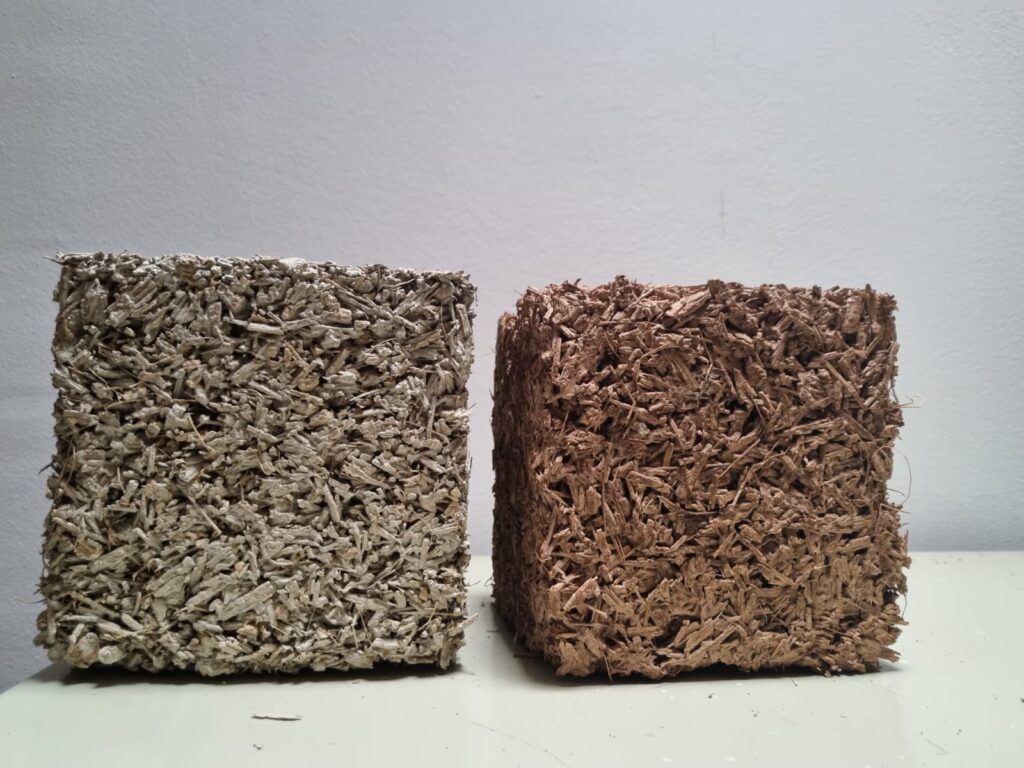
- The project is led by a team from the Rehabilitation and Architectural Restoration (REARQ) at the Universitat Politècnica de Catalunya - BarcelonaTech (UPC), in collaboration with the Interdisciplinary Group on Building Science and Technology (GICITED), also from UPC, and CONSTRAULA.
- A research team from the inLab FIB at the Universitat Politècnica de Catalunya - BarcelonaTech (UPC), together with the Asociación de Personas con Movilidad Reducida (AsoPMR), has taken part in the Spot4Dis project to enhance the mobility and autonomy of people with reduced mobility.
- The La Volta project foresees the construction of a large Catalan vault pergola within the Llars Mundet campus, in the Montbau neighbourhood (Horta-Guinardó district). This structure will become a new architectural landmark for Barcelona, combining traditional construction techniques with contemporary innovation. The project involves the Rehabilitation and Architectural Restoration Research Group (REARQ), at the Universitat Politècnica de Catalunya - BarcelonaTech (UPC), and is led by the Architects’ Association of Catalonia (COAC) and the Barcelona Provincial Council.
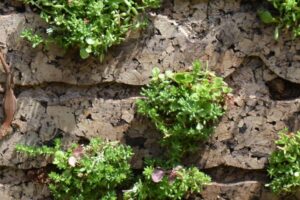
SATE-VEG: A system for energy renovation of buildings that helps reduce the urban heat island effect
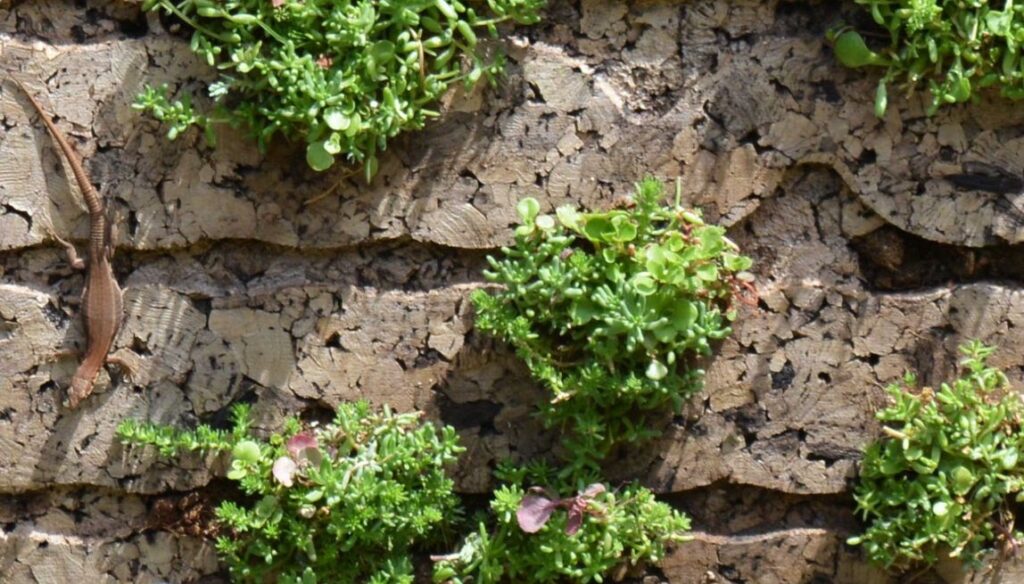
Researchers from the Architecture, Energy and Environment (AiEM) group at the Universitat Politècnica de Catalunya - BarcelonaTech (UPC) have developed SATE-VEG, an external thermal insulation system with a vegetal coating that offers seasonally adaptive thermal behaviour, enhances urban biodiversity and promotes positive health effects. The system is made from organic materials, requires low maintenance and consumes minimal water.- A research team from the Interdisciplinary Group on Building Science and Technology (GICITED) at the Universitat Politècnica de Catalunya – BarcelonaTech (UPC) is leading the BioSAFE project, which aims to develop sustainable building envelopes —mainly façades— designed according to sustainability, comfort and safety criteria, with particular attention to their acoustic behaviour and fire performance.
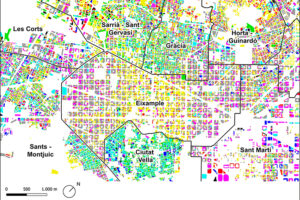
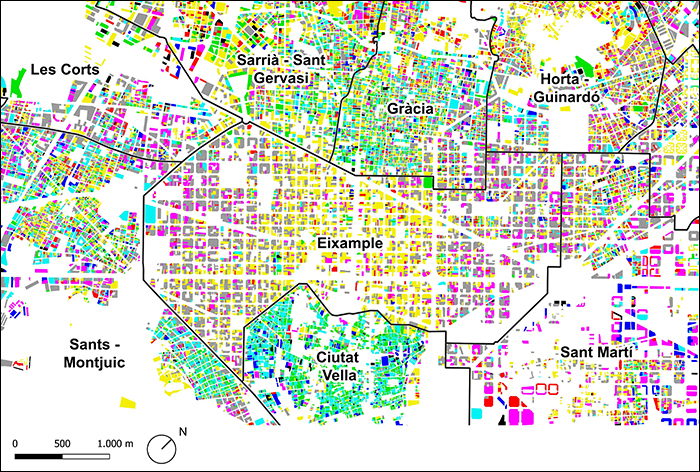
- The Architecture, Energy and Environment (AiEM) research group at the Universitat Politècnica de Catalunya - BarcelonaTech (UPC) has characterised Barcelona’s residential buildings according to their capacity to adapt to climate change. This study is part of the project ‘VeUvE: Urban havens for vulnerable zones’. The work highlights the climate inequality conditions present across different areas of the city and will help to better define the priorities and energy renovation strategies for its districts.
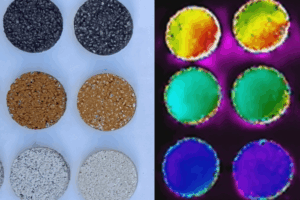
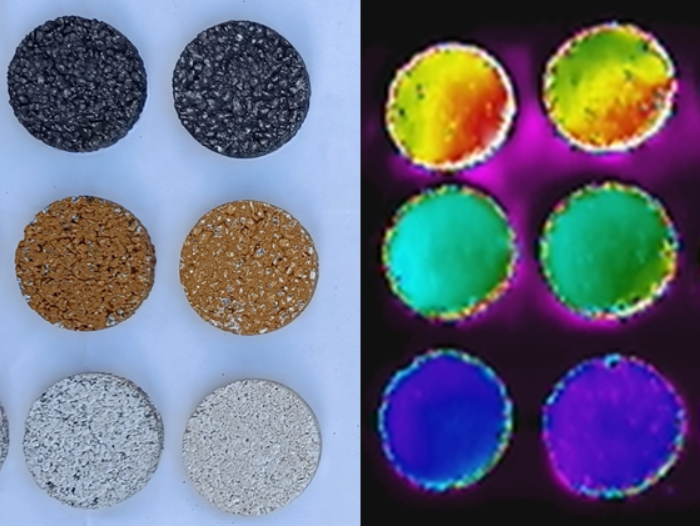
- The Construction Materials and Roads (MATCAR) research group at the Universitat Politècnica de Catalunya - BarcelonaTech (UPC) has carried out the RELUM project with the aim of researching and developing innovative solutions to help prevent global warming, through the design of sustainable pavements with reflective and photoluminescent properties, in collaboration with the company Sorigué.
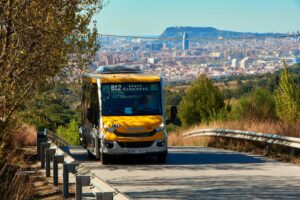
- The Barcelona Innovative Transportation (BIT), the Research Center in Automotive and Advanced Mobility (CER-AMA) and The Future Mobility Research Hub (CARNET) research groups from the Universitat Politècnica de Catalunya - BarcelonaTech (UPC) are participating in the E-MED project, which aims to optimise energy and resource efficiency in public transport systems by addressing energy price fluctuations through smart and participatory solutions across the Mediterranean region.
- The company Friselva S.A., Corporació Alimentària Guissona (bonÀrea), together with the Food Service Cluster and inLab FIB at the Universitat Politècnica de Catalunya - BarcelonaTech (UPC), are participating in the Hydroless project, which aims to optimise water consumption in meat production plants. The project includes an innovative solution to monitor and optimise water use at bonÀrea’s plant in Guissona, as well as the design and development of a digital twin of Friselva’s facilities in Riudellots de la Selva.
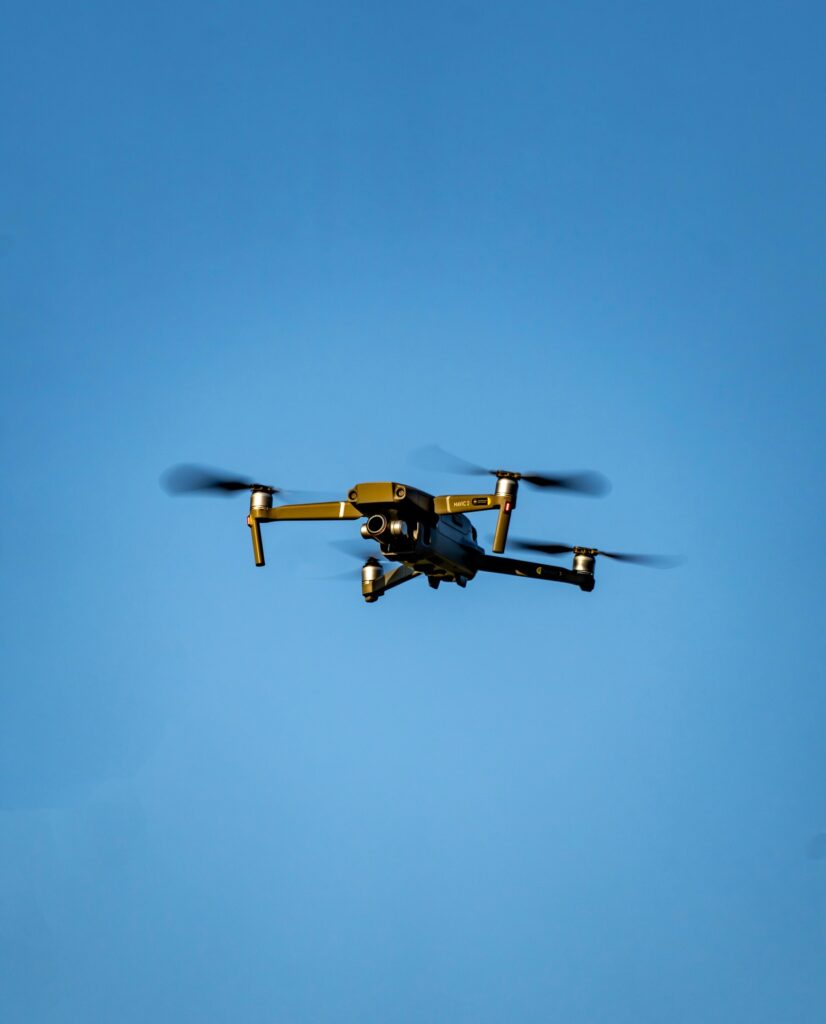
- A research team led by the Mobile Robotics and Artificial Intelligence Group (RAIG) of the Institute of Robotics and Industrial Informatics (IRI, CSIC-UPC) at the Universitat Politècnica de Catalunya - BarcelonaTech (UPC) is taking part in the European project TRIFFID (auTonomous Robotic aId For increasing FIrst responDers efficiency). The aim is to develop a platform to support rescue operations in emergency situations. The initiative combines advanced robotics, artificial intelligence and immersive interfaces to enhance safety and accelerate response in hazardous environments.
- The Centre of Technological Innovation in Power Electronics and Drives (CITCEA) of the Universitat Politècnica de Catalunya - BarcelonaTech (UPC) is leading a European project that redesigns the current energy system to stabilise the power grid in the face of high renewable energy penetration. The proposed solutions involve using the loads that consume energy to help balance the grid.
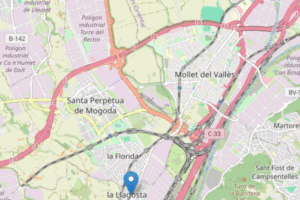
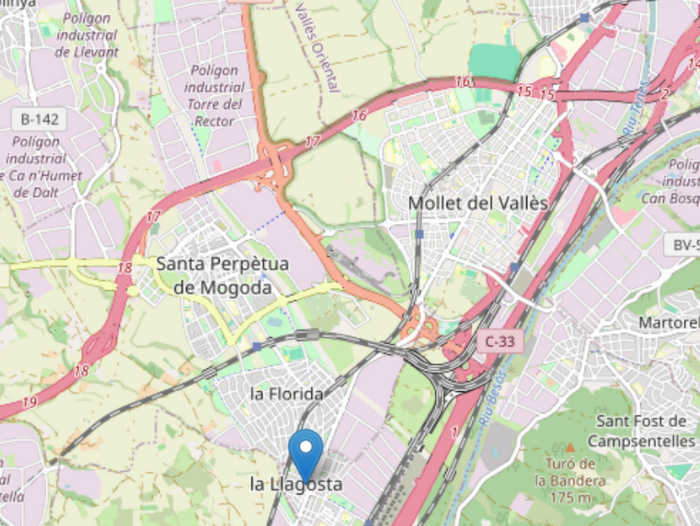
- A team from the Environment Centre Laboratory (LCMA) of the Universitat Politècnica de Catalunya - BarcelonaTech (UPC) is taking part in a study commissioned by the city councils of la Llagosta, Mollet and Santa Perpètua (in Vallès Occidental), with the main objective of identifying the impact of industrial plants on the generation of unpleasant odours and continuously monitoring air quality in these municipalities.