
- All
- Agricultura
- agrotech (antiguo)
- Agrotech (antiguo)
- Agua
- Aigua
- Alimentación, agricultura y medio marino
- Audiovisual
- Automoción
- Big Data
- Biomateriales
- blockchain
- Ciberseguridad
- Economía Circular
- Enertronic
- Enertrònica
- Food, agriculture and the marine environment
- Green Car
- IAQ
- ict
- Indoor air quality
- Industria 4.0
- Industry
- Inteligencia Artificial
- Internet of Things
- Materiales de frontera
- Materiales de frontera
- microxips
- Mobile Technologies
- Open innovation
- Óptica y fotónica
- Qualitat de l’aire interior (IAQ)
- Realidad Virtual y Realidad Aumentada
- Robótica y Visión
- Sector Salut
- Smart City
- Smart Grids
- Technology
- Tecnologías de Agrotech
- Tecnologías de Infraestructuras
- Tecnologías de la Energía
- Tecnologías de la Producción
- Tecnologías de la Química
- Tecnologías de la Química
- Tecnologías de la Salud
- Tecnologías de la Transformación Digital
- Tecnologías de Logística y Movilidad
- Tecnologías de los Materiales
- Tecnologías de Urbanismo y Sostenibilidad
- Tecnologías del Medio Ambiente
- Tecnologías Químicas y de la Alimentación
- UPCxels
- Water
- Wood
- X
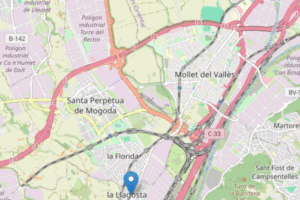
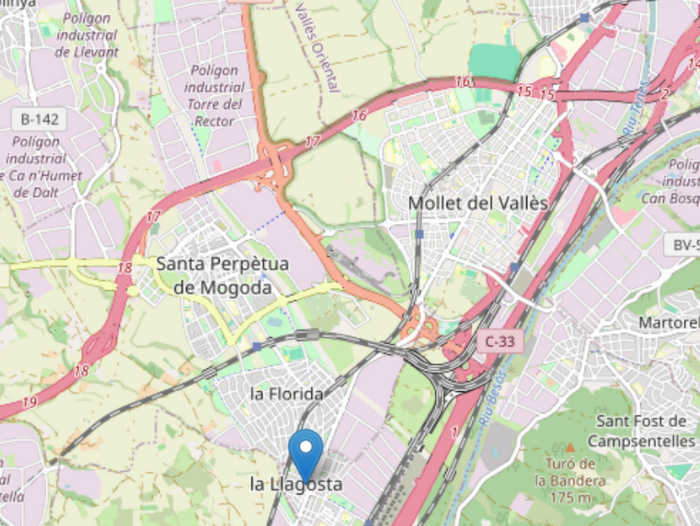
- A team from the Environment Centre Laboratory (LCMA) of the Universitat Politècnica de Catalunya - BarcelonaTech (UPC) is taking part in a study commissioned by the city councils of la Llagosta, Mollet and Santa Perpètua (in Vallès Occidental), with the main objective of identifying the impact of industrial plants on the generation of unpleasant odours and continuously monitoring air quality in these municipalities.
- The Environmental Engineering (ENMA) research group leads the WhATTer project with the aim of developing an innovative and sustainable solution for the treatment of textile wastewater through an electrochemical/alkaline electrolysis system that allows for simultaneous hydrogen production. The project is carried out in collaboration with the Textile Technology (TECTEX) and Polymeric Materials and Textile Chemistry (POLQUITEX) research groups at the facilities of the Institute of Textile Research and Industrial Cooperation of Terrassa (INTEXTER) at the Universitat Politècnica de Catalunya - BarcelonaTech (UPC).
- The Research Center for Supervision, Safety and Automatic Control (CS2AC-UPC) at the Universitat Politècnica de Catalunya - BarcelonaTech (UPC) has coordinated the SaCoAV project, focused on researching new methods and tools to ensure the safe coordination of autonomous vehicles in urban environments.
- The Centre for Technological Risk Studies (CERTEC) at UPC is participating in the WUITIPS project (Wildland-Urban-Interface Fire Touristic Infrastructure Protection Solutions), which aims to develop a new wildfire management framework for the tourism sector. This project contributes to risk analysis and the design of specific strategies to mitigate such risks.
- The European project LIFE Biogasnet, coordinated by the Biological Treatment of Gaseous Contaminants and Odours Group (BIOGAP) at the Universitat Politècnica de Catalunya - BarcelonaTech (UPC), has validated a new biogas purification technology that improves the quality of this resource, produced in urban solid waste treatment plants and wastewater treatment facilities, while reducing the carbon footprint, thus promoting the concept of a circular economy. The new solution is based on efficient, low-cost biological technologies, combining a biotrickling filter with a nitrification bioreactor.
- The Remote Sensing Acquisition Systems Development Centre (SARTI UPC) has developed a new model of buoys to record ocean currents and temperatures as part of the European project Multi-Sensor Extra Light Oceanography Apparatus (MELOA). This is a DRIFTER, or a low-cost, low-power surface drifting buoy, which is easy to use, impact-resistant, multi-purpose, multi-sensorial, and very lightweight. It is designed to be used in all aquatic environments, from the deep sea to inland waters, including coastal areas, river plumes, and wave-breaking zones.
- Barcelona is characterised by a high consumption of bottled water (55% of the population drinks it regularly). The reasons for this behaviour tend to be dissatisfaction with the organoleptic characteristics, perceived health risks and distrust of the quality of tap water.
- The Heat and Mass Transfer Technology Center (CTTC) at the Universitat Politècnica de Catalunya - BarcelonaTech (UPC) participated in the Economic COgeneration by Efficiently COncentrated SUNlight (ECOSUN) project to develop a low-cost, concentrated thermal and photovoltaic cogeneration system that increases the system’s electrical efficiency.
- Cities are responsible for 80% of global energy consumption, 70% of total waste generation and 60% of greenhouse gas emissions of the planet. For this reason, measures need to be taken to transform cities into more sustainable, circular ecosystems.
- Researchers at the Centre for Land Valuation Policy (CPSV), from the research group Quality of Urban Life: Innovation, Sustainability and Social Engagement (QURBIS) at the UPC, have participated in the design of the theoretical model of the Building Renovation Passport based on BIM and Blockchain for the public administration.
- The Centre for Sensors, Instruments and Systems Development (CD6) at the Universitat Politècnica de Catalunya - BarcelonaTech (UPC) is taking part in PhotonHub Europe. This is a European project to establish a single pan-European hub for innovation in photonics as a one-stop shop solution that brings together the pioneering photonics solutions, facilities, knowledge and experience of 53 European partners.
- The Centre for Technological Innovation in Static Converters and Drives (CITCEA) of the Universitat Politècnica de Catalunya - BarcelonaTech (UPC) is participating in the COVHE project, whose aim is to develop an electrical drive system for heavy vehicles based on a hydrogen cell.
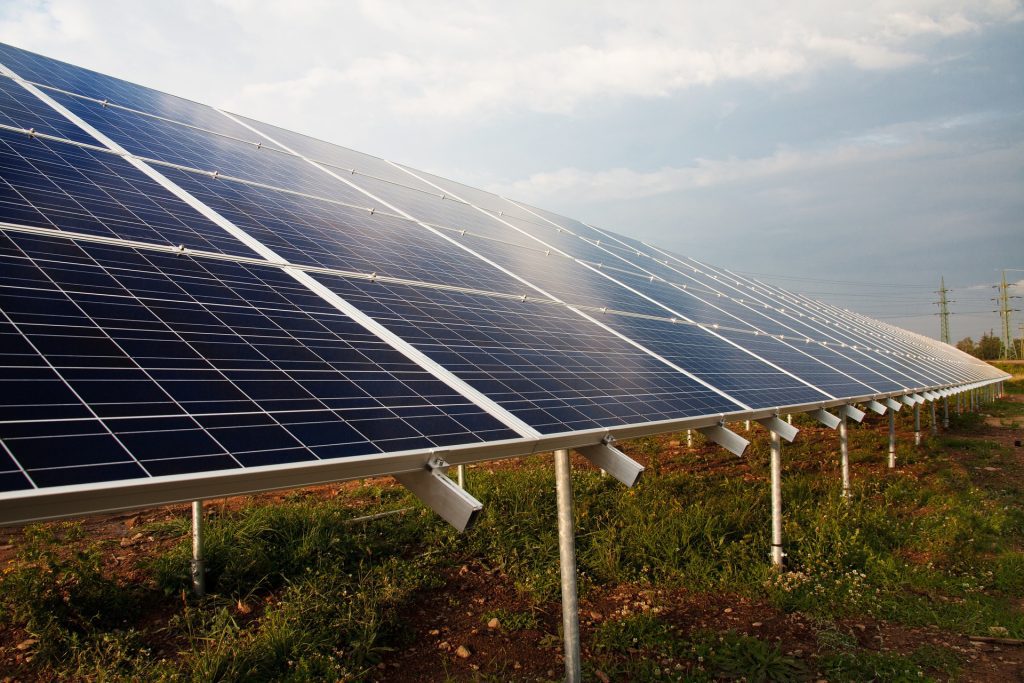
- 21/12/2022Project Headerrightrightno-repeat;left top;;auto20px To achieve the energy transition, the development, penetration and permanence of renewable energy is vital, particularly photovoltaic energy. By 2050, the share of […]
- The aim of the MARLIT project is to improve the knowledge and development of tools to understand the impacts of current and future storms on the coast (damage, flooding and population security), to support the management of coastal risk by government bodies. Participants in this project include the Maritime Engineering Laboratory (LIM) of the Universitat Politècnica de Catalunya - BarcelonaTech (UPC).
- The REARQ research group is participating in “Revive the rooftops” (REV-TER), a project whose aim is to improve the quality of life of communities and people who live […]
- CITCEA of the UPC is coordinating the European project iPLUG, which is part of the Horizon Europe programme, to develop power electronic solutions to improve the […]