

- All
- Agricultura
- agrotech (antiguo)
- Agrotech (antiguo)
- Agua
- Aigua
- Alimentación, agricultura y medio marino
- Audiovisual
- Automoción
- Big Data
- Biomateriales
- blockchain
- Ciberseguridad
- Economía Circular
- Enertronic
- Enertrònica
- Food, agriculture and the marine environment
- Green Car
- IAQ
- ict
- Indoor air quality
- Industria 4.0
- Industry
- Inteligencia Artificial
- Internet of Things
- Materiales de frontera
- Materiales de frontera
- microxips
- Mobile Technologies
- Open innovation
- Óptica y fotónica
- Qualitat de l’aire interior (IAQ)
- Realidad Virtual y Realidad Aumentada
- Robótica y Visión
- Sector Salut
- Smart City
- Smart Grids
- Technology
- Tecnologías de Agrotech
- Tecnologías de Infraestructuras
- Tecnologías de la Energía
- Tecnologías de la Producción
- Tecnologías de la Química
- Tecnologías de la Química
- Tecnologías de la Salud
- Tecnologías de la Transformación Digital
- Tecnologías de Logística y Movilidad
- Tecnologías de los Materiales
- Tecnologías de Urbanismo y Sostenibilidad
- Tecnologías del Medio Ambiente
- Tecnologías Químicas y de la Alimentación
- UPCxels
- Water
- Wood
- X
- The Environmental Engineering (ENMA) research group leads the WhATTer project with the aim of developing an innovative and sustainable solution for the treatment of textile wastewater through an electrochemical/alkaline electrolysis system that allows for simultaneous hydrogen production. The project is carried out in collaboration with the Textile Technology (TECTEX) and Polymeric Materials and Textile Chemistry (POLQUITEX) research groups at the facilities of the Institute of Textile Research and Industrial Cooperation of Terrassa (INTEXTER) at the Universitat Politècnica de Catalunya - BarcelonaTech (UPC).
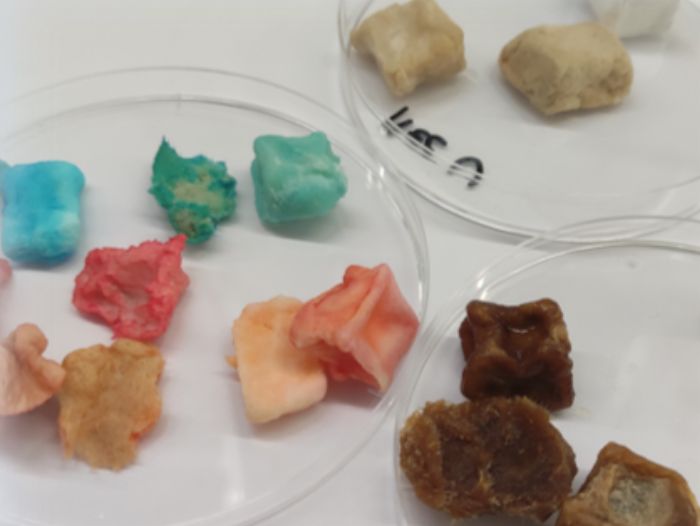
- The Innovation in Materials and Molecular Engineering – Biomaterials for Regenerative Therapies (IMEM-BRT) research group at the Universitat Politècnica de Catalunya – BarcelonaTech (UPC), in collaboration with the Institute of Chemical Research of Catalonia (ICIQ), has developed polymer resins derived from plant-based materials to reduce the dependence of 3D printing on fossil fuel-based resins.
- The Tecnologia Orientada a la Comunitat (TOC) research group at UPC, in collaboration with the Centre d'Estudis Porcins de Catalunya, leads the AEROFER project, which aims to demonstrate the viability of liquid fertilisers derived from pig manure in aeroponic cultivation, with the intention of later extrapolating it to conventional crops, thereby closing the loop from waste to resource, with a positive environmental impact on the region.
- The Maritime Engineering Laboratory at UPC (LIM) participates in a European project that will help improve the management of plastic pollution in the north-western Mediterranean and raise environmental awareness among citizens about marine preservation.
- The project, led by the Paper Engineering Research Group (CELBIOTECH) at the Universitat Politècnica de Catalunya - BarcelonaTech (UPC), aims to obtain different subproducts from the waste generated during industrial hemp cultivation, also known as hemp fibre. The proposed processes are technologies already used in biorefineries and the paper industry but with different raw materials.
- Microalgae-based wastewater treatment systems have demonstrated the ability to recover nutrients from wastewater and produce valuable biomass for agricultural applications while also recovering energy through the anaerobic digestion of residual biomass. In the Cyan2Bio project, in which the Group of Environmental Engineering and Microbiology (GEMMA) of the Universitat Politècnica de Catalunya - BarcelonaTech (UPC) is participating, an additional step will be taken in the valorisation of microalgae biomass to obtain biopolymers suitable for transformation into bioplastics alongside pigments, thereby replacing fossil-based materials.
- The energy transition is reshaping the foundations of the power grid, driven by the massive deployment of renewable generation based on power electronics and the gradual disconnection of conventional fossil-based generation. In this context, grid operators will require support systems to provide flexibility, as renewable generation is highly variable.
- The Biological Treatment of Gaseous Pollutants and Odours Group (BIOGAP) at UPC is participating in the BIOMETCRI project, which aims to implement an innovative biotechnological process to recycle batteries from electric and hybrid vehicles, recovering valuable metals such as cobalt, lithium, nickel, and manganese.
- Since the early 21st century, the agricultural sector has faced significant challenges, such as the increasing demand for quality products and a lack of generational replacement. In this context, the agri-food sector is compelled to follow the example of other industries and prioritise digitalisation and automation to ensure sustainability and competitiveness.
- The project, led by the Centre for Advanced Technologies in Mechanics (CATMech) research group at UPC, aims to minimise the by-product waste in hemp cultivation through the development of a competitive industrial plant, reduce energy consumption, and increase comfort in buildings through research into innovative insulation panels in bioconstruction.
- The Group of Environmental Engineering and Microbiology (GEMMA) at UPC is leading the PROALGAE project, aimed at producing new alternative proteins from biomass derived from microalgae and cyanobacteria cultivated using by-products from the agri-food industry. These alternative proteins aim to provide a sustainable ingredient to meet the growing global demand for protein, applicable in the development of food and feed.
- An international research team led by the UPC has created a hybrid device that combines, for the first time ever, molecular solar thermal energy storage with silicon-based photovoltaic energy. It achieves a record energy storage efficiency of 2.3% and up to 14.9% total solar energy utilisation.
- The European project LIFE Biogasnet, coordinated by the Biological Treatment of Gaseous Contaminants and Odours Group (BIOGAP) at the Universitat Politècnica de Catalunya - BarcelonaTech (UPC), has validated a new biogas purification technology that improves the quality of this resource, produced in urban solid waste treatment plants and wastewater treatment facilities, while reducing the carbon footprint, thus promoting the concept of a circular economy. The new solution is based on efficient, low-cost biological technologies, combining a biotrickling filter with a nitrification bioreactor.
- A team of researchers from the materials and structures area of CATMech at UPC is participating in a circular economy project to study the feasibility of using canemuixa, a by-product of hemp, in five applications in the building sector.
- 09/09/2024Project Headerrightno-repeat;left top;;auto20px The DISCOVER project aims to revolutionize the construction and demolition industry by developing an advanced system for the autonomous, synchronous, and continuous identification […]
- The Paper Engineering research group (CELBIOTECH) at the Universitat Politècnica de Catalunya - BarcelonaTech (UPC) is participating in a project to develop biodegradable materials from cellulose, to transform them into advanced, eco-friendly bioproducts.