

- All
- Agricultura
- agrotech (antiguo)
- Agrotech (antiguo)
- Agua
- Aigua
- Alimentación, agricultura y medio marino
- Audiovisual
- Automoción
- Big Data
- Biomateriales
- blockchain
- Ciberseguridad
- Economía Circular
- Enertronic
- Enertrònica
- Food, agriculture and the marine environment
- Green Car
- IAQ
- ict
- Indoor air quality
- Industria 4.0
- Industry
- Inteligencia Artificial
- Internet of Things
- Materiales de frontera
- Materiales de frontera
- microxips
- Mobile Technologies
- Open innovation
- Óptica y fotónica
- Qualitat de l’aire interior (IAQ)
- Realidad Virtual y Realidad Aumentada
- Robótica y Visión
- Sector Salut
- Smart City
- Smart Grids
- Technology
- Tecnologías de Agrotech
- Tecnologías de Infraestructuras
- Tecnologías de la Energía
- Tecnologías de la Producción
- Tecnologías de la Química
- Tecnologías de la Química
- Tecnologías de la Salud
- Tecnologías de la Transformación Digital
- Tecnologías de Logística y Movilidad
- Tecnologías de los Materiales
- Tecnologías de Urbanismo y Sostenibilidad
- Tecnologías del Medio Ambiente
- Tecnologías Químicas y de la Alimentación
- UPCxels
- Water
- Wood
- X
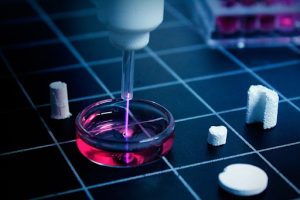
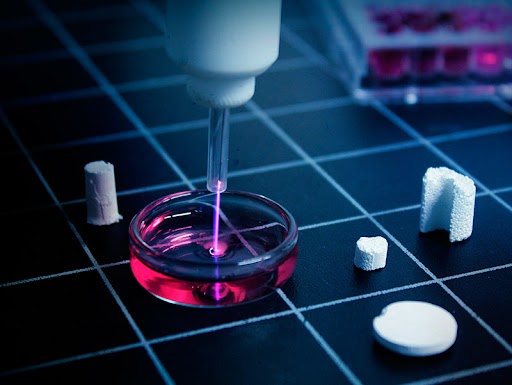
- Researchers from the Plasmas for BioMedical Applications Laboratory (PlasmaMED Lab) of the Department of Materials Science and Engineering of the Universitat Politècnica de Catalunya - BarcelonaTech (UPC), are working to develop a new treatment for bone cancer, which avoids the secondary effects of conventional treatments – such as chemotherapy – and enables bone regeneration when the tumour has been surgically resected.
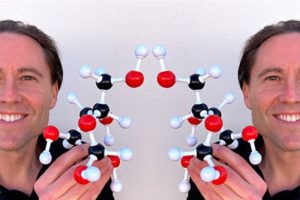
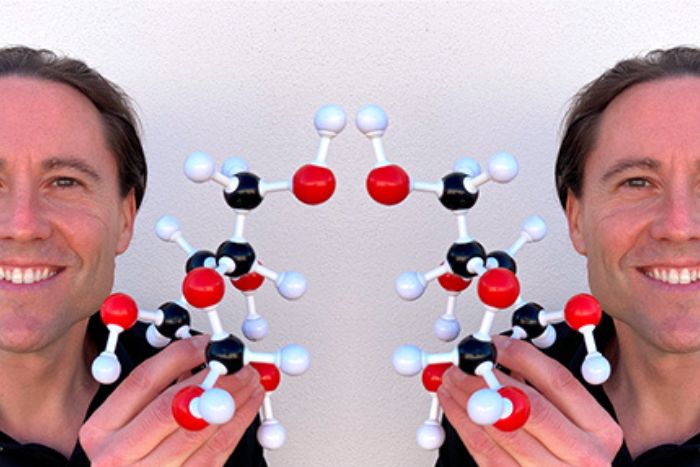
- The research group Polyfunctional Polymeric Materials (POLY2) of the Universitat Politècnica de Catalunya - BarcelonaTech (UPC) will work on the project CELICOIDS - Nanohelicoid metamaterials templated by cellulose nanocrystals with end-tethered polymers. As part of this project, it will develop new metamaterials −materials designed to have a property that is not found in nature – that can increase the spectroscopic sensitivity to distinguish molecular chirality.
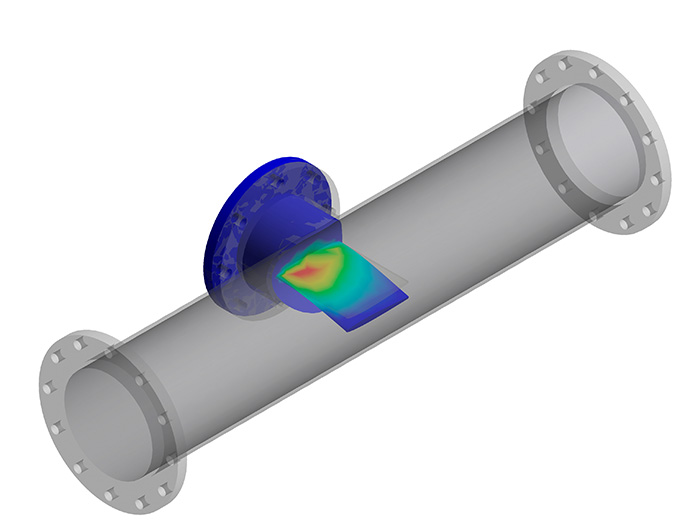
- The research group Barcelona Fluids & Energy Lab (IFLUIDS) and the Centre for Technological Innovation in Static Converters and Drives (CITCEA) of the UPC participate in the European project H-HOPE, which is focused on the development of solutions to produce clean energy based on water sources that have still not been exploited, such as pipes and water channels.
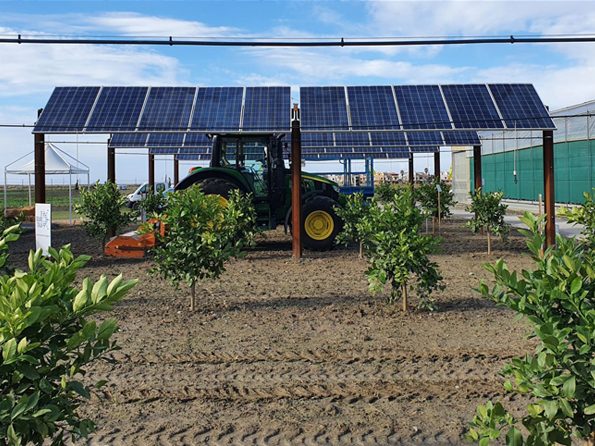
- Combining agricultural activity and the production of solar energy by means of photovoltaic panels is the aim of SYMBIOSYST, a project promoted by a consortium of 16 European partners including the UPC. As part of this project, technological tools will be developed to contribute to generating clean energy for the agricultural sector in Europe.
- The production of biogas through anaerobic digestion has been increasing exponentially in Europe in recent years. This is because it can be produced locally and has a clear positive effect on waste recycling, the generation of clean energy, sustainable development or climate action. In this context, the FertiLab project was launched, with the participation of researchers from the Department of Agri Food Engineering and Biotechnology (DEAB) of the UPC.
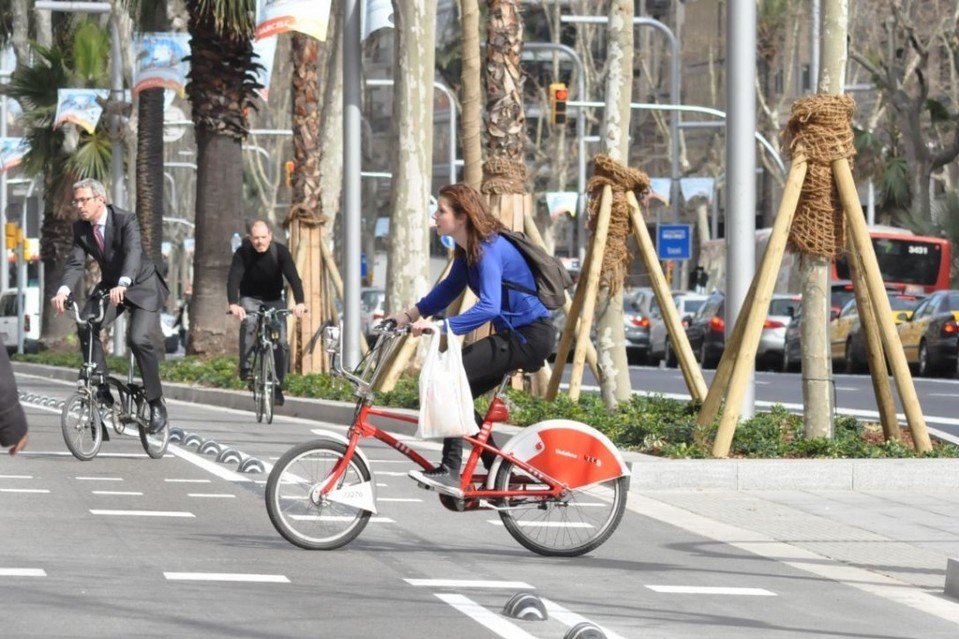
- MobilitApp is an application capable of predicting the mode of transport used by citizens using a deep learning tool based on three mobile phone sensors.
- The aim of the Muvity project in which the Multimedia Applications and ICTs Laboratory (LAM) of the Universitat Politècnica de Catalunya - BarcelonaTech (UPC) participates, is to develop a gamified physical telerehabilitation application for people with chronic injuries. The user carries out exercises and plays games designed with therapists that lead them to move their arms and legs and thus achieve the established goals.
- Researchers from the Advanced Broadband Communications Centre (CCABA) and the Optical Communications Group (GCO) of the Universitat Politècnica de Catalunya - BarcelonaTech (UPC) participate in the B5G-OPEN (Beyond 5G – OPtical nEtwork coNtinuum) project. This project is funded by the European Union, in the framework of which a new end-to-end integrated packet-optical transport architecture based on multiband optical transmission and switching networks is being designed and prototyped.
- Autonomous vehicles are a reality that we are getting closer to gradually but inevitably. The Centre for Sensors, Instruments and Systems Development (CD6) of the Universitat Politècnica de Catalunya - BarcelonaTech (UPC) has developed technologies for this type of vehicles that improve safety on journeys. To meet the needs of perceiving the environment at long range, a very complete set of sensors has to be developed, including cameras, LIDAR (Light Detection and Ranging) and radar.
- The aim of ANEM, in which SISCOM of the UPC participates, has been to develop, using latest generation models and techniques, a modular platform that can generate synthetic data (that is, not real data but data that can be used to train the artificial intelligence), protected from potential threats in the area of cybersecurity.
- The mobility of the future must be more intelligent, sustainable and connected. In this context, the project ‘Solutions for smart mobility’, with the participation of the Laboratory of the Barcelona School of Informatics (inLab FIB) of the Universitat Politècnica de Catalunya - BarcelonaTech (UPC), has developed a predictive model for the occupation of passengers in public transport buses based on deep learning methods.
- The SCAPE project has been developed with the participation of the Power Electronics Research Group (GREP) of the Universitat Politècnica de Catalunya - BarcelonaTech (UPC). The aim is to advance towards design standardisation, cost reduction and an improvement in the features of electronic power conversion systems for the future generation of electric vehicles.
- The research group Computer Networks and Distributed Systems (CNDS) of the Universitat Politècnica de Catalunya - BarcelonaTech (UPC) is working on LoRaMesher. The main objective of this project is to design a data routing protocol that enables the interconnection of IoT devices on LoRa wireless communication technology. IoT devices connected by LoRa construct a mesh, so that they can communicate between each other through the nodes of the network, as occurs on the Internet.
- The Motion Control and Industrial Applications (MCIA) centre, the Terrassa Industrial Electronics Group (TIEG) and the Environmental Engineering (ENMA) group of the UPC participate in RHODaS, a project to improve integrated motor propulsion systems for multiple drive architectures with more efficient materials, new semiconductors, better heat management and standardisation of manufacture of power convertors.
- The Centre for Technological Innovation in Static Converters and Drives (CITCEA) of the Universitat Politècnica de Catalunya - BarcelonaTech (UPC) is participating in the COVHE project, whose aim is to develop an electrical drive system for heavy vehicles based on a hydrogen cell.
- The aim of the GENIUS project, in which the Centre for Technological Innovation in Static Converters and Drives (CITCEA) of the Universitat Politècnica de Catalunya - BarcelonaTech (UPC) participates, is to develop a charge estimator for lithium-ion batteries based on a dynamic model parameterised by a neural network.