

- All
- Agricultura
- agrotech (antiguo)
- Agrotech (antiguo)
- Agua
- Aigua
- Alimentación, agricultura y medio marino
- Audiovisual
- Automoción
- Big Data
- Biomateriales
- blockchain
- Ciberseguridad
- Economía Circular
- Enertronic
- Enertrònica
- Food, agriculture and the marine environment
- Green Car
- IAQ
- ict
- Indoor air quality
- Industria 4.0
- Industry
- Inteligencia Artificial
- Internet of Things
- Materiales de frontera
- Materiales de frontera
- microxips
- Mobile Technologies
- Open innovation
- Óptica y fotónica
- Qualitat de l’aire interior (IAQ)
- Realidad Virtual y Realidad Aumentada
- Robótica y Visión
- Sector Salut
- Smart City
- Smart Grids
- Technology
- Tecnologías de Agrotech
- Tecnologías de Infraestructuras
- Tecnologías de la Energía
- Tecnologías de la Producción
- Tecnologías de la Química
- Tecnologías de la Química
- Tecnologías de la Salud
- Tecnologías de la Transformación Digital
- Tecnologías de Logística y Movilidad
- Tecnologías de los Materiales
- Tecnologías de Urbanismo y Sostenibilidad
- Tecnologías del Medio Ambiente
- Tecnologías Químicas y de la Alimentación
- UPCxels
- Water
- Wood
- X
- 09/09/2024Project Headerrightno-repeat;left top;;auto20px The DISCOVER project aims to revolutionize the construction and demolition industry by developing an advanced system for the autonomous, synchronous, and continuous identification […]
- UPC, the Port of Barcelona and Siport21 will create an innovative operational traffic management system based on artificial intelligence and machine learning. This will be developed within the Compass+ project, which has been recognised as a pre-commercial project in the second call of the innovation fund managed by Ports of the State − Ports 4.0. The aim of the fund is to enhance efficiency and safety in port operations by integrating disruptive technologies that will drive the ports of the future.
- The EU.FFICIENT (European Communities of Facilitators focused on Co-creation training, Networking and Hands-on learning) project, launched in January 2024, aspires to transform and enhance the co-creation landscape across Europe. Funded under the EU framework, the project brings together a consortium of 16 partners from 12 countries, boasting a diverse blend of academic, industrial and public sector partners. The initiative, with CIT UPC standing as a one of key participants, represents an investment in the future of collaborative innovation.
- The Centre for Advanced Technologies in Mechanics (CATMech) at the Universitat Politècnica de Catalunya - BarcelonaTech (UPC) is involved in a project to explore additive manufacturing technology with concrete to provide innovative solutions to the construction market. The project, called ADRIANO, aims to develop a real-time control system for the concrete manufacturing process, to estimate the expected outcome and anticipate decision-making on its various stages.
- The innovation and research laboratory of the Barcelona Faculty of Computer Science (inLab FIB) at the Universitat Politècnica de Catalunya - BarcelonaTech (UPC) collaborated with ModpoW, a company specialised in wireless technologies, sensors and general electronics, to create a solution that optimises water and fertilizer usage in agriculture. This solution, which can potentially save over 30% of annual water and fertilizer consumption, monitors underground water data to draw up an irrigation recommendation for farmers, according to the real-time conditions of each plot.
- The Radio Frequency Identification and Flexible Electronics (RFLEX) group of the Universitat Politècnica de Catalunya - BarcelonaTech (UPC) is participating in the TELEBREATH project to better address the demand for long-term care in vulnerable groups, such as elderly and dependent people.
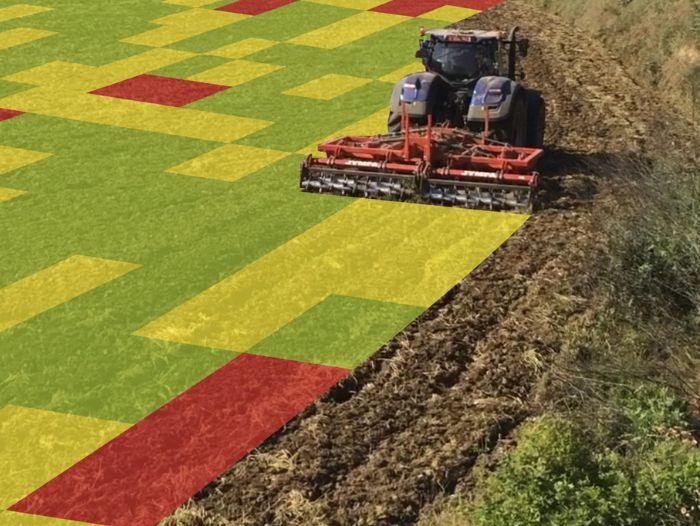
- The Agricultural Machinery Unit (UMA) at the Universitat Politècnica de Catalunya - BarcelonaTech (UPC) participated in the CULTISENSOR project to design, manufacture and validate a sensing subsoiler prototype for soil decompaction. This instrument allows mapping and interpretation of the physical conditions of soil when fieldwork activities are being carried out.
- The Centre for Sensors, Instruments and Systems Development (CD6) at the Universitat Politècnica de Catalunya - BarcelonaTech (UPC) is participating in the development of a smart assistant device that, by combining building information modelling (BIM) with augmented reality and virtual reality technologies, provides a comprehensive tool at each stage of the construction life cycle.
- The LENA project emerged with the aim of creating continuous learning algorithms in the field of artificial intelligence (AI) that are robust and flexible. This project is led by the Mobile Robotics and Artificial Intelligence Group (RAIG) from the Institute of Robotics and Industrial Informatics (IRI, CSIC-UPC) at the Universitat Politècnica de Catalunya - BarcelonaTech (UPC). LENA is focused on developing innovative technologies that overcome the current limitations in AI algorithms that, once trained, tend to show a certain degree of rigidity in the face of new, unexpected situations.
- The inLab FIB of the UPC is participating with the company Kapture Intelligence in a project to improve quality control systems in manufacture processes, based on a model of an artificial intelligence algorithm that detects when a part or product has suffered from a drop in quality level.
- The Wireless Communications and Technologies Research Group (WiComTec) at the Universitat Politècnica de Catalunya - BarcelonaTech (UPC) is participating in a project to develop and implement solutions based on the Internet of Everything to make mobile drone communication safer and more efficient.
- A team of researchers from the Acoustic and Mechanical Engineering Laboratory (LEAM) in the Centre for Advanced Technologies in Mechanics (CATMech) at the Universitat Politècnica de Catalunya - BarcelonaTech (UPC) is participating in the development of a method that can generate and update noise maps for cities via mobile acoustic sensors.
- A team of researchers from the ISI group at the UPC is developing technology to be able to monitor animals’ cardiovascular parameters in a non-invasive way. This tool is designed to facilitate the work of vets and professionals who look after animals, as it can be used to measure vital signs in as little time as possible and provides more information than current electrocardiogram systems.
- A multidisciplinary team whose participants include the Microbiology Service of the Vall d’Hebrón University Hospital, the Microbiology research group of the Vall d’Hebron Research Institute (VHIR), the Computational Biology and Complex Systems Group (BIOCOM-SC UPC), the Image and Video Processing Group (GPI) and the Database Technologies and Information Management Group (DTMI) at the Universitat Politècnica de Catalunya - BarcelonaTech (UPC), and Fundación Probitas, have presented a new diagnostic method for malaria based on artificial intelligence.
- The Construction Research and Innovation Group (GRIC) at the UPC is driving the N2B2 project to develop new technology so that heating and air conditioning can be turned on and off via predictive control.
- Cities are responsible for 80% of global energy consumption, 70% of total waste generation and 60% of greenhouse gas emissions of the planet. For this reason, measures need to be taken to transform cities into more sustainable, circular ecosystems.