

- All
- Agricultura
- agrotech (antiguo)
- Agrotech (antiguo)
- Agua
- Aigua
- Alimentación, agricultura y medio marino
- Audiovisual
- Automoción
- Big Data
- Biomateriales
- blockchain
- Ciberseguridad
- Economía Circular
- Enertronic
- Enertrònica
- Food, agriculture and the marine environment
- Green Car
- IAQ
- ict
- Indoor air quality
- Industria 4.0
- Industry
- Inteligencia Artificial
- Internet of Things
- Materiales de frontera
- Materiales de frontera
- microxips
- Mobile Technologies
- Open innovation
- Óptica y fotónica
- Qualitat de l’aire interior (IAQ)
- Realidad Virtual y Realidad Aumentada
- Robótica y Visión
- Sector Salut
- Smart City
- Smart Grids
- Technology
- Tecnologías de Agrotech
- Tecnologías de Infraestructuras
- Tecnologías de la Energía
- Tecnologías de la Producción
- Tecnologías de la Química
- Tecnologías de la Química
- Tecnologías de la Salud
- Tecnologías de la Transformación Digital
- Tecnologías de Logística y Movilidad
- Tecnologías de los Materiales
- Tecnologías de Urbanismo y Sostenibilidad
- Tecnologías del Medio Ambiente
- Tecnologías Químicas y de la Alimentación
- UPCxels
- Water
- Wood
- X
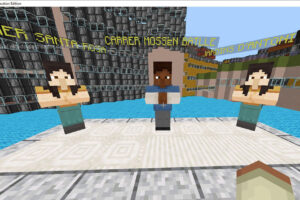
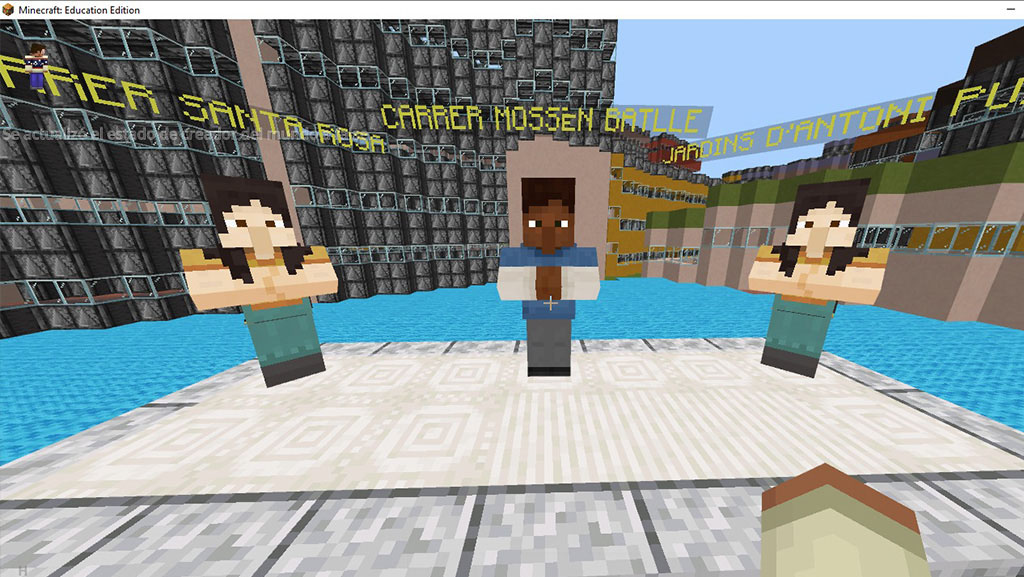
- City and Play is a social action project coordinated by researchers from the Centre for Image and Multimedia Technology (CITM) and the DiCode research group (Digital Culture and Creative Technologies Research Group) of the Universitat Politècnica de Catalunya – BarcelonaTech (UPC), the Universitat Oberta de Catalunya (UOC) and the University of Barcelona (UB), and funded by Barcelona City Council. The aim of the project is to promote civic competences and reflection on the urban environment among adolescents through the creation of an open framework that uses methodologies based on play, co-creation and storytelling.
- The Visualisation, Virtual Reality and Graphic Interaction Research Group (ViRVIG) at the Universitat Politècnica de Catalunya - BarcelonaTech (UPC) participates in the CLIPE project under the MSCA-ITN call, which has developed technologies to provide virtual characters in immersive VR/AR environments with natural behaviour and interaction between virtual characters, making them more human and realistic, with potential applications in industry, video games, training and simulation.
- The BIOsignal Analysis for Rehabilitation and Therapy (BIOART) research group at the Universitat Politècnica de Catalunya – BarcelonaTech (UPC) coordinates the Proactive Response and Efficient Planning with AI for Resilient Emergencies in hospitals (PREPARE) project, which aims to optimise hospital preparedness during emergencies through dynamic capacity and risk assessment using artificial intelligence (AI).
- A research team from the inLab FIB at the Universitat Politècnica de Catalunya - BarcelonaTech (UPC), together with the Asociación de Personas con Movilidad Reducida (AsoPMR), has taken part in the Spot4Dis project to enhance the mobility and autonomy of people with reduced mobility.
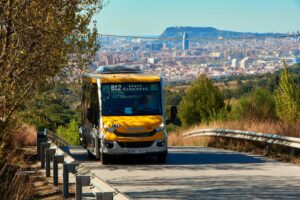
- The Barcelona Innovative Transportation (BIT), the Research Center in Automotive and Advanced Mobility (CER-AMA) and The Future Mobility Research Hub (CARNET) research groups from the Universitat Politècnica de Catalunya - BarcelonaTech (UPC) are participating in the E-MED project, which aims to optimise energy and resource efficiency in public transport systems by addressing energy price fluctuations through smart and participatory solutions across the Mediterranean region.
- The company Friselva S.A., Corporació Alimentària Guissona (bonÀrea), together with the Food Service Cluster and inLab FIB at the Universitat Politècnica de Catalunya - BarcelonaTech (UPC), are participating in the Hydroless project, which aims to optimise water consumption in meat production plants. The project includes an innovative solution to monitor and optimise water use at bonÀrea’s plant in Guissona, as well as the design and development of a digital twin of Friselva’s facilities in Riudellots de la Selva.
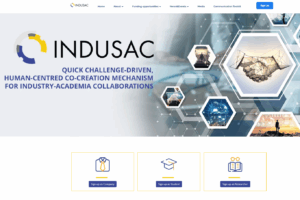
- The EU-funded Quick Challenge-Driven, Human-Centred Co-Creation Mechanism for INDUStry-Academia Collaborations (INDUSAC) project has successfully developed and validated a new, human-centred, challenge-driven co-creation mechanism that connects industry with academia across Europe. Over three years of implementation, the project has supported international teams of students and researchers in tackling innovation needs directly submitted by companies. The INDUSAC project has created a dynamic community of industry-academia stakeholders focused on circularity, general sustainability, digitalisation and industry 4.0.
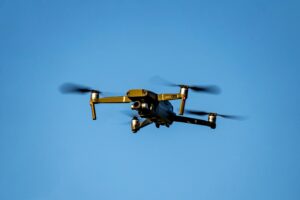
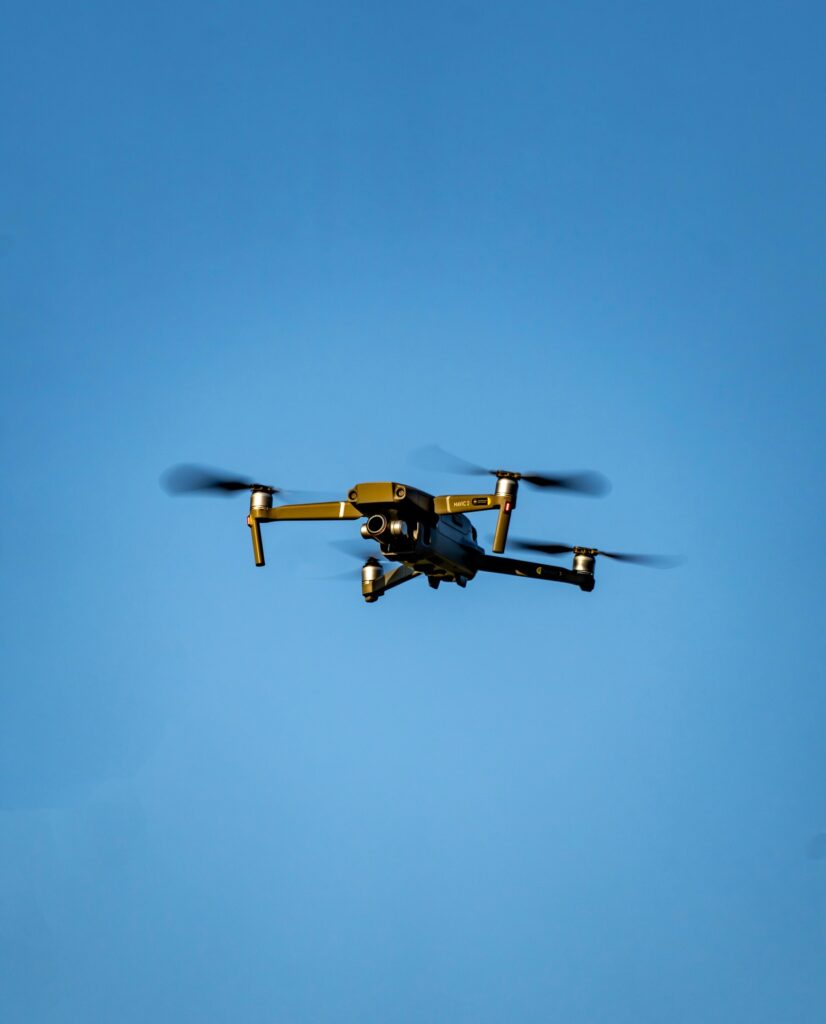
- A research team led by the Mobile Robotics and Artificial Intelligence Group (RAIG) of the Institute of Robotics and Industrial Informatics (IRI, CSIC-UPC) at the Universitat Politècnica de Catalunya - BarcelonaTech (UPC) is taking part in the European project TRIFFID (auTonomous Robotic aId For increasing FIrst responDers efficiency). The aim is to develop a platform to support rescue operations in emergency situations. The initiative combines advanced robotics, artificial intelligence and immersive interfaces to enhance safety and accelerate response in hazardous environments.
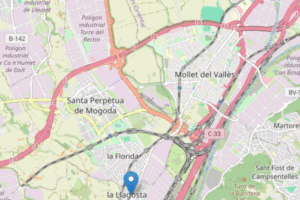
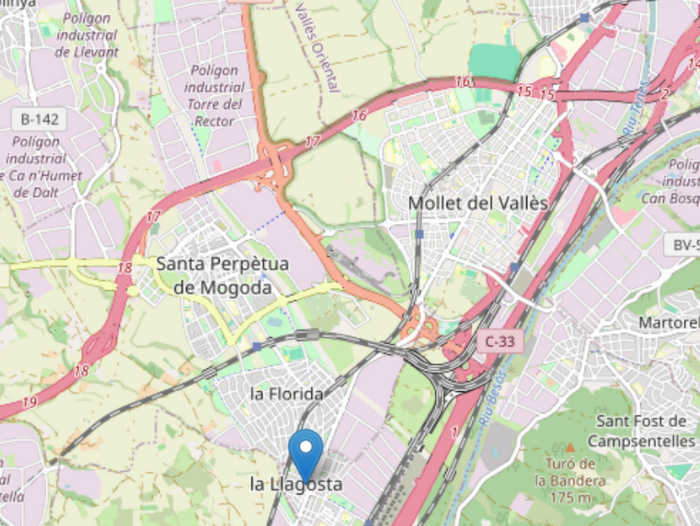
- A team from the Environment Centre Laboratory (LCMA) of the Universitat Politècnica de Catalunya - BarcelonaTech (UPC) is taking part in a study commissioned by the city councils of la Llagosta, Mollet and Santa Perpètua (in Vallès Occidental), with the main objective of identifying the impact of industrial plants on the generation of unpleasant odours and continuously monitoring air quality in these municipalities.
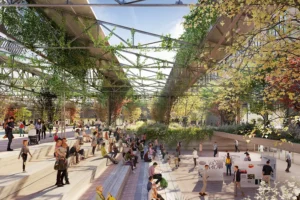
- Researchers from the Concrete Sustainability and Smart Structures (C3S) research group, part of the Construction Engineering (EC) group at the Universitat Politècnica de Catalunya - BarcelonaTech (UPC), are leading the CIRC-BOOST project, which aims to promote sustainability, industrial competitiveness and greater resource efficiency in the European construction sector.
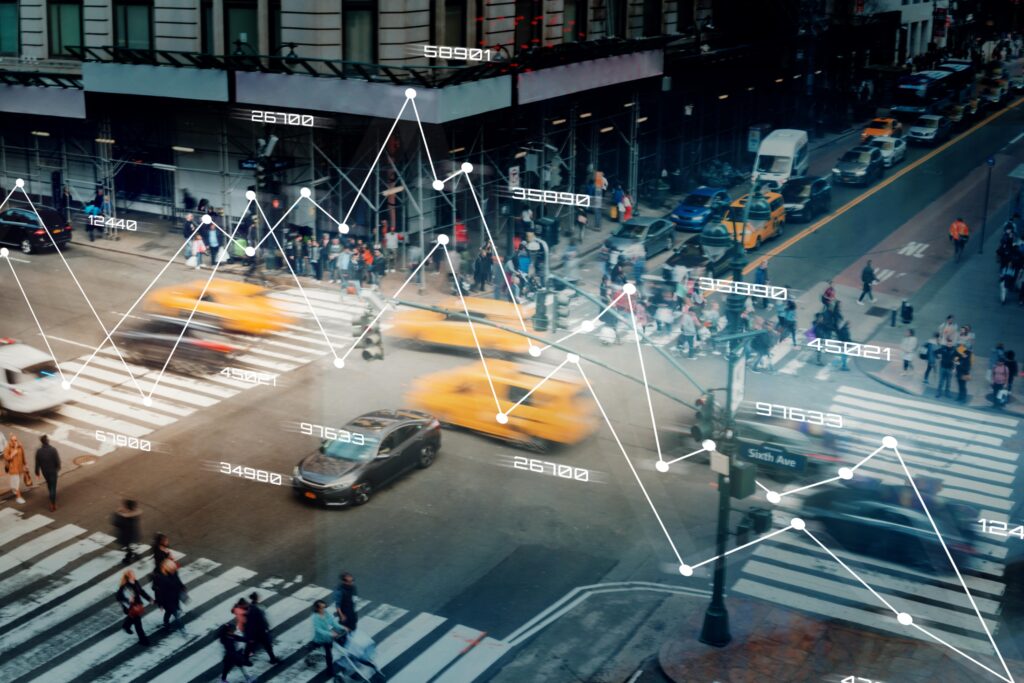
- A research team involving the Barcelona Innovative Transportation (BIT), inLab FIB, CARNET Barcelona – Future Mobility Research Hub (CER-AMA), and the Department of Computer Architecture (DAC) of the Universitat Politècnica de Catalunya - BarcelonaTech (UPC) is driving the i-MovE project, which aims to incorporate multisectoral data to provide much more accurate and valuable information for the mobility sector. The project develops four use cases focused on both companies and mobility authorities, covering public and individual transport, using the UPCxels demonstrator.
- The Structural and Materials Technology (ATEM) research group at the Universitat Politècnica de Catalunya - BarcelonaTech (UPC) is participating, in collaboration with the Universitat de les Illes Balears (UIB), in the ReINfoRCed project, which aims to promote the extension of the service life of reinforced concrete structures affected by corrosion.
- A team led by the Electronic and Biomedical Instrumentation (IEB) research group at the Universitat Politècnica de Catalunya - BarcelonaTech (UPC) is developing an electronic chip that enables more objective detection of potential infractions in race walking, which are currently judged solely by visual observation. The technology, already tested in official competitions, provides accurate, objective, and fair data on race walkers’ loss of ground contact.
- The organisation CARBOPESCA, together with the research group Development Center of Remote Acquisition and Information Processing Systems (SARTI) and the Efficient and Robust Integrated Circuits and Systems (EFRICS) group, at the UPC, are leading the iPROPEZESPADA project, an initiative aimed at optimising the capture and management of swordfish fishing using artificial intelligence.
- The Centre for Technological Risk Studies (CERTEC) at the Universitat Politècnica de Catalunya – BarcelonaTech (UPC) is coordinating the European Program for Wildfire-Prepared Communities (FIREPRIME), a project designed to develop tools and services for wildfire prevention in Europe, with the goal of improving safety in the wildland-urban interface by actively involving the community in its own protection.
- The digitalisation of human senses has advanced significantly in areas such as vision, hearing and touch. However, smell and taste continue to present a technological challenge, as their analysis relies on the identification of volatile or dissolved chemical compounds. While there are various sensors on the market capable of detecting specific gases and substances, they often lack the versatility required for comprehensive recognition of complex odours, showing limitations in adapting to different combinations of compounds.